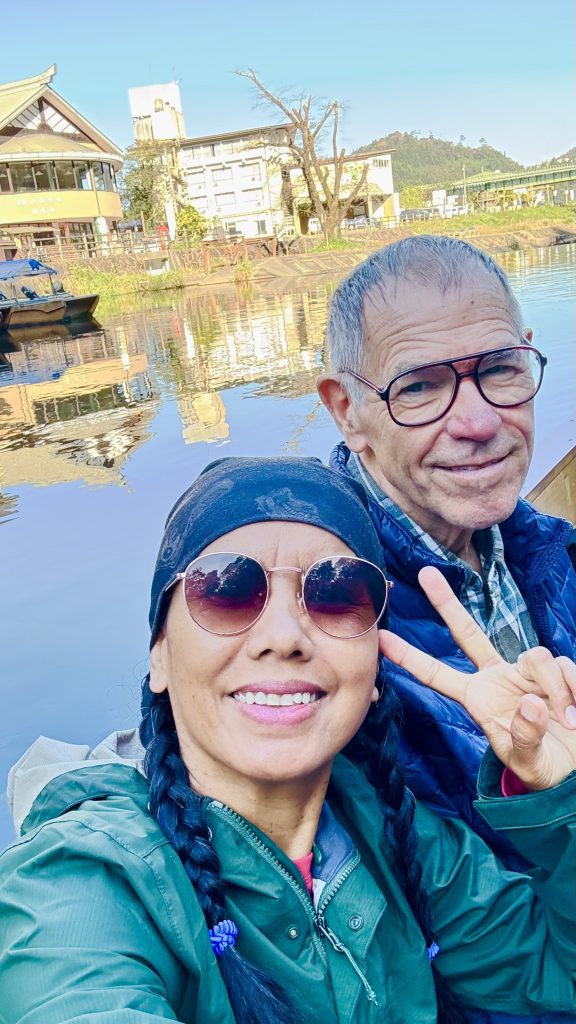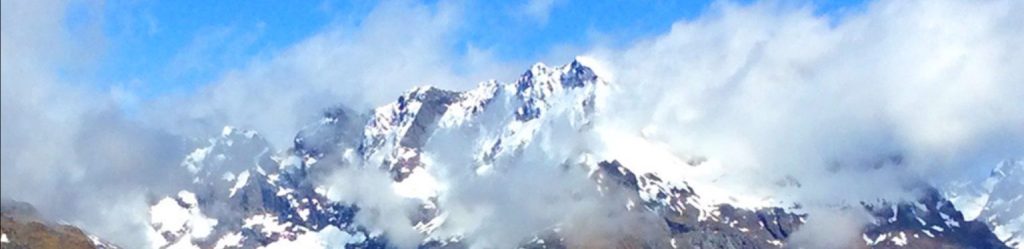
On the way on our semi-annual commute to and from Thailand, we are now spending three weeks traveling from Hokkaido, Japan to Tokyo, staying at many onsen resorts along the way, traveling by train.
I will try to keep updating this travel journal while waiting for trains.
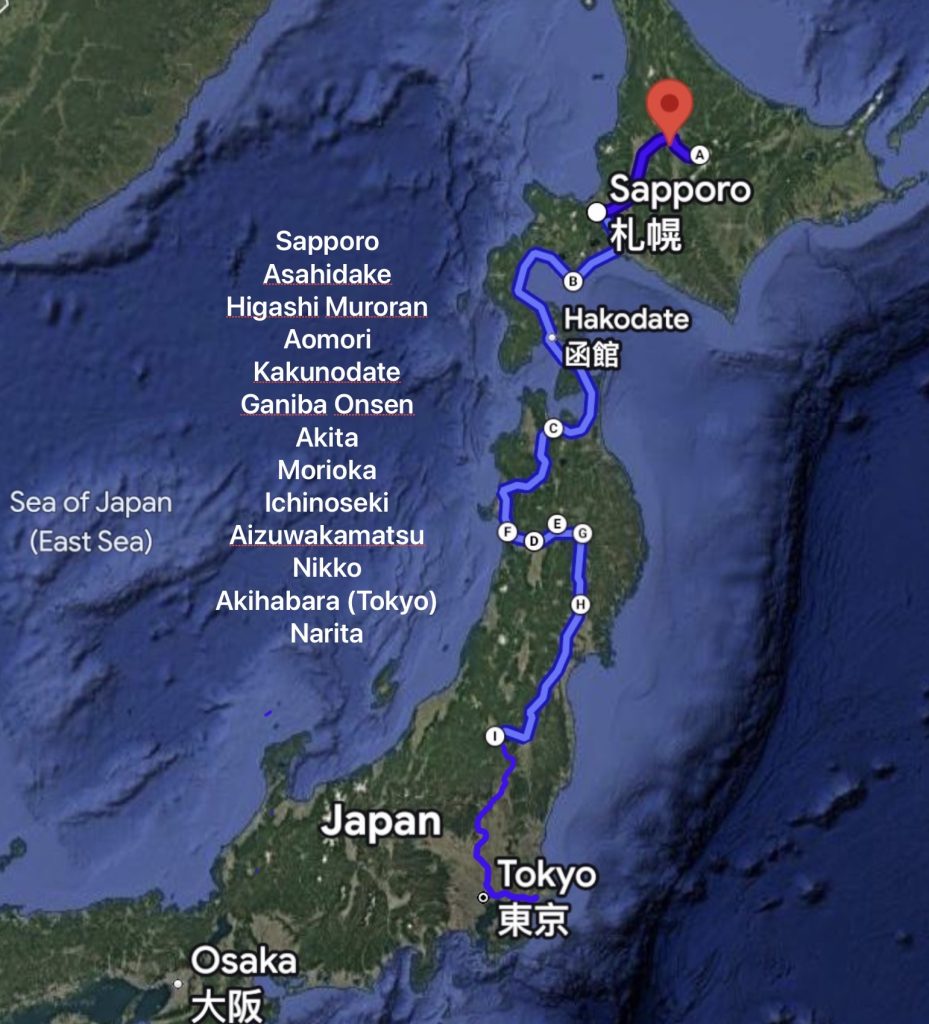
Our flight from Portland to San Francisco departed an hour late due to weather-related air traffic control delays. As we had only a 1 hour 19 minute connection for our 11 hour flight to Tokyo, it made me a little nervous. However, we managed OK, just. Just a reminder to not schedule your connections too closely!
We arrived at our Sapporo hotel about 9pm. Long travel day! Three flights plus a train trip from the Sapporo Airport into town.
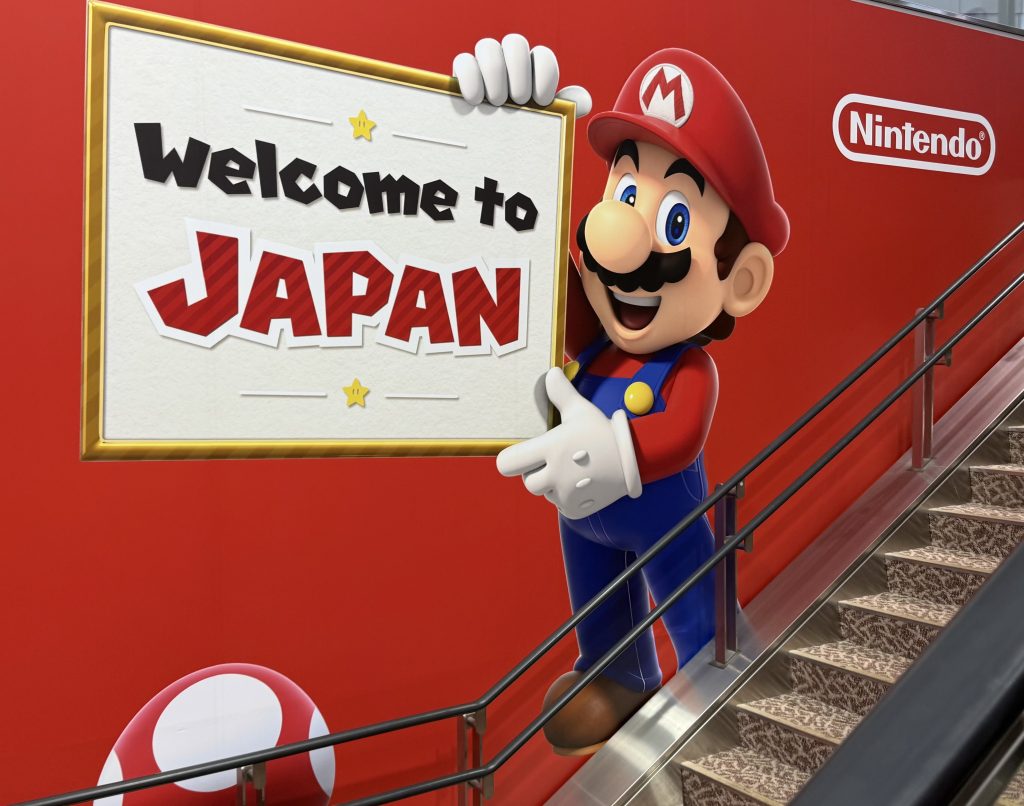
I have traveled Japan from north to south, and have come to like Dormy Inns, which all have in-house hot springs. So we began this stay in one in central Sapporo.
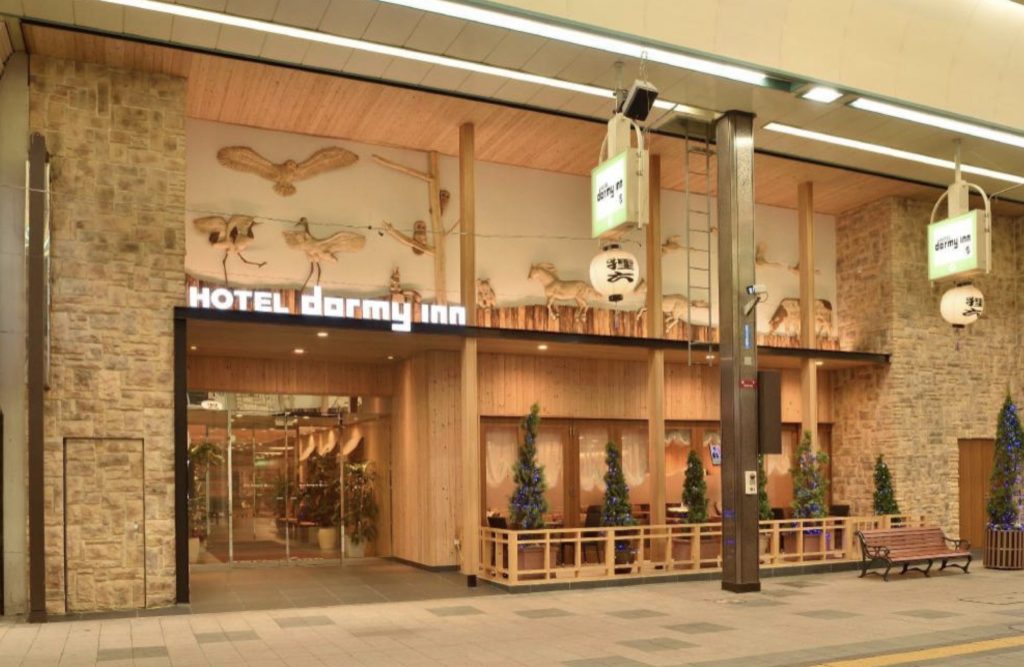
Onsen (hot springs) are a great Japanese tradition. Given its volcanically active location at the boundary of a tectonic plate, there are more than 27,900 hot springs!
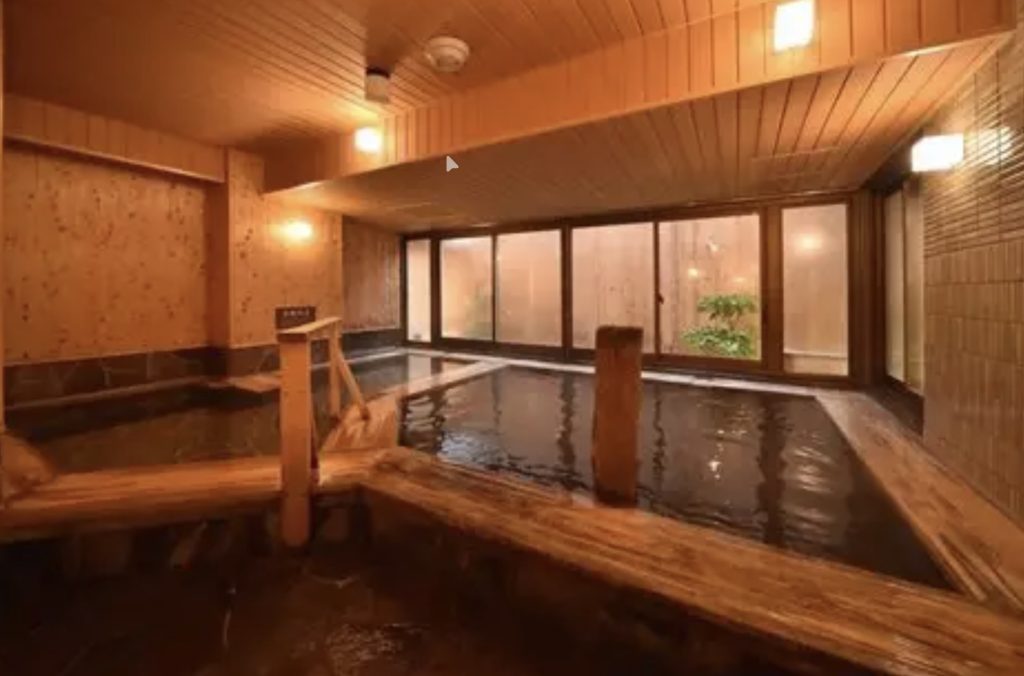
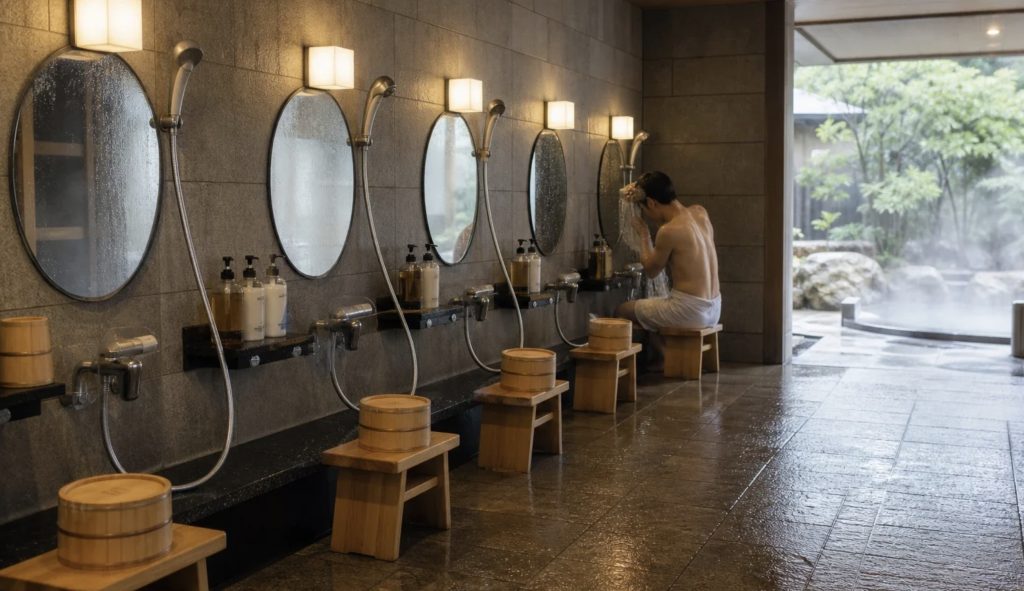
Before bathing, you thoroughly clean your body from head to toe, so the onsen water remains pure. It is a soothing part of the onsen ritual:
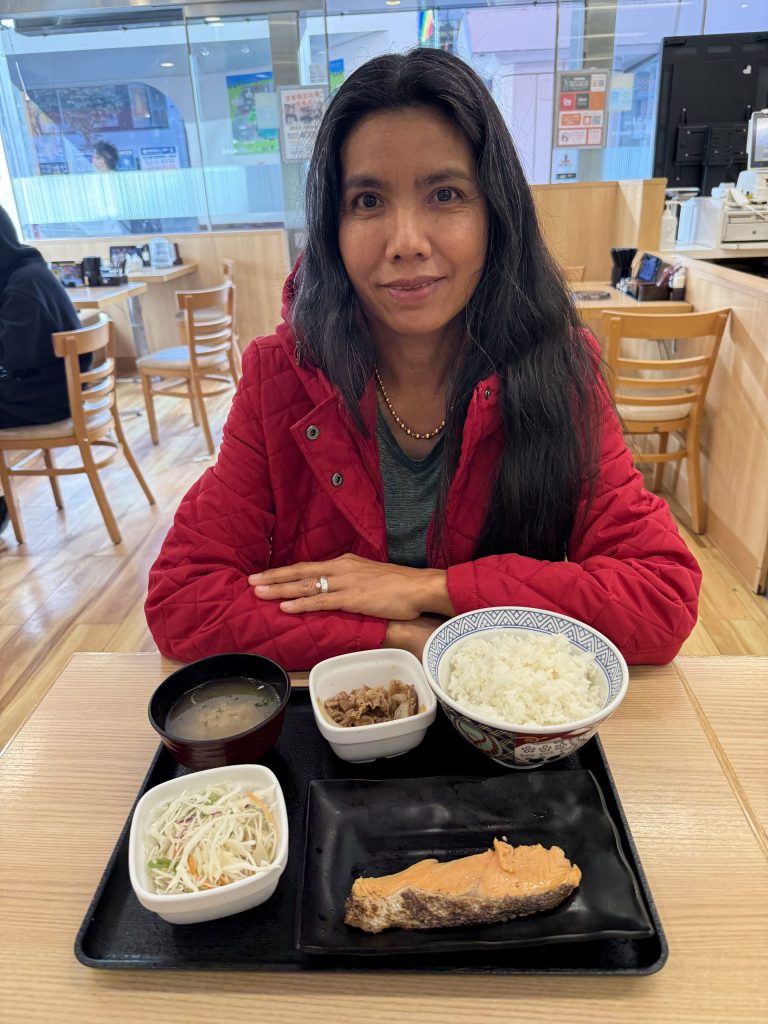
Our hotel is situated on a covered shopping street. The next morning, we walked out for a simple breakfast. This breakfast cost $4 US dollars each. Miso soup, salad, noodles, rice and salmon.
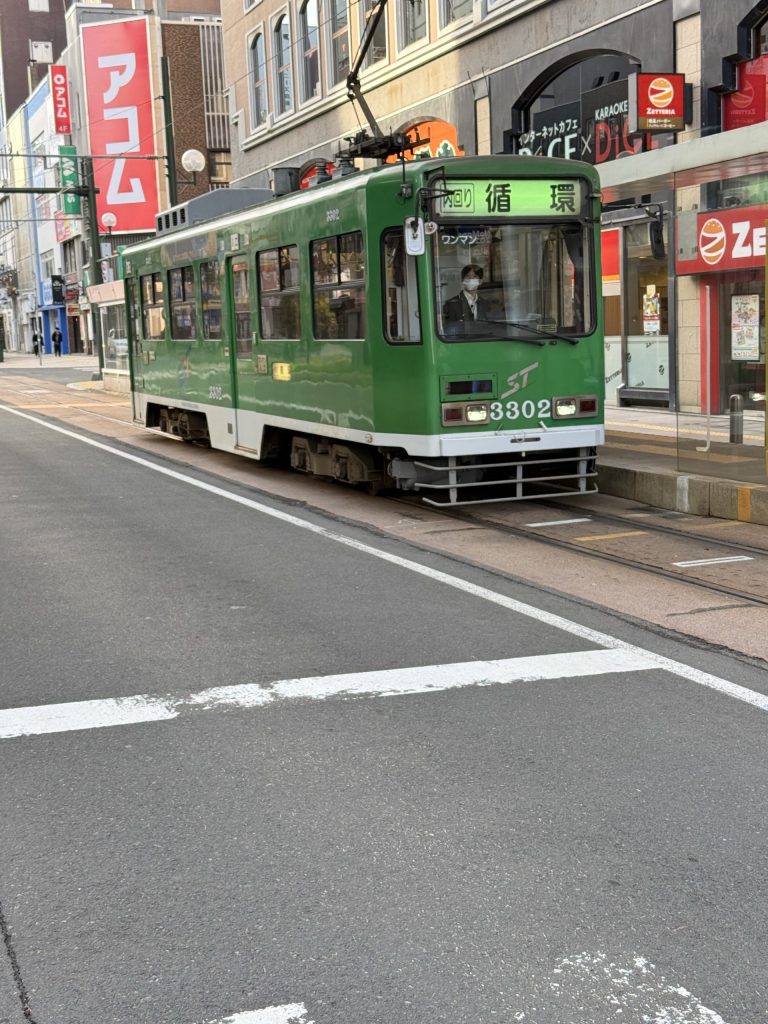
Sapporo is a lovely, clean town. We traveled around the core area by tram, such as this antique one:
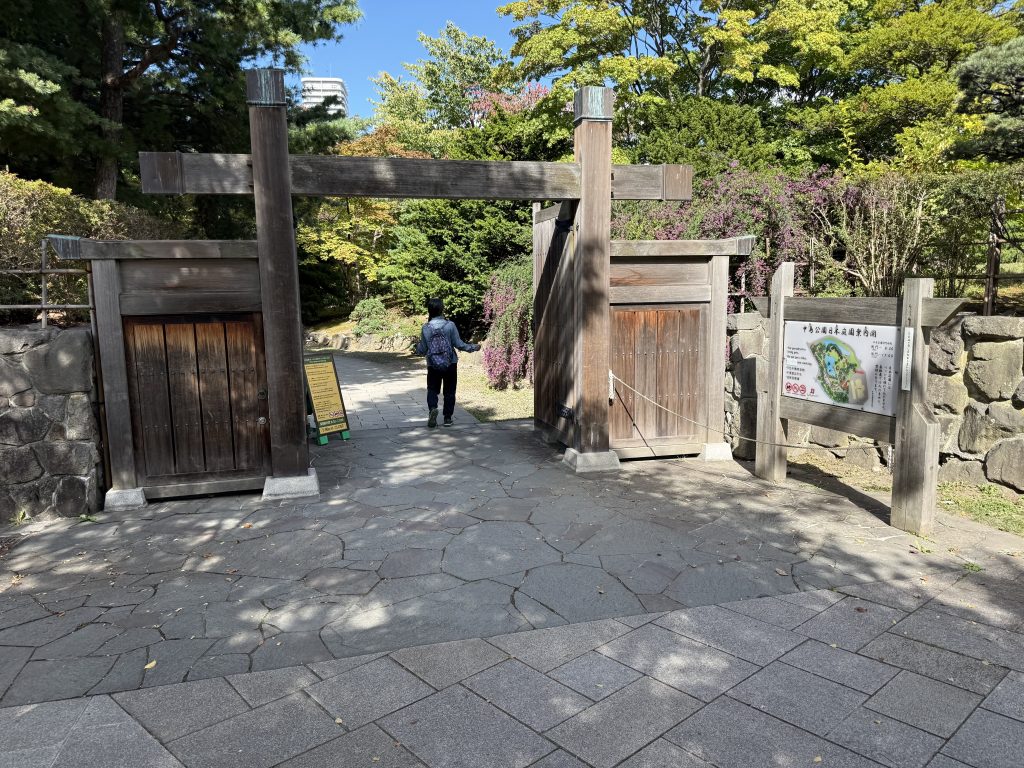
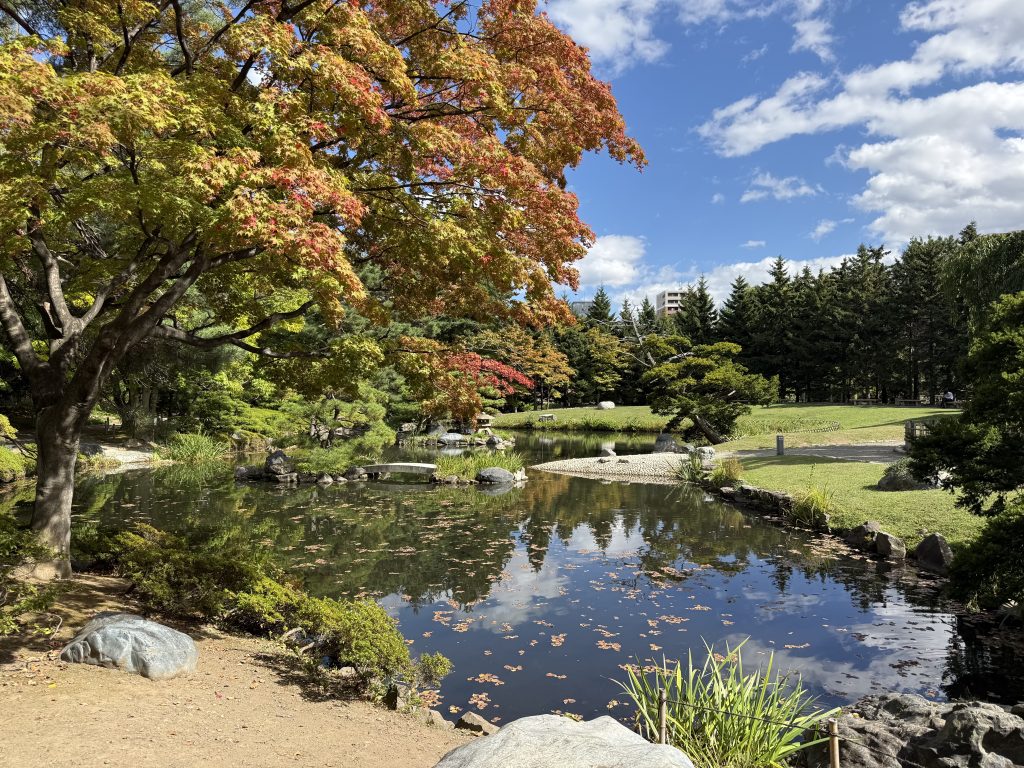
Nakajima Park is a beautiful 20 acre oasis that was one of our favorites. There is an exquisite Japanese garden there:
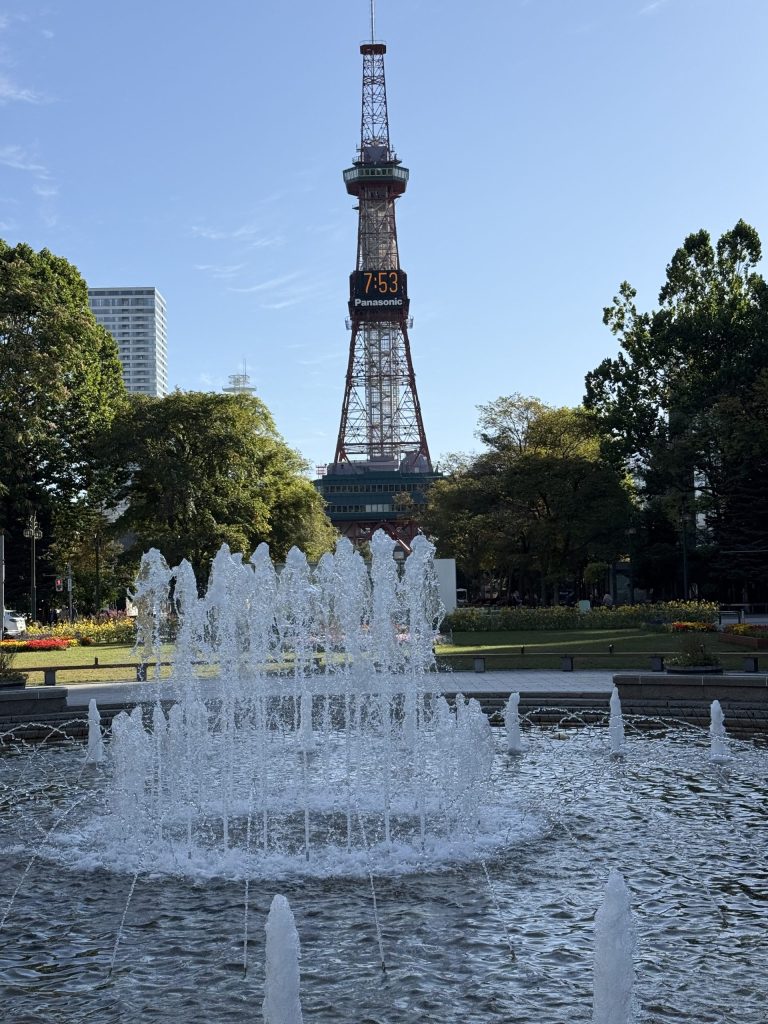
Sapporo is a sister city of Portland, Oregon.
After two nights in Sapporo, we walked about 1200 yards to the train station, and went 1 ½ hours by express train towards the central highlands of Hokkaido to visit Daisetsuzan National Park, home of Hokkaido’s highest mountain, an active volcano, Mount Asahidake:
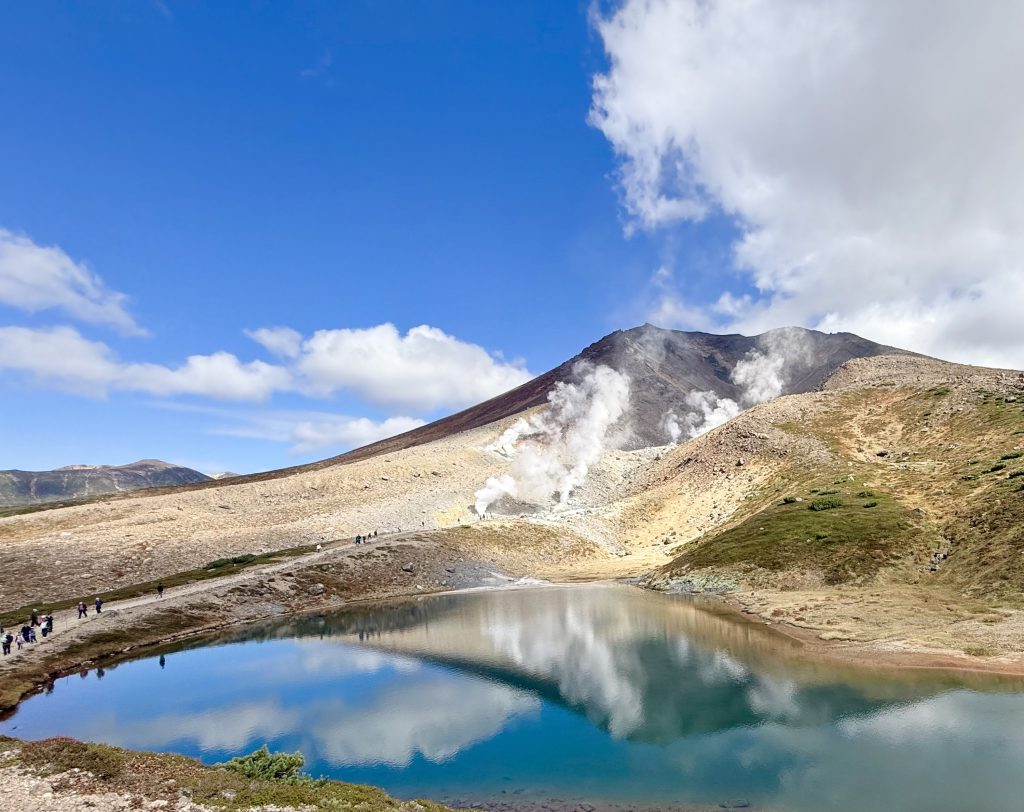
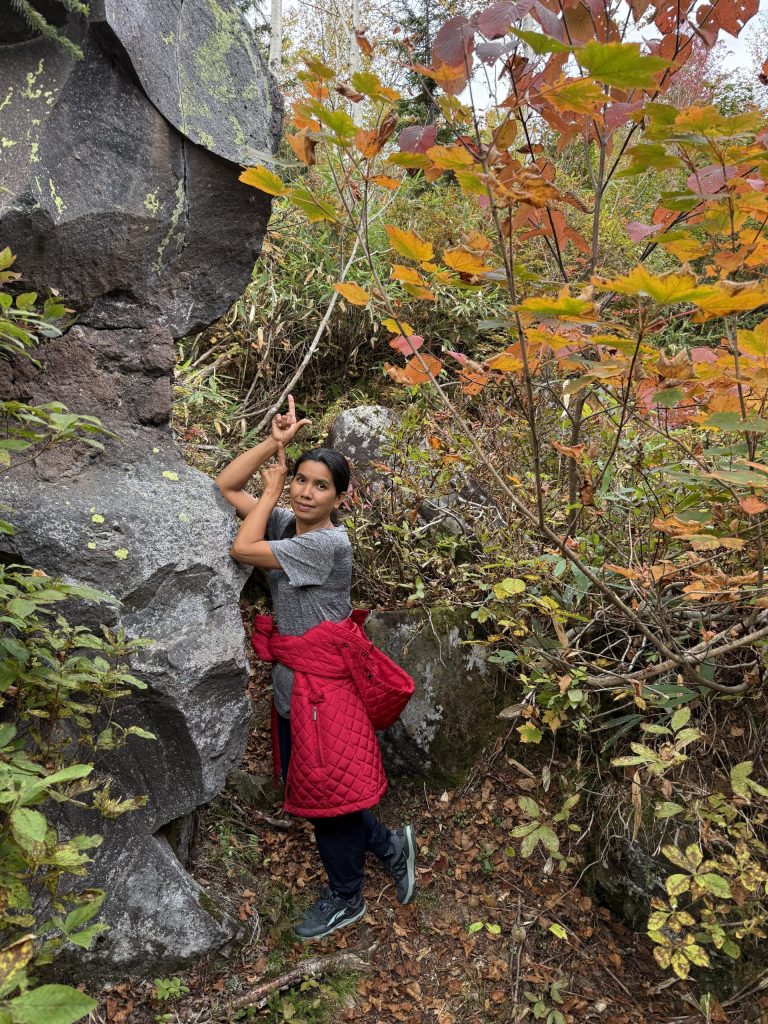
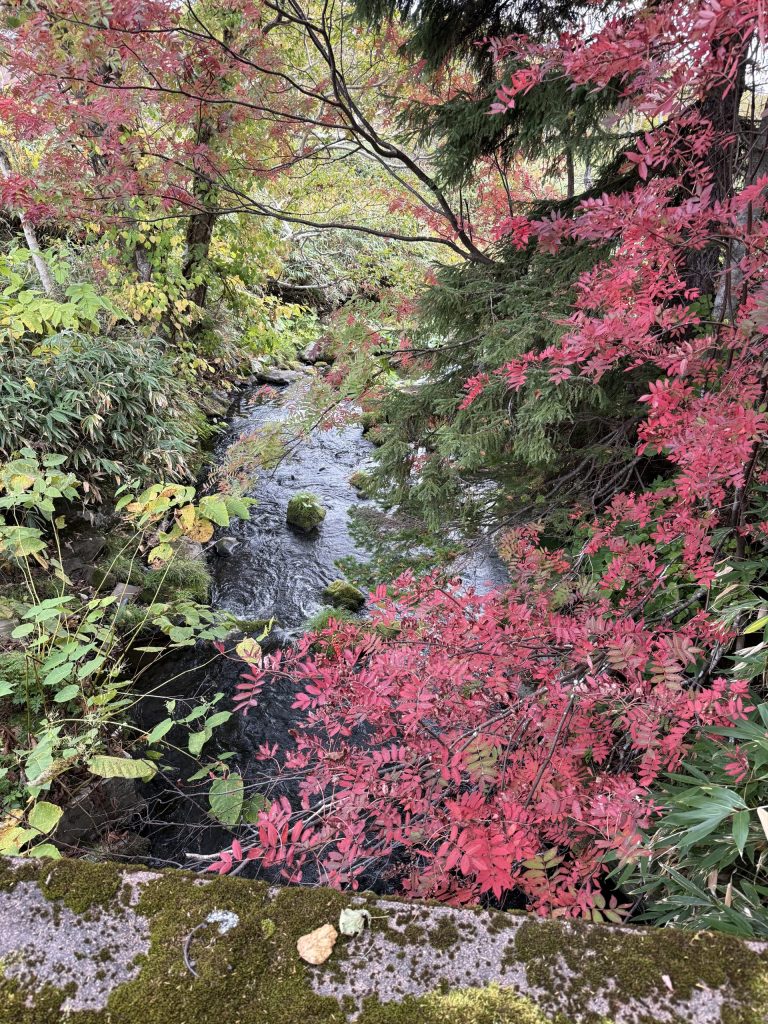
When I first visited her in 2017, it was enveloped in clouds, and even snowed 6 inches on my second day (October 4). But we were lucky to come on a clear, beautiful day this time. After coming down from above timberline, we took a hike in the forest:
Japan Rail East makes reserving train seats and tickets quite easy, and even allows you to change them for free up until 9pm the day before. Thereafter, up until you check in for a charge of only $4 USD. As it began to rain overnight, we decided to head back down to Sapporo for one more night before heading south.
Back in Sapporo, we had a relaxing onsen bath, and the next morning walked over to the Hokkaido University campus.
A pretty, lush urban campus with a long history. We walked along a path bordered by imported Poplar trees planted by students 110 years ago.
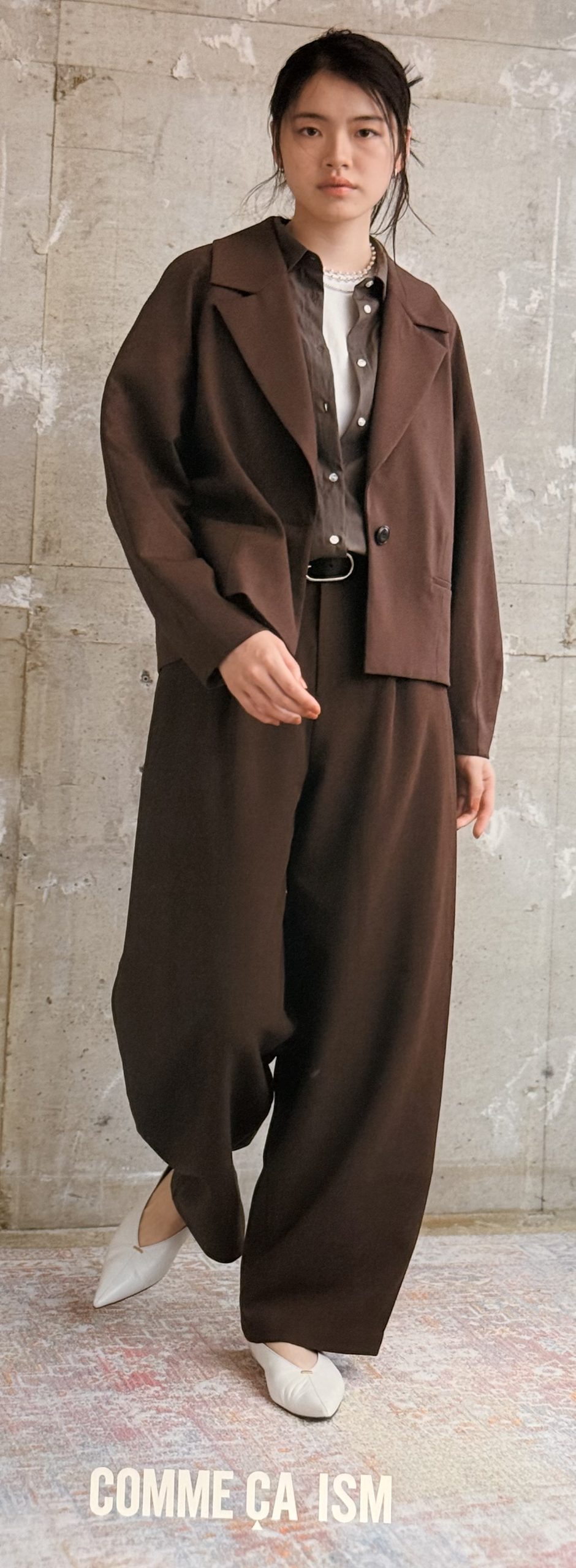
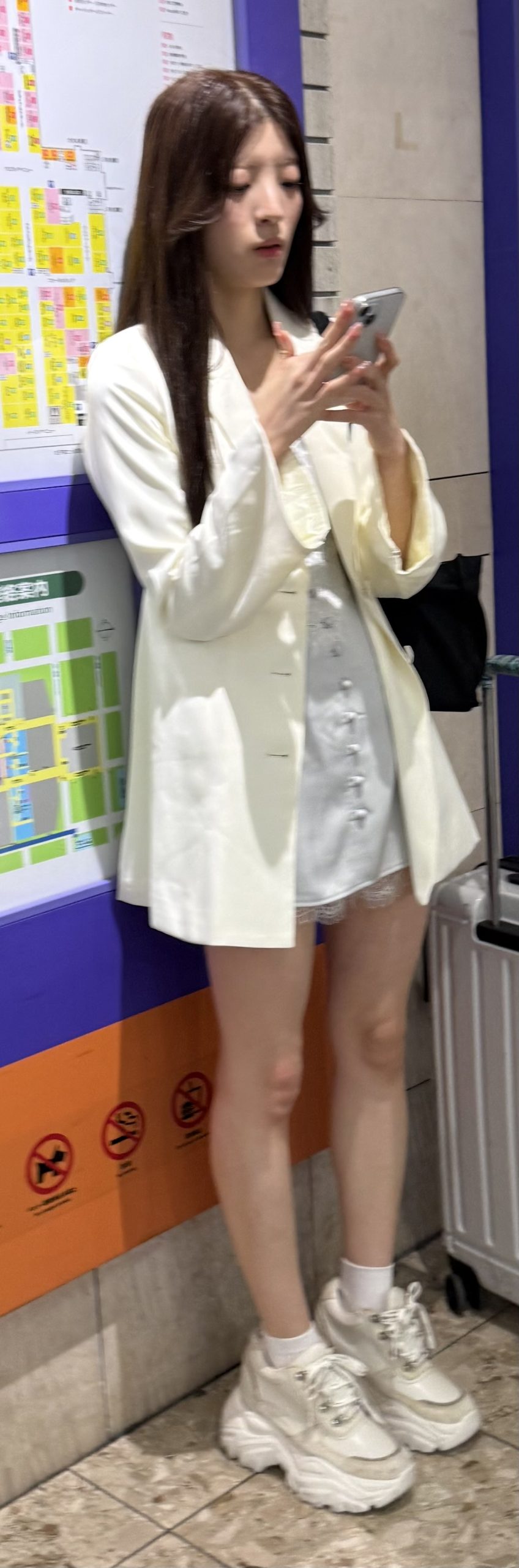
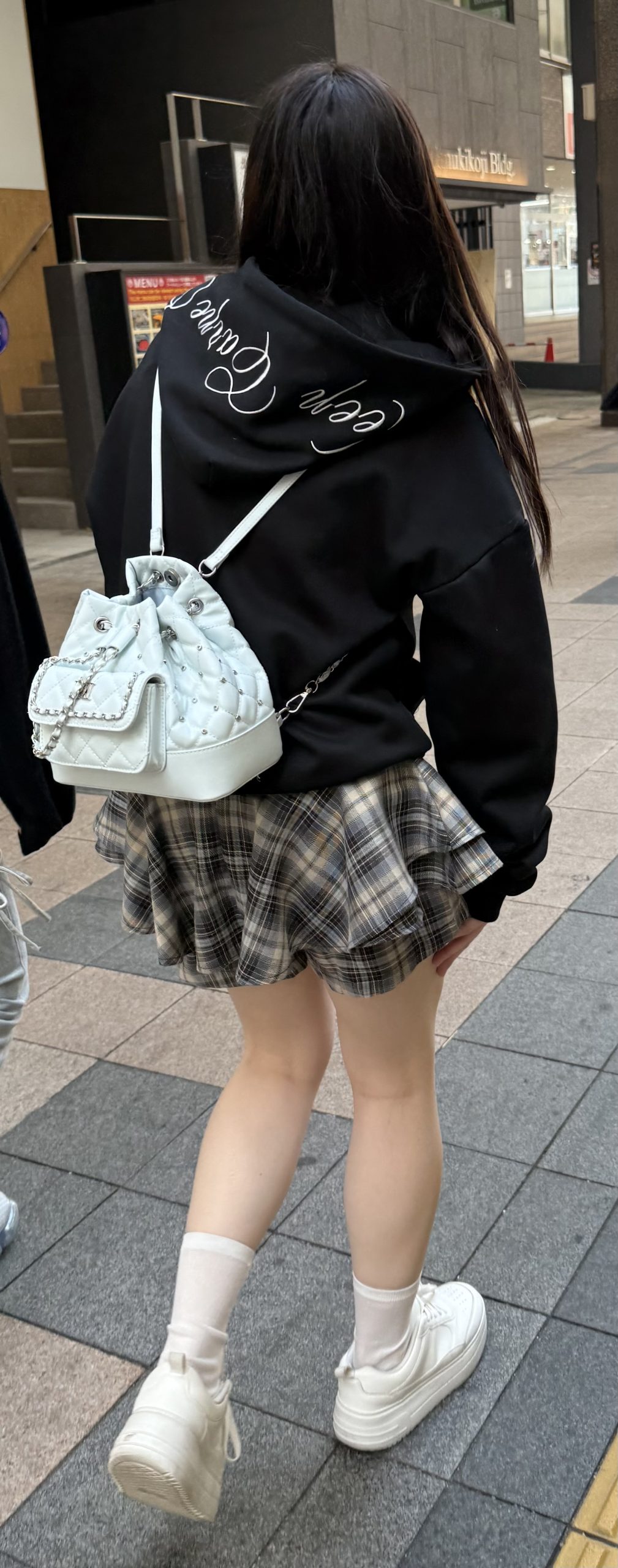
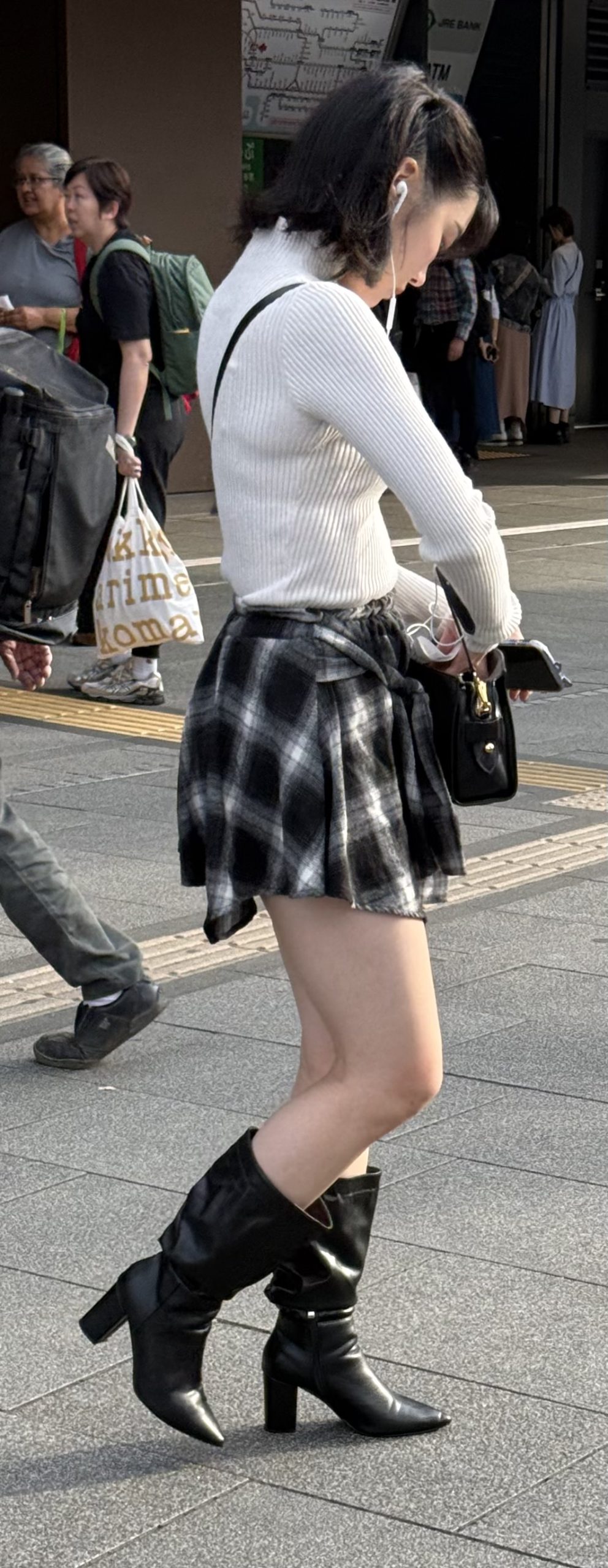
When we were living in Hawai’i, I joked that we could easily tell visiting Japanese women at a great distance: look for the most stylishly dressed. Here’s some Sapporo style shared even by kids:
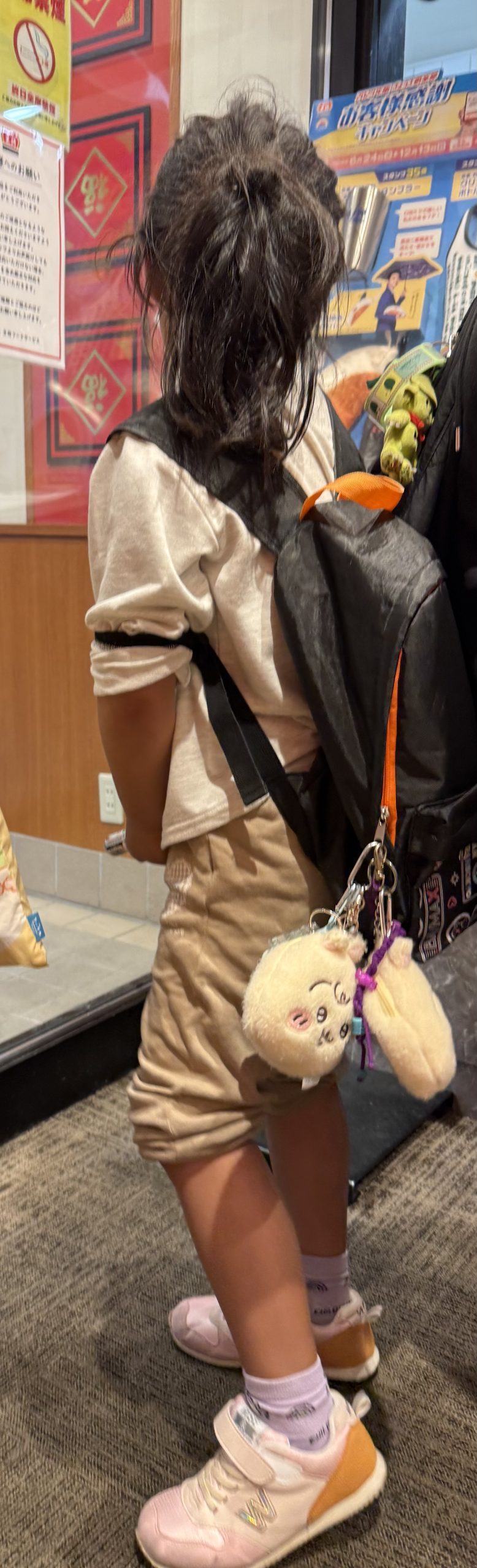
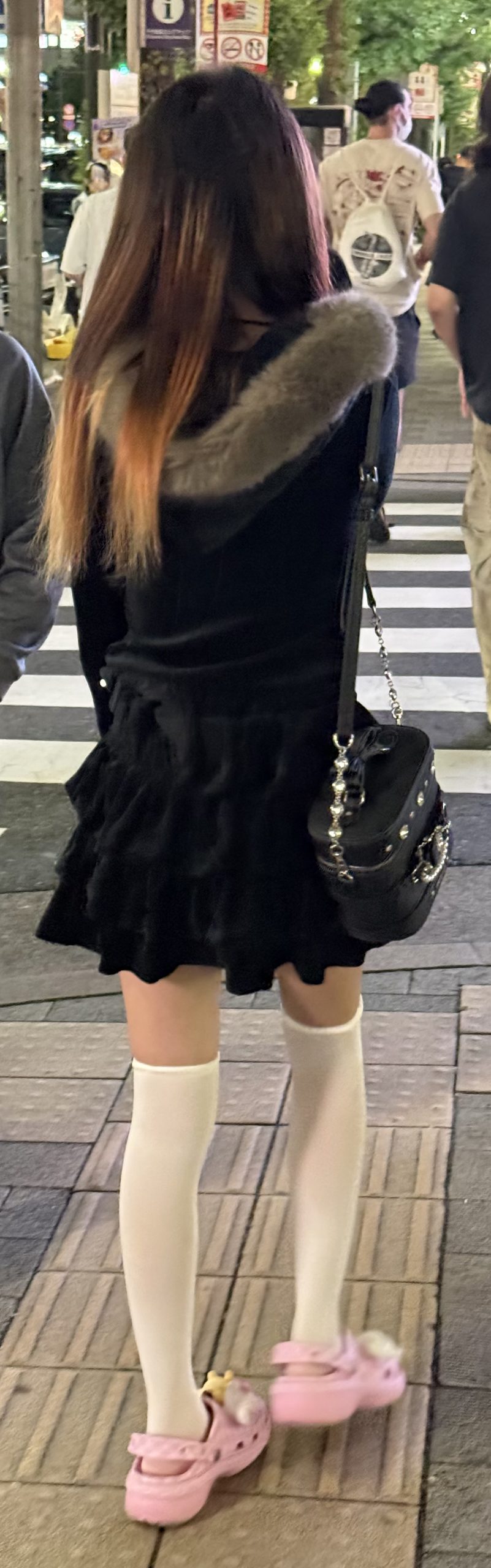
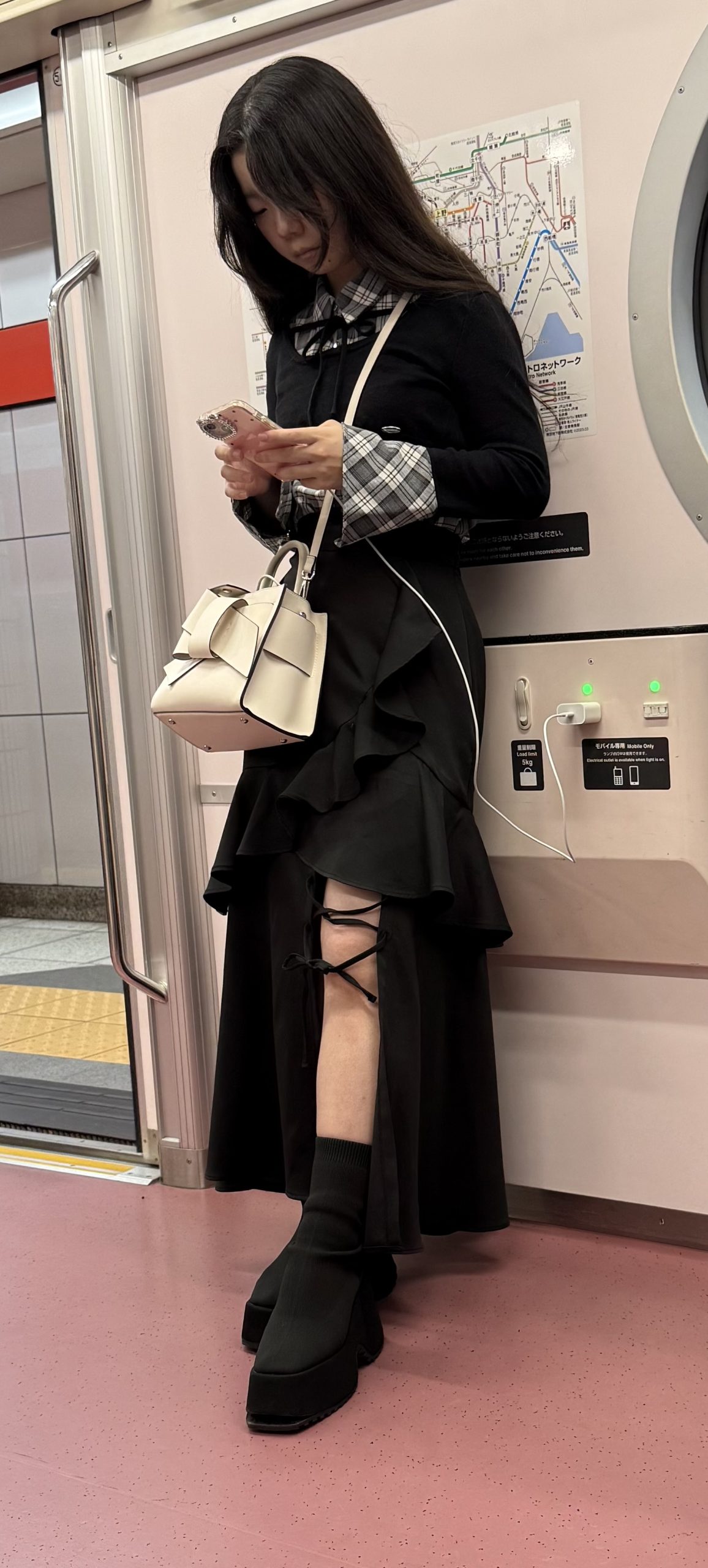
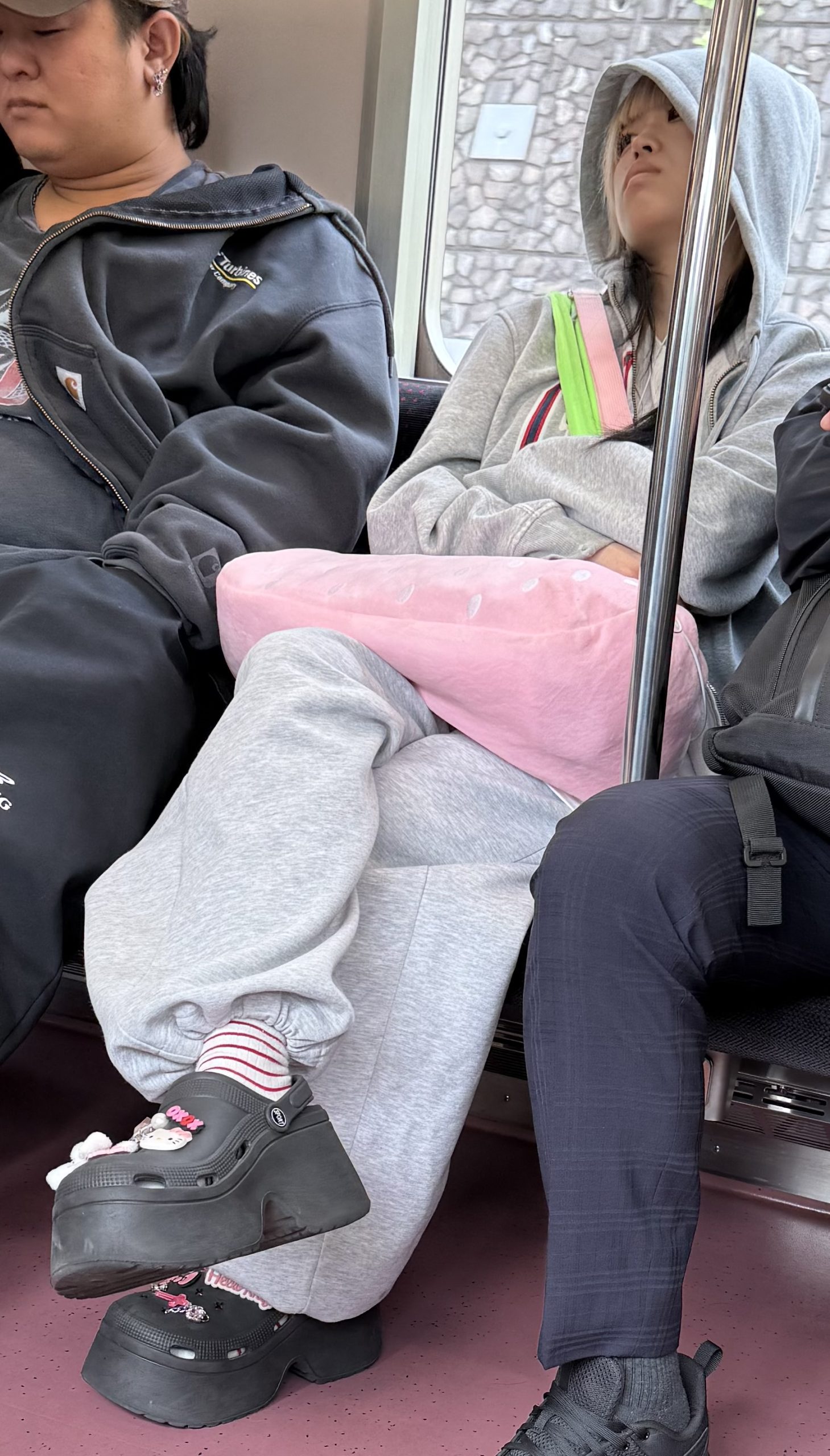
It was easy to gather food to eat on the train as we walked to the station on the underground route. A couple of fresh pastries, and bentos that included fish, rice, chicken and egg custard.
The Japanese train platforms are exceptionally well-organized. Signs along your platform even tell you where to queue for a particular train and car number.
Preparing for this trip, I upped my Japanese vocabulary, and it has been useful. While many hotel clerks speak English, other people you meet (especially older Japanese) do not. It makes it easy to ask directions, or just exchange pleasantries. I imagine my Japanese is accented and imperfect, but as is often the case abroad, people appreciate it if you make the effort to learn their language. Let us hope that America returns to extending such positive welcomes to visitors and immigrants from other countries. After all, we all are, without exception, either immigrants, or the offspring of immigrants.
When I was a science student 60 years ago, it seemed obvious that the USA would adopt the metric system like the rest of the world. Our founding fathers brought the oddball English system with them, with its many practical disadvantages. Then, they themselves changed to metric, (perhaps King George’s revenge?), leaving only three countries with the old English system of measurements: USA, Liberia and Myanmar (Burma). I’ve decided that I will try to shift from translating metric to English constantly, to just thinking in metric, for the rest of my life. Please forgive me when I use metric in my future posts. 1 meter = ±40 inches or 10% more than a yard. 1 km =0.62 miles. 10°C =50 °F, 20°C =68 °F, 30°C =86 °F, 40°C =104 °F.
We arrived today in Higashi-Muroran (Southern Hokkaido) in our first light rain. But the Dormy Inn onsen opens soon to sooth us, and hopefully the rain will ease up so we can explore this coastal city.
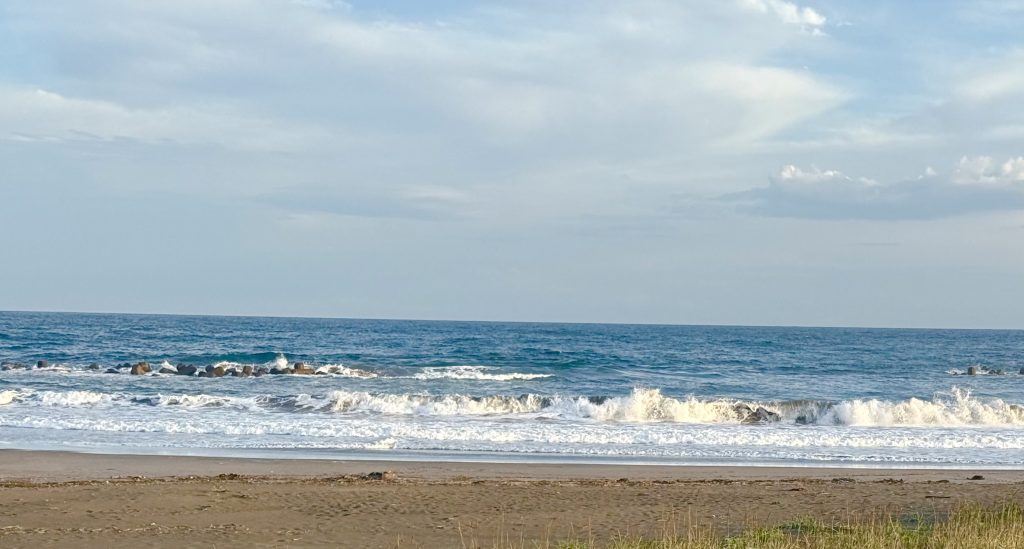
Well, the showers stopped, so we walked 3 kilometers to the beach and back. We have been trying to walk 8-10 km per day, and did so yesterday.
Looking east across the Pacific Ocean:
I LOVE the Japanese onsen ritual. It is profoundly relaxing, like a Tai Chi meditative ceremony. We have settled into bathing in the onsen way morning and evening. I’m even trying the Nordic practice of first getting very hot in the hot pools and sauna, then plunging into 10°C icy cold pool for 1 to 2 minutes, and repeating. Nice once you get used to it, apparently good for circulation. Or you can stand outside and let the fall breezes cool you.
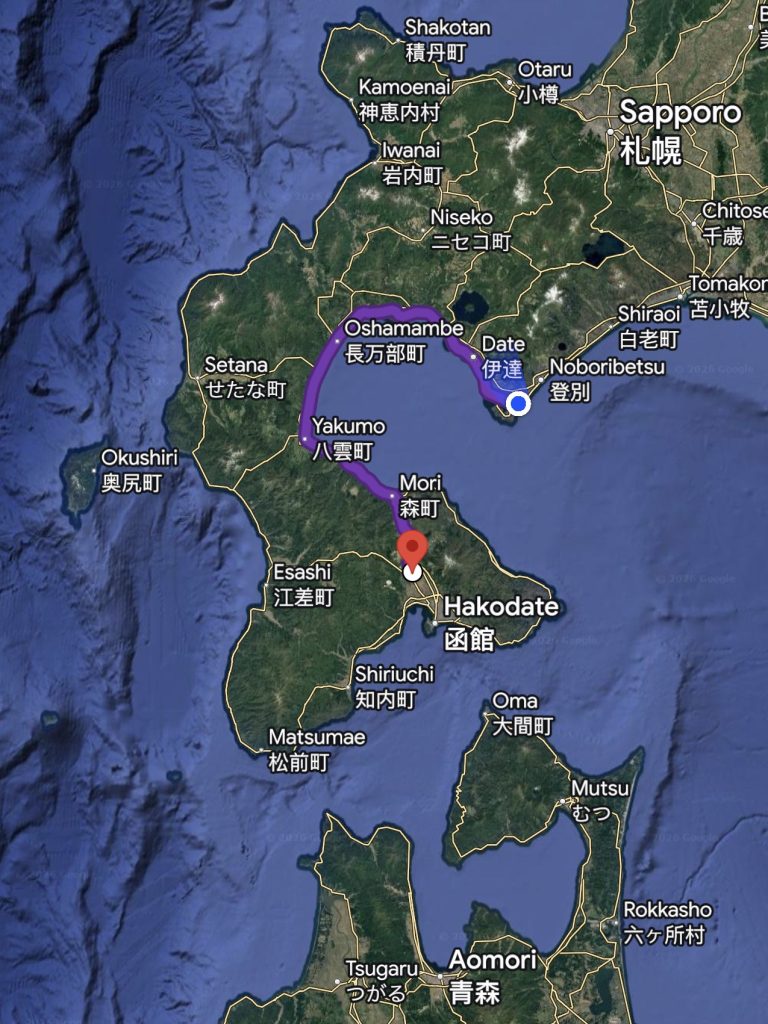
We have about 3 ½ hours of train riding today. First we spend two hours circumnavigating a large bay in southern Hokkaido:
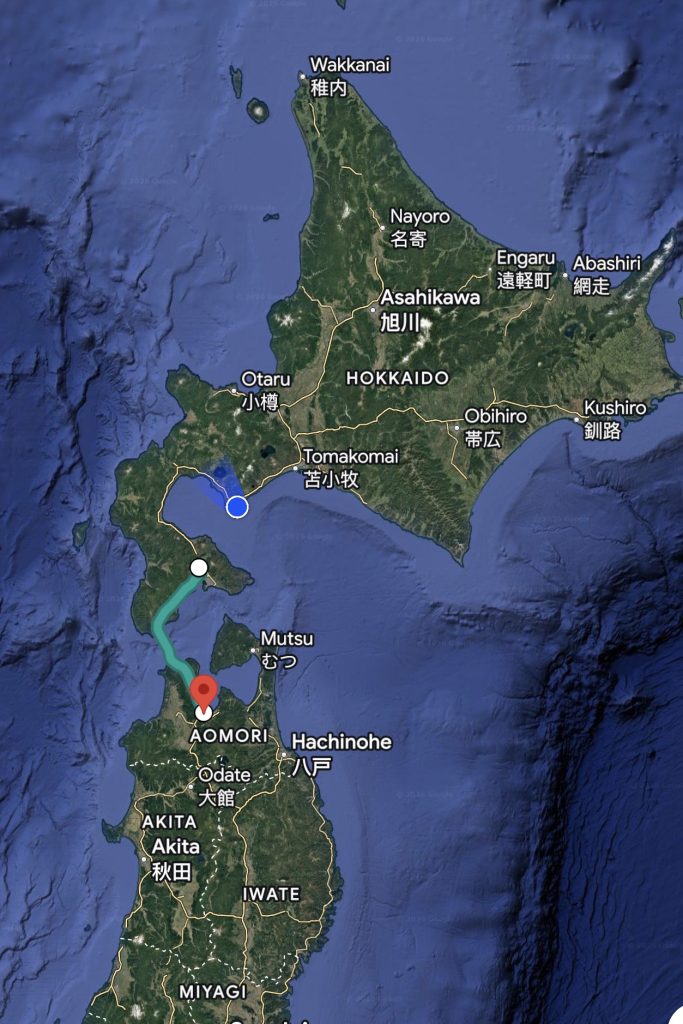
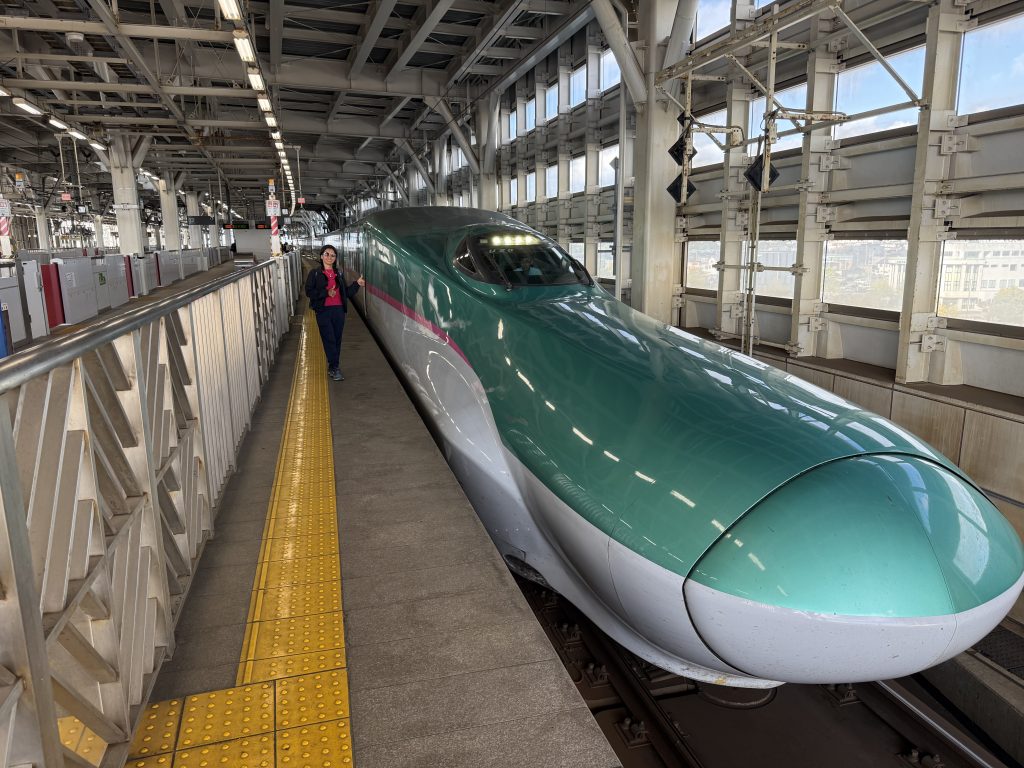
That takes us to the northern terminus of the Shinkansen (high speed train) that goes all the way to Tokyo. We change to that train, and cross under Tsugaru Strait separating Hokkaido from Honshu (the main island of Japan) in the second longest railway tunnel in the world (54 km). It was blasted and dug about 100 meters below the sea bed, as the volcanic rock precluded using a boring machine. We arrive in Aomori, Honshu Island, where we’ll spend two nights.
This Shinkansen is the fastest one in Japan. In some sections, it cruises at 320 km/hour (200 mph). And does it smoothly and quietly. Sleek aerodynamics!
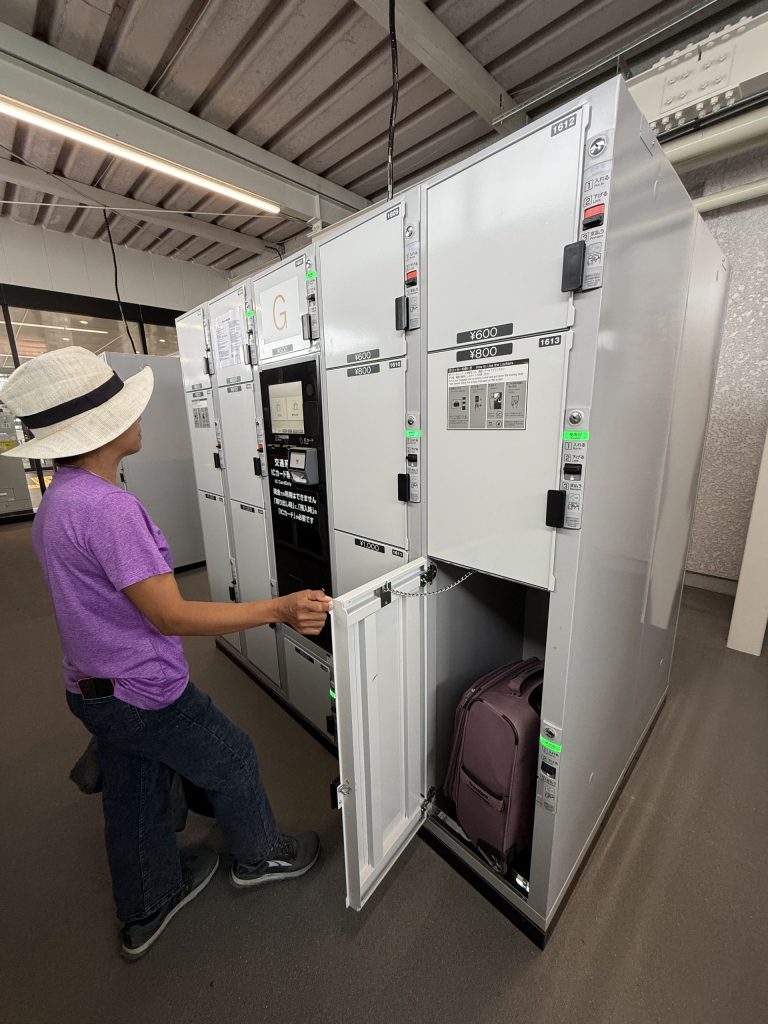
All the stations have luggage lockers, so it’s easy to stash your bags if you have arrived too early for checkin, or have a long layover and want to explore the area. Cost depends on size, anywhere from $3 USD to $7 for this one big enough for two carryons and two knapsacks.
Another flawless Japanese train journey. They just make it all easy. I have noticed that arrival times are often a few minutes later than published, so maybe be careful about very tight connections where you must change platforms. Aomori seems more urbane than Sapporo. There is a pretty, long boardwalk along the bay.
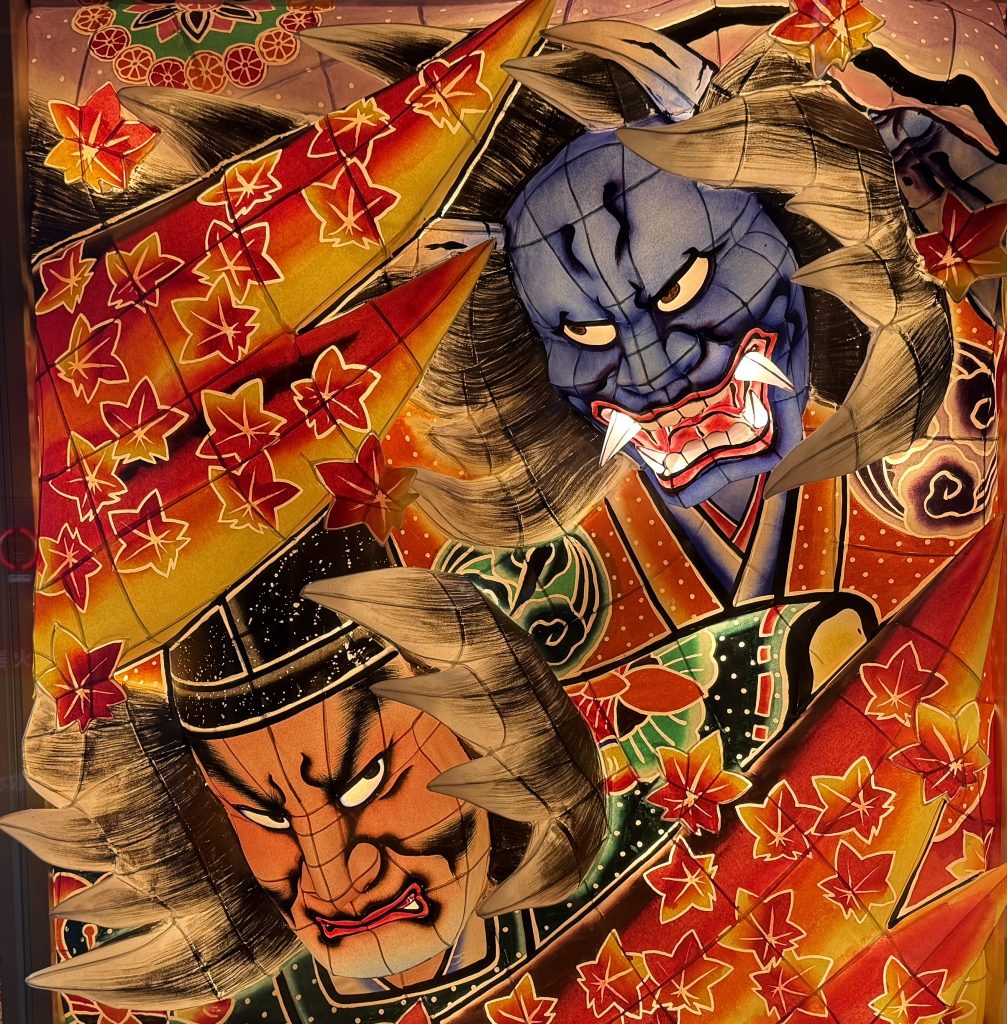
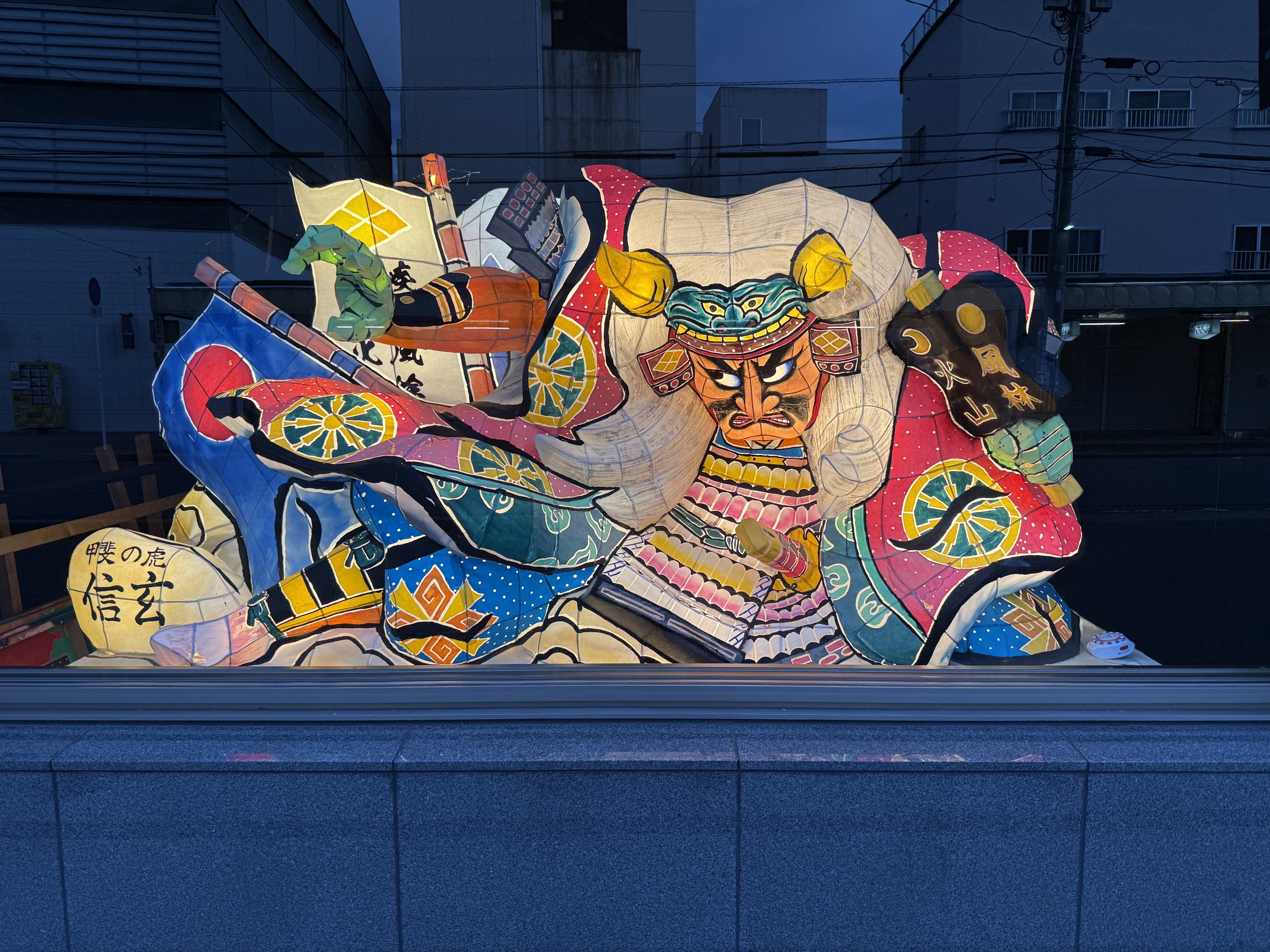
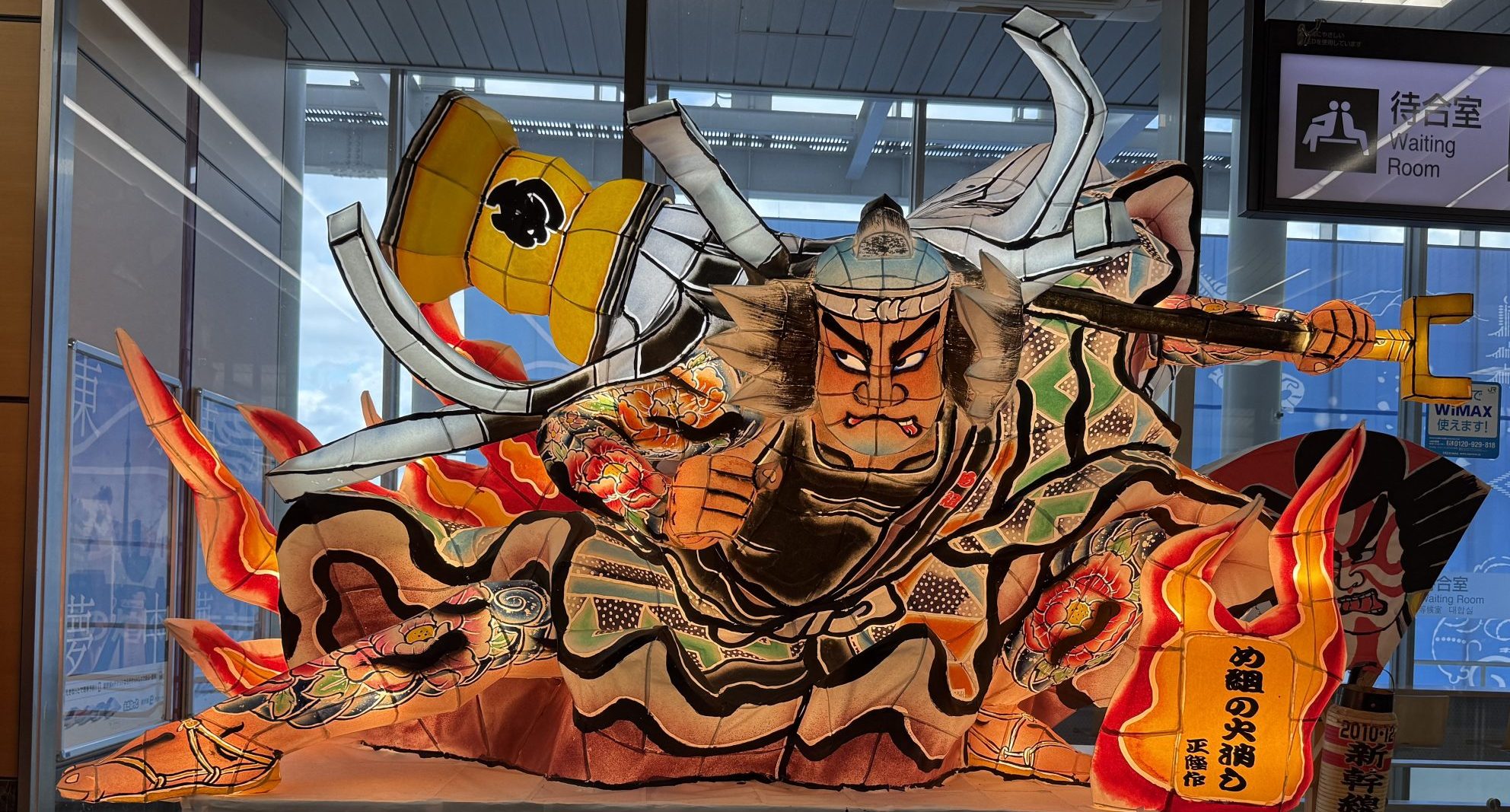
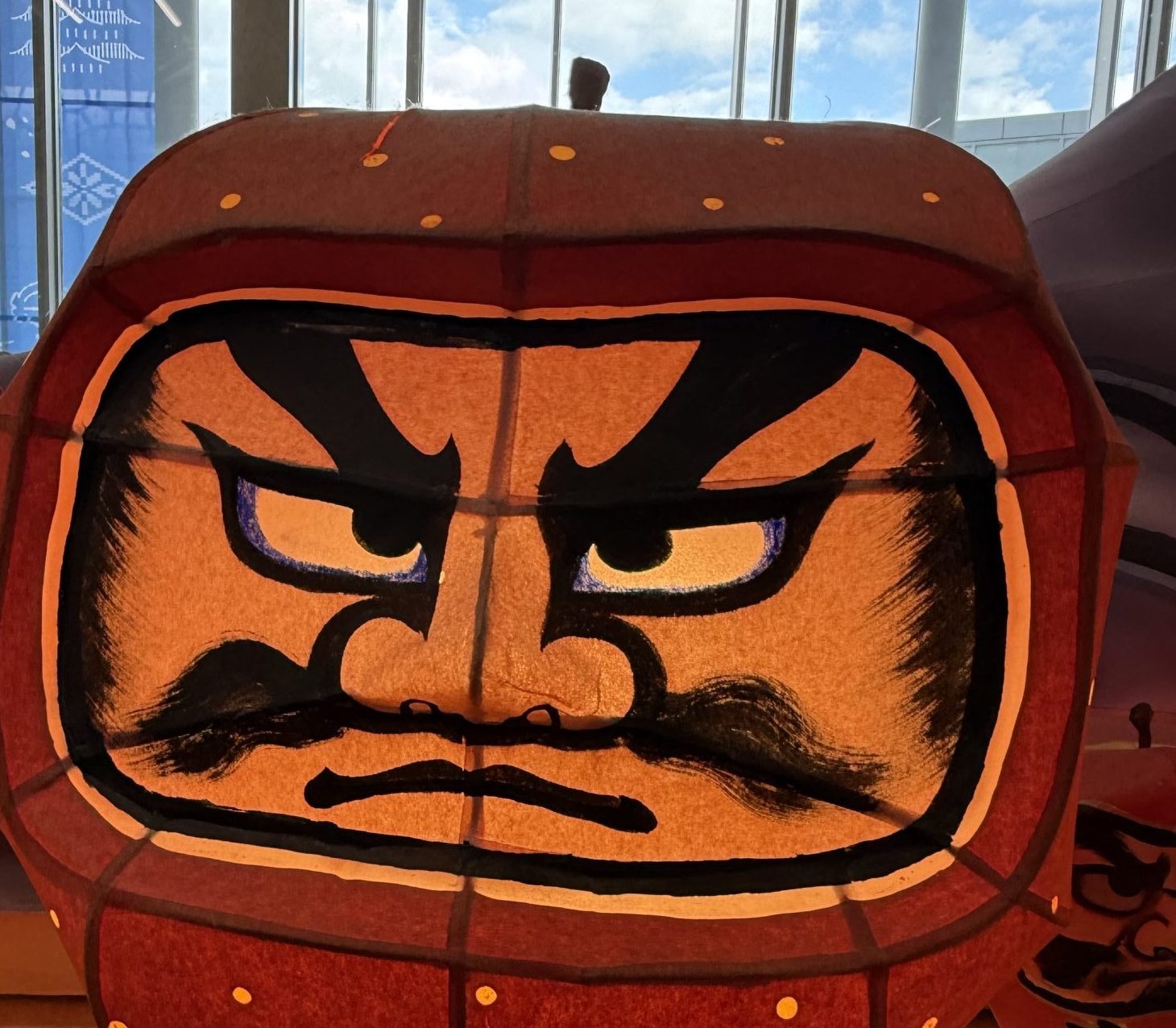
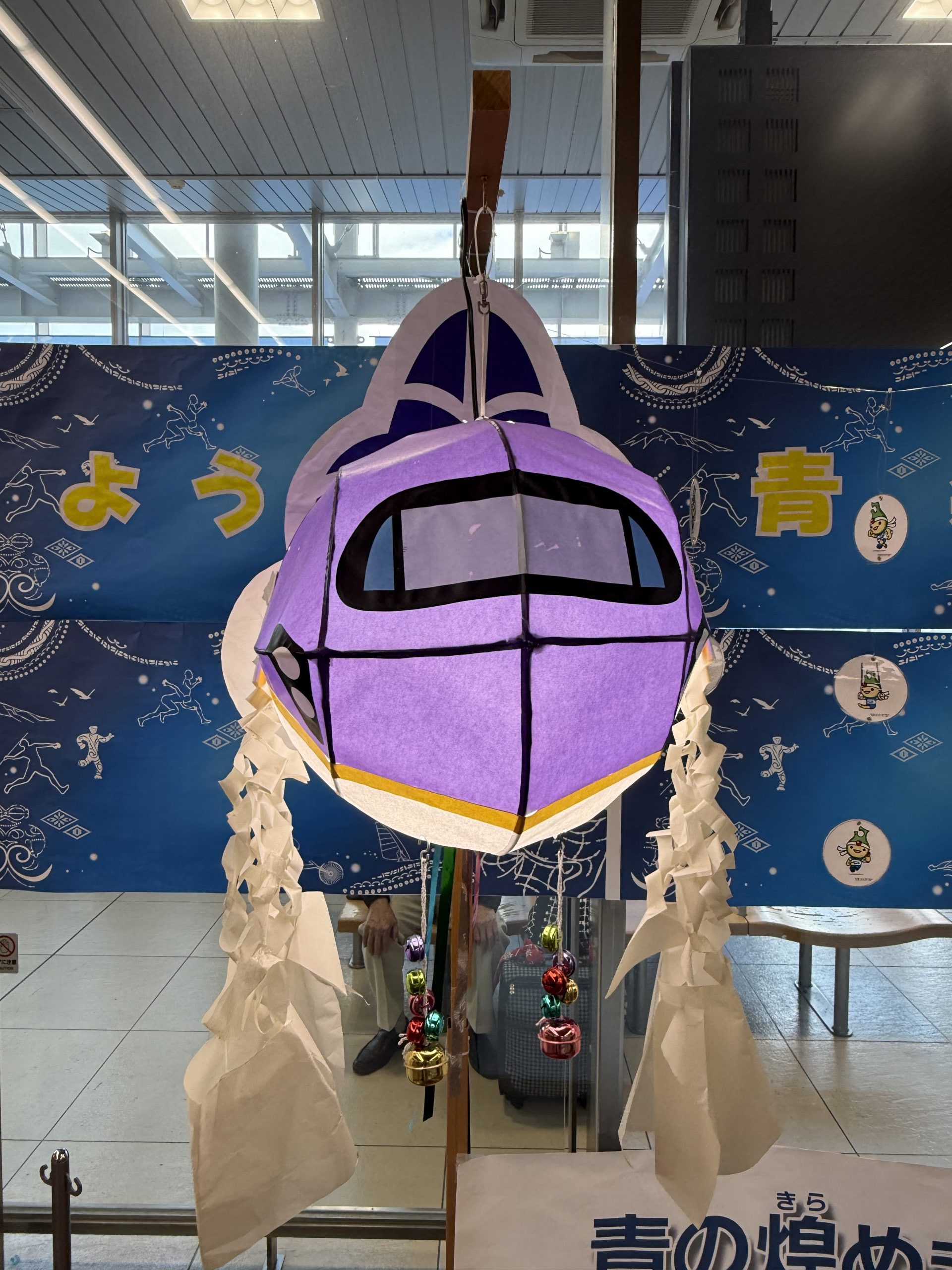
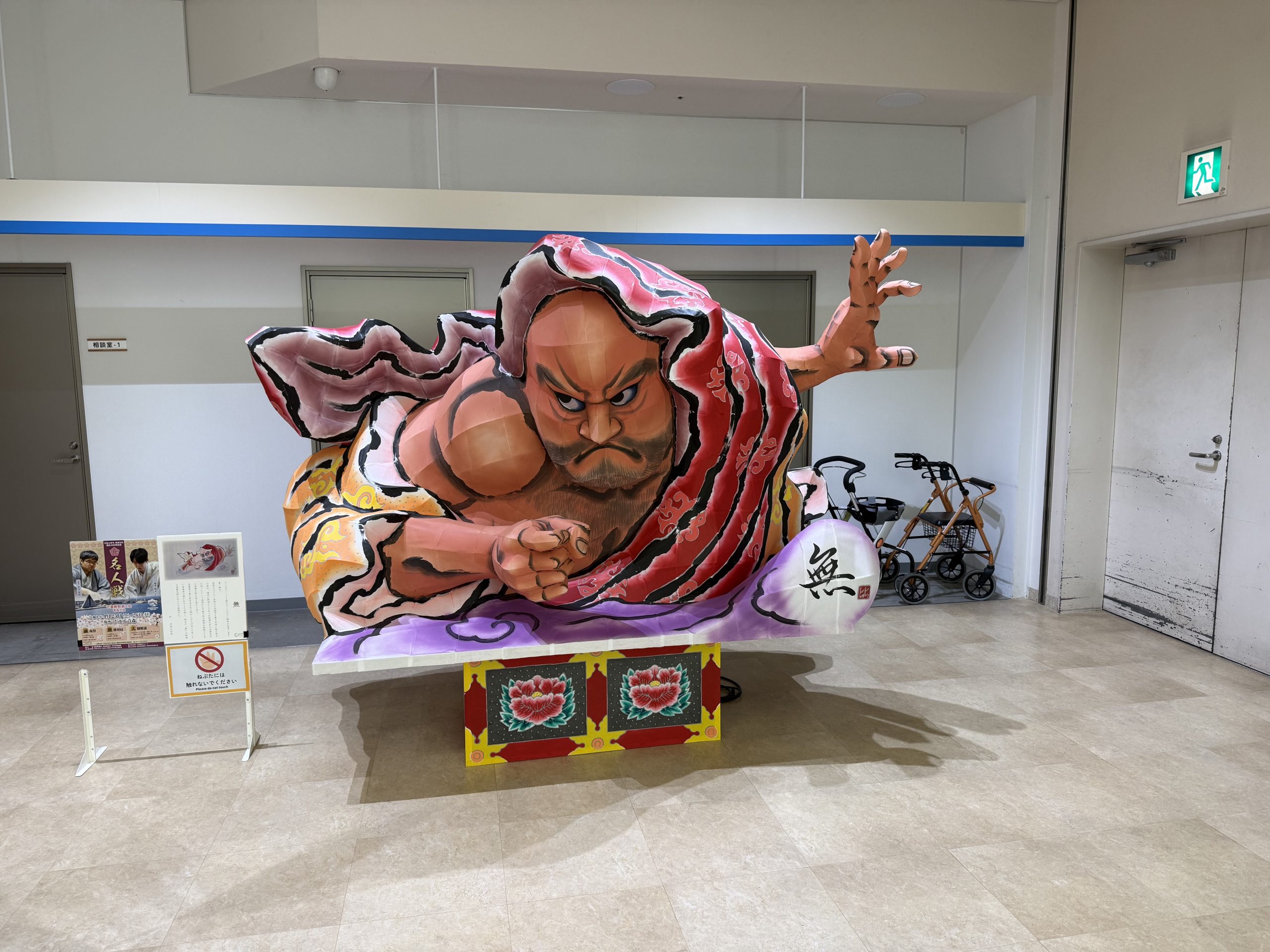
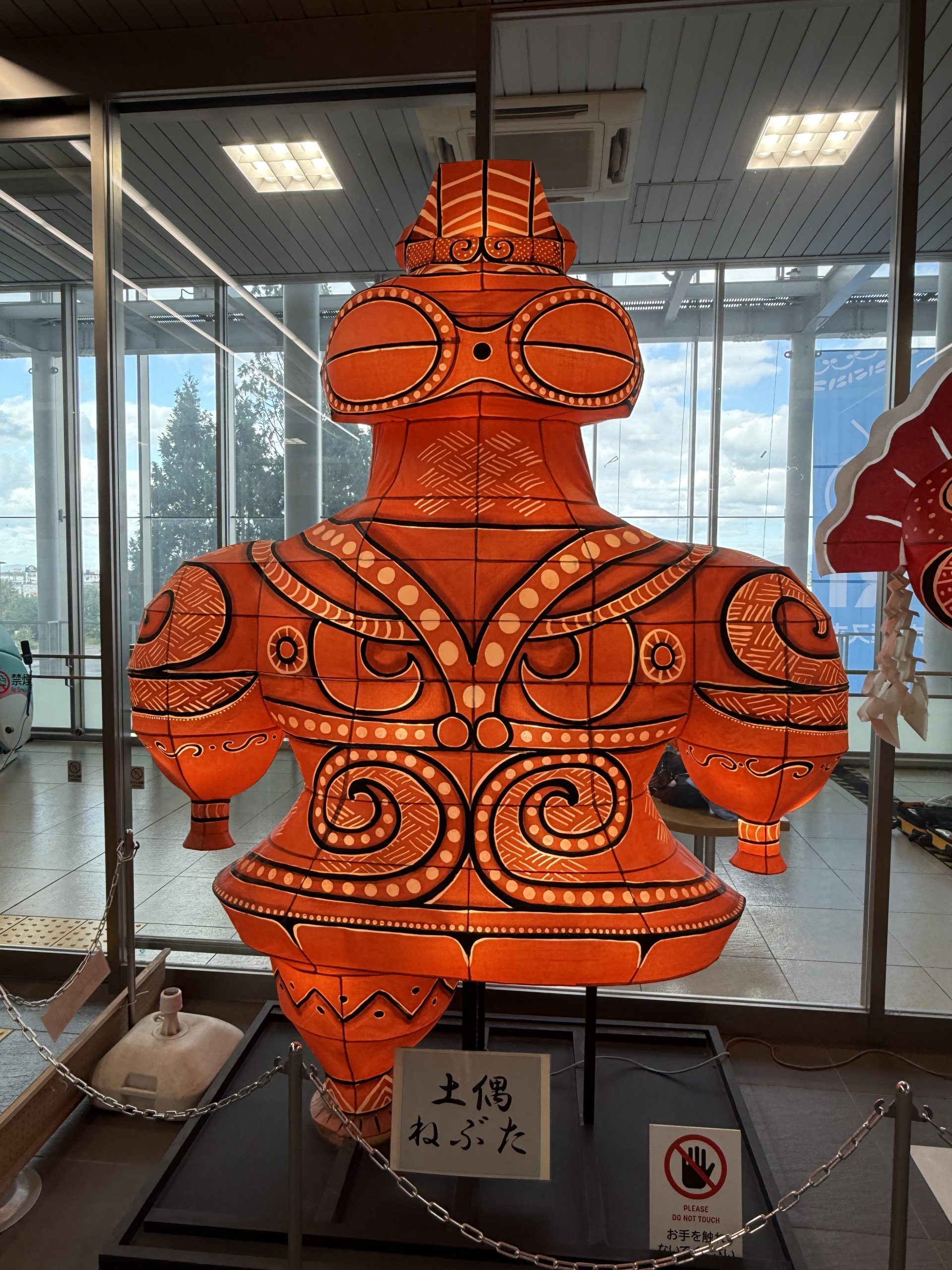
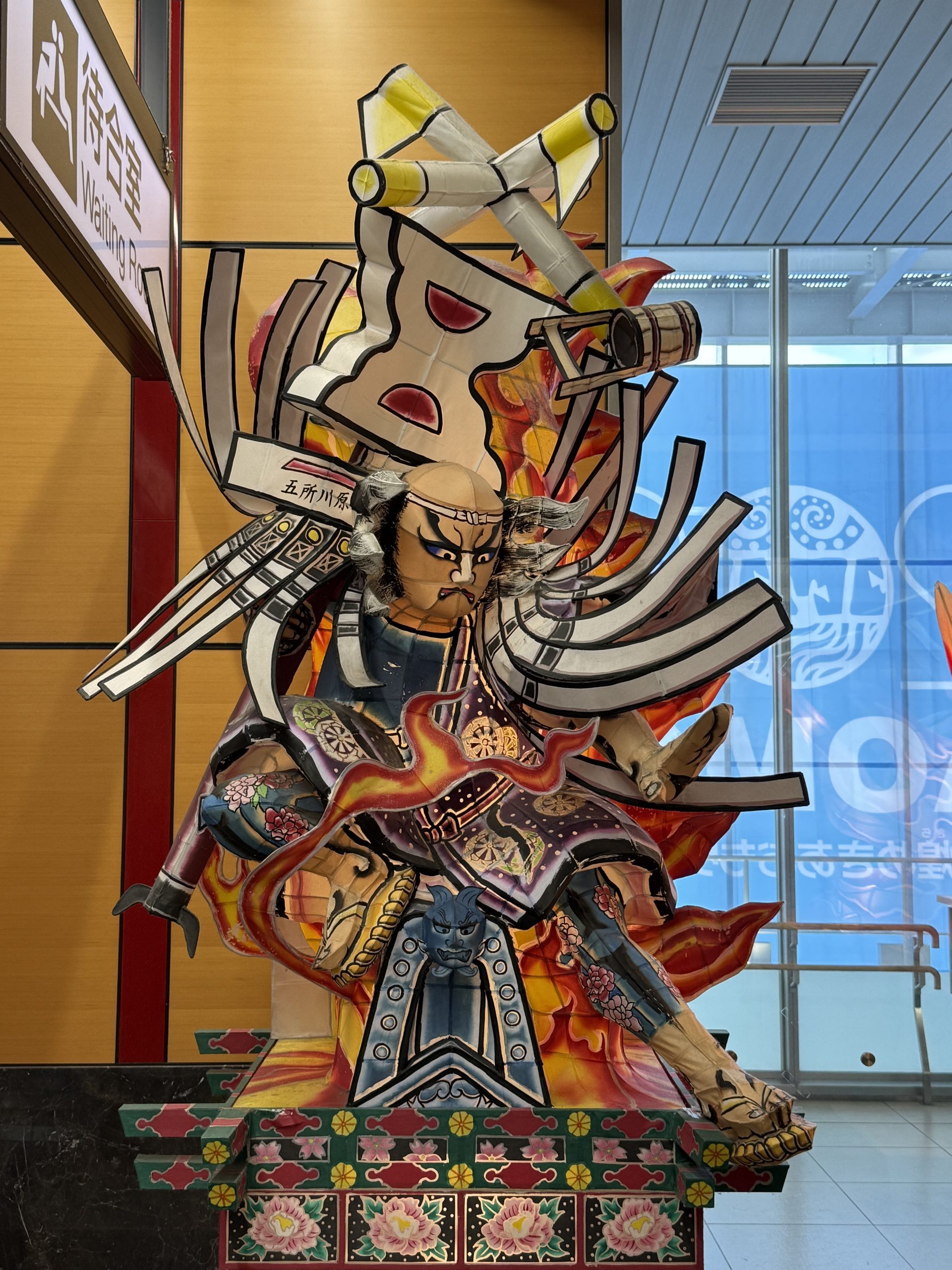
There is a tradition here of making colorful paper lanterns:
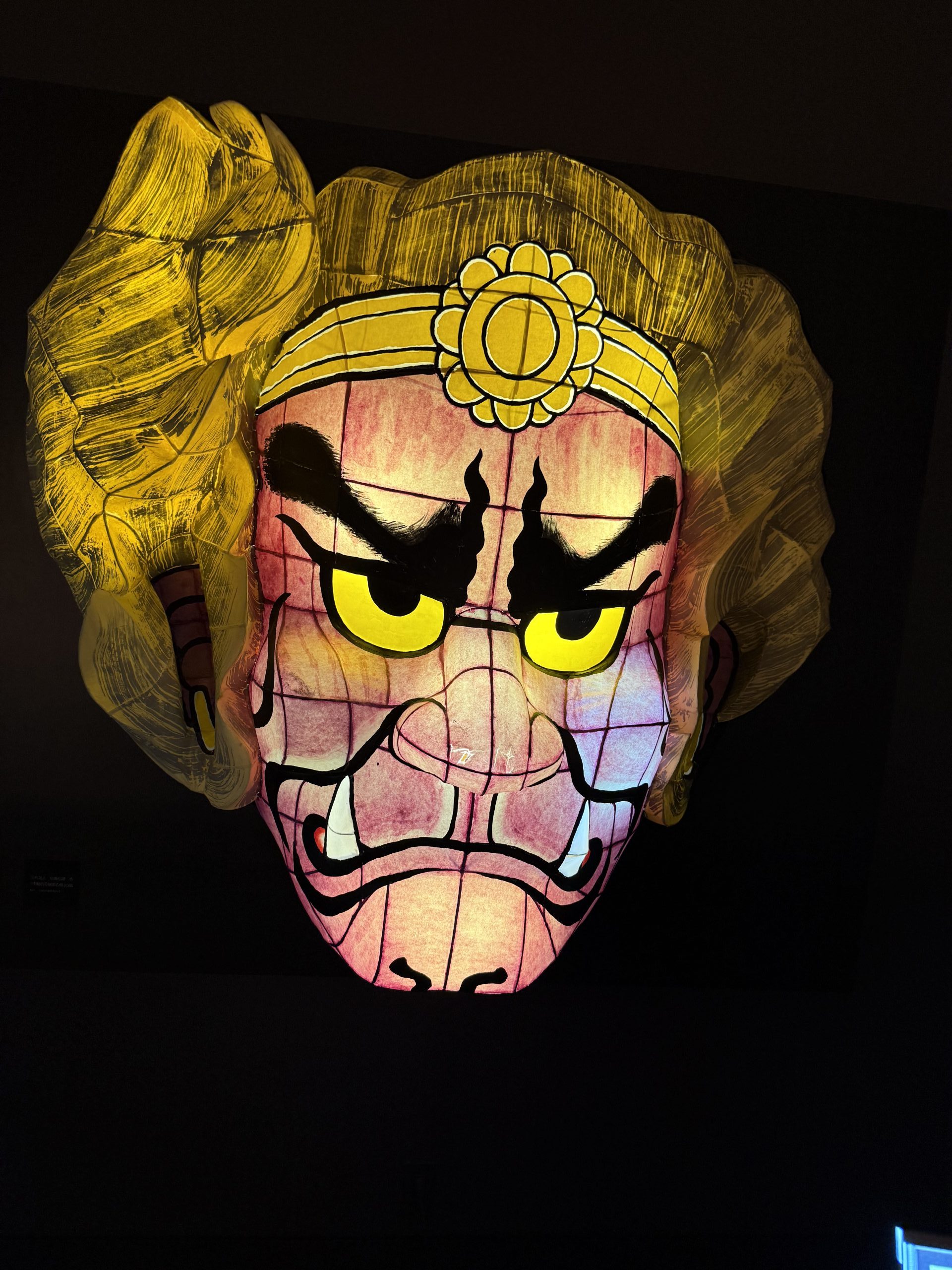
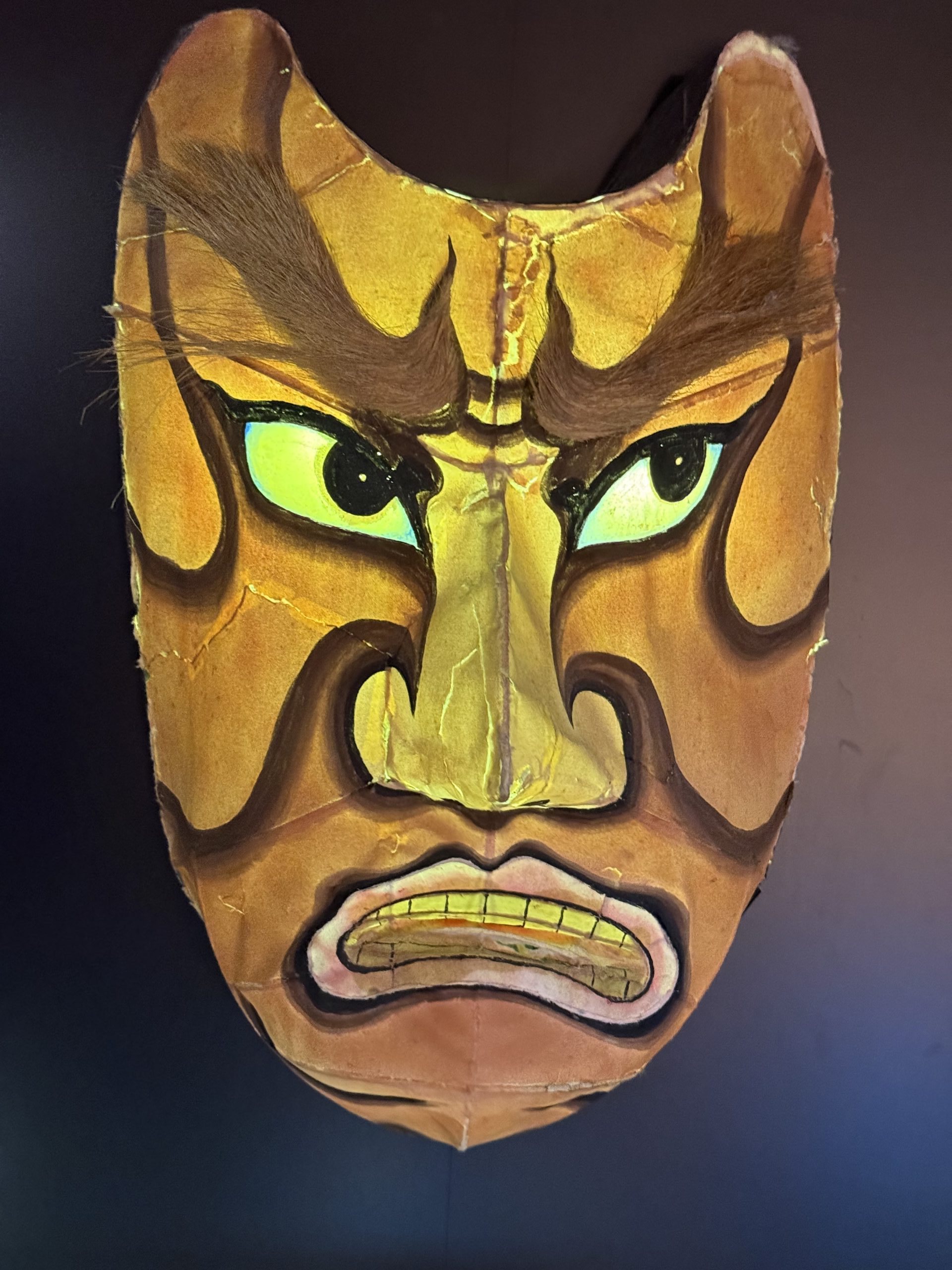
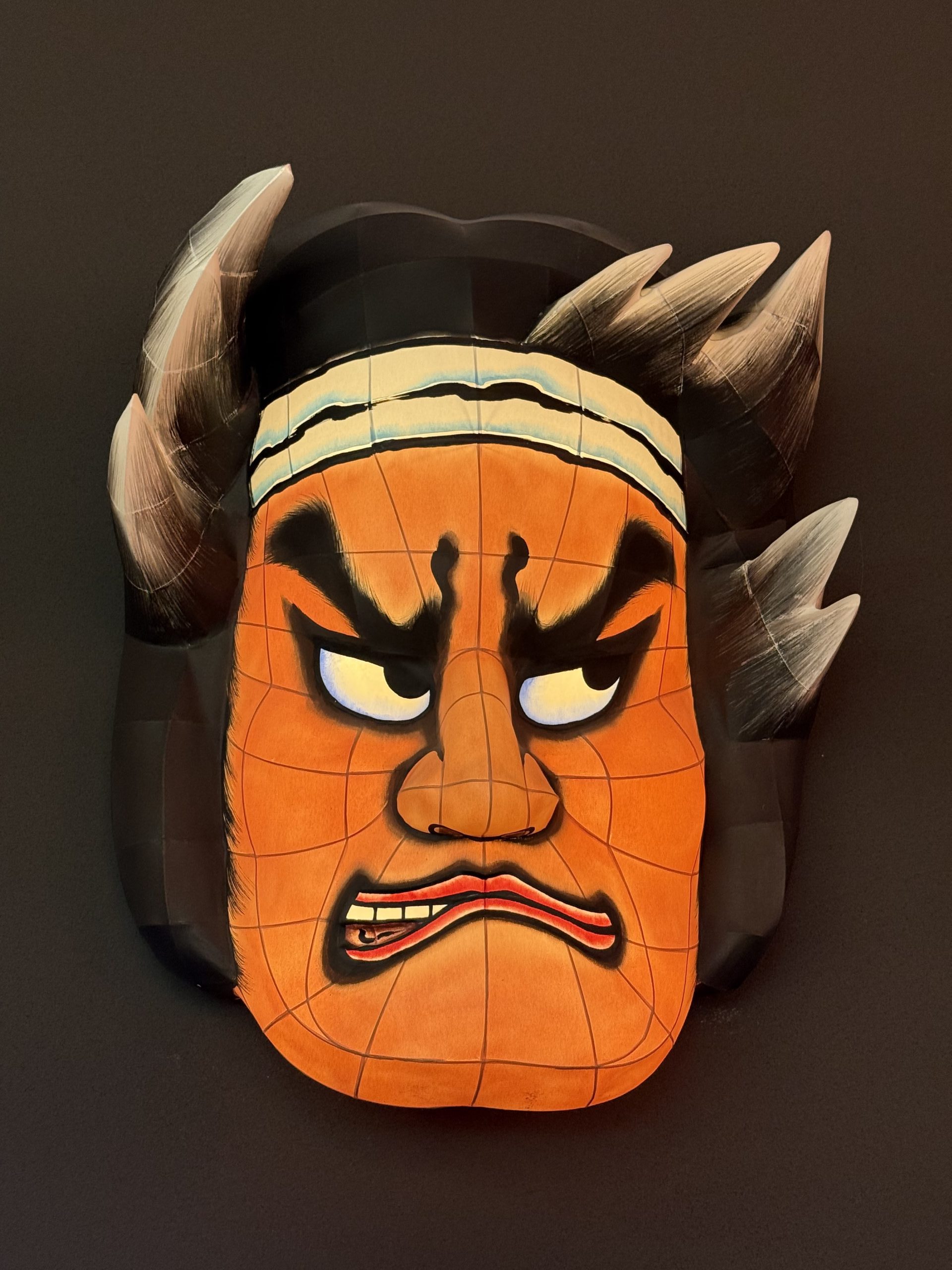
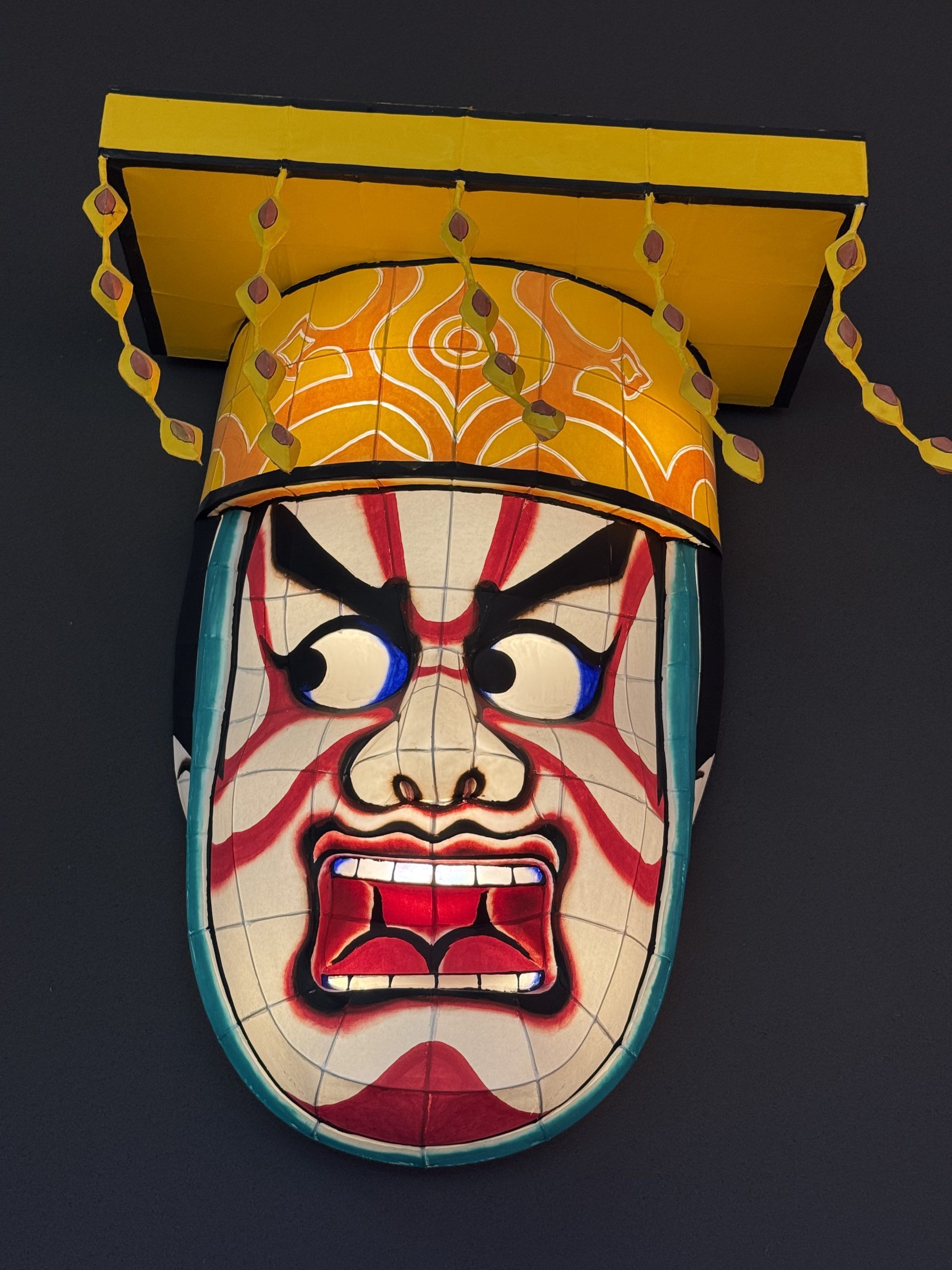
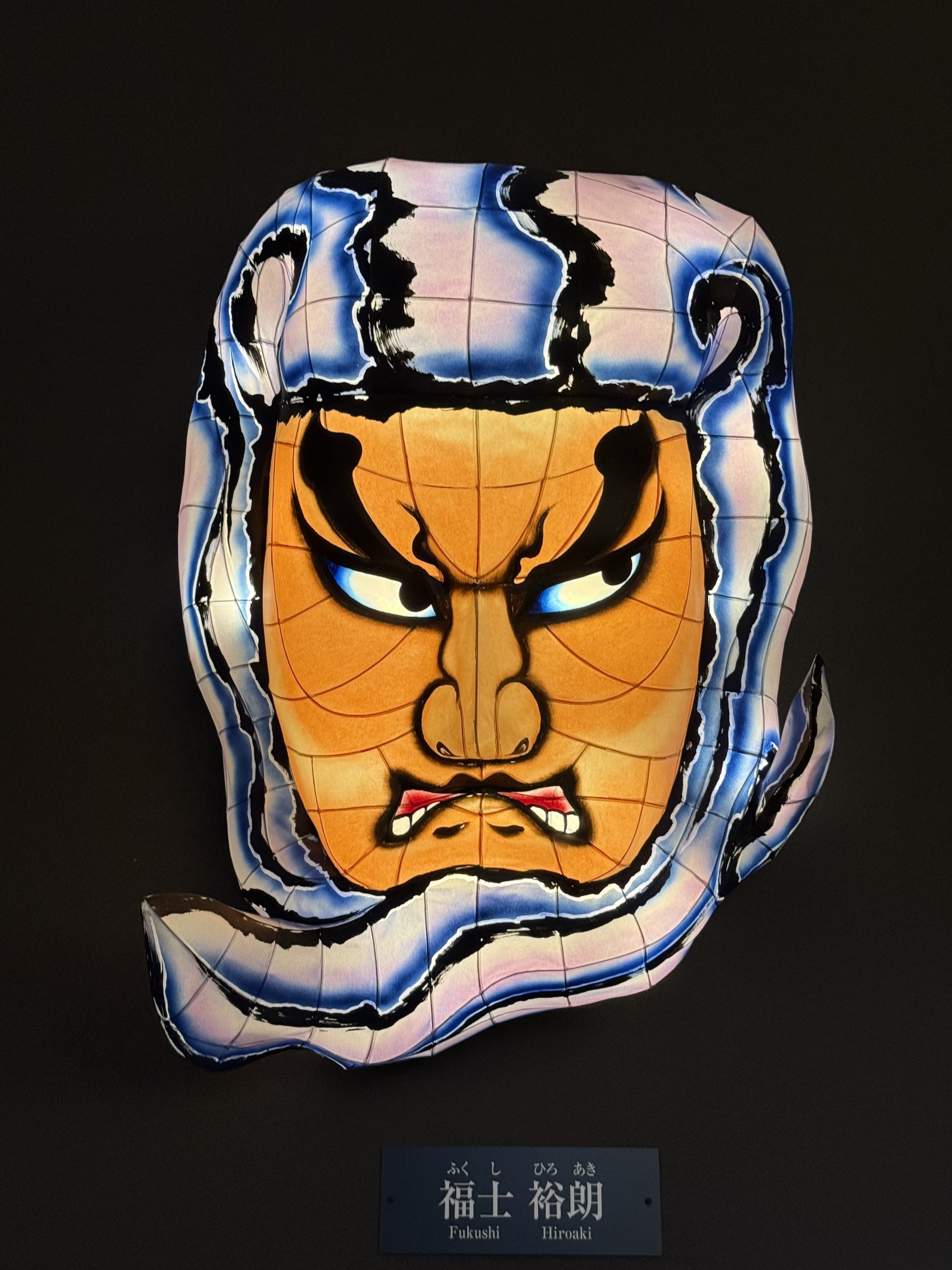
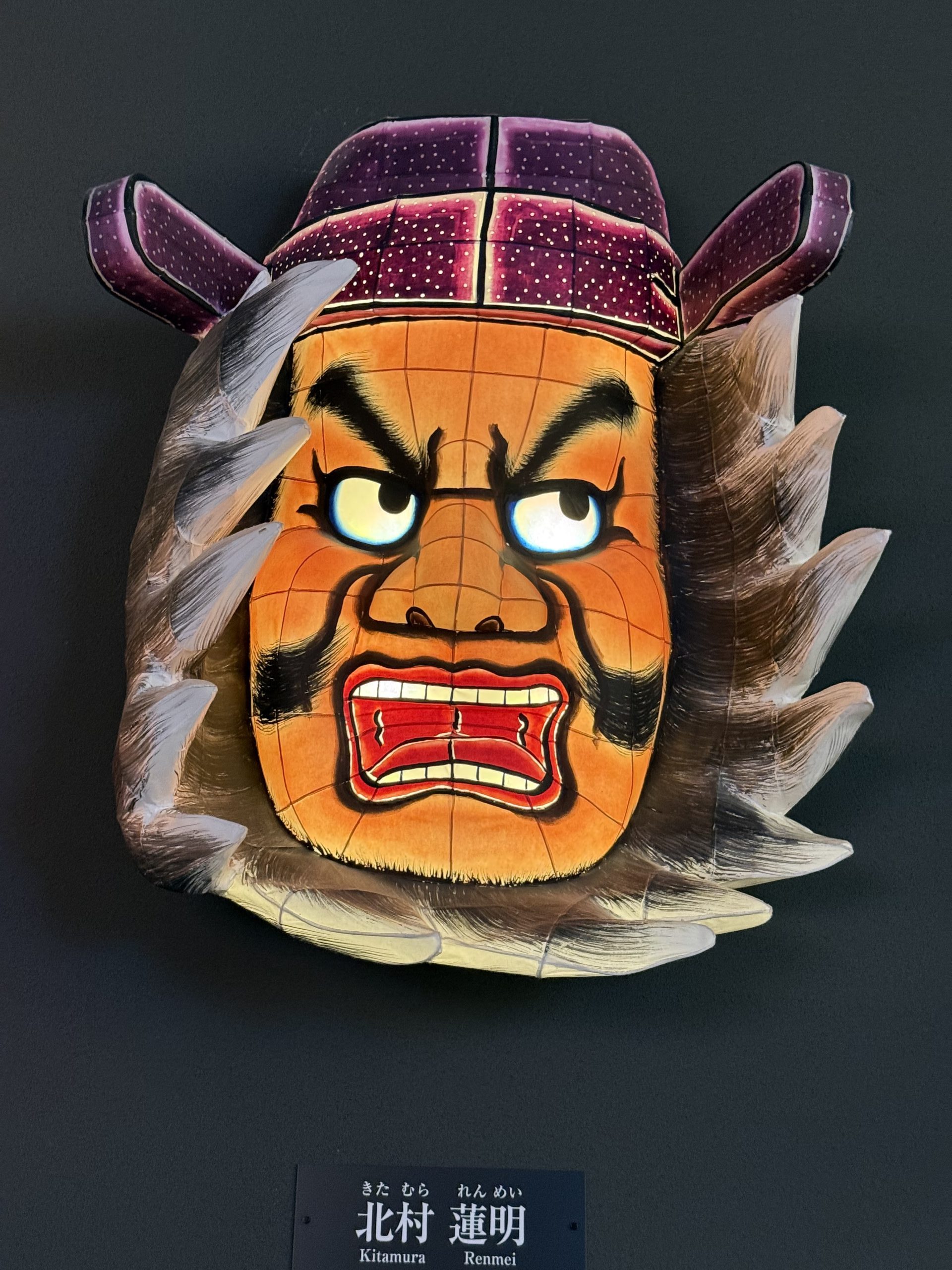
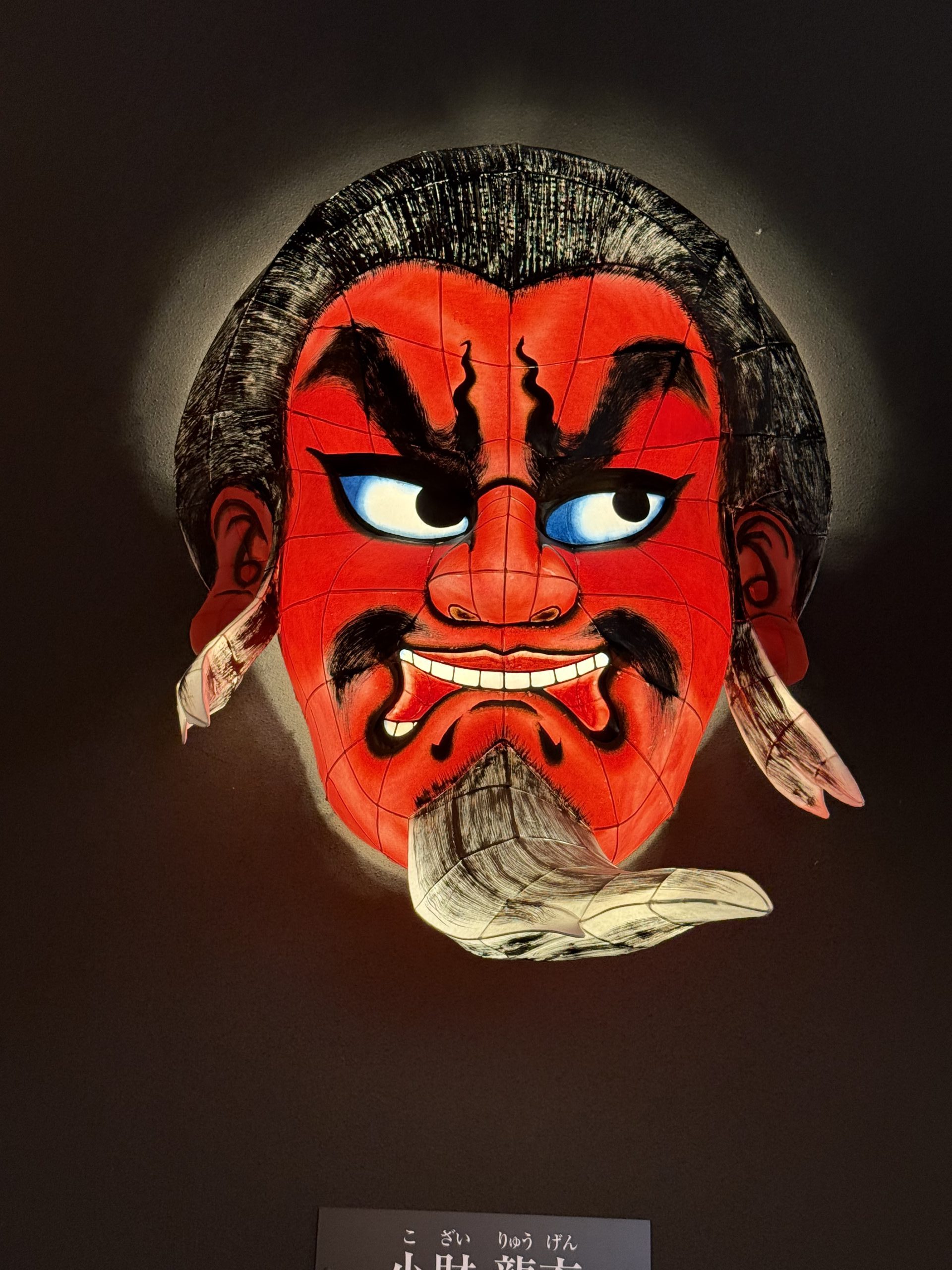
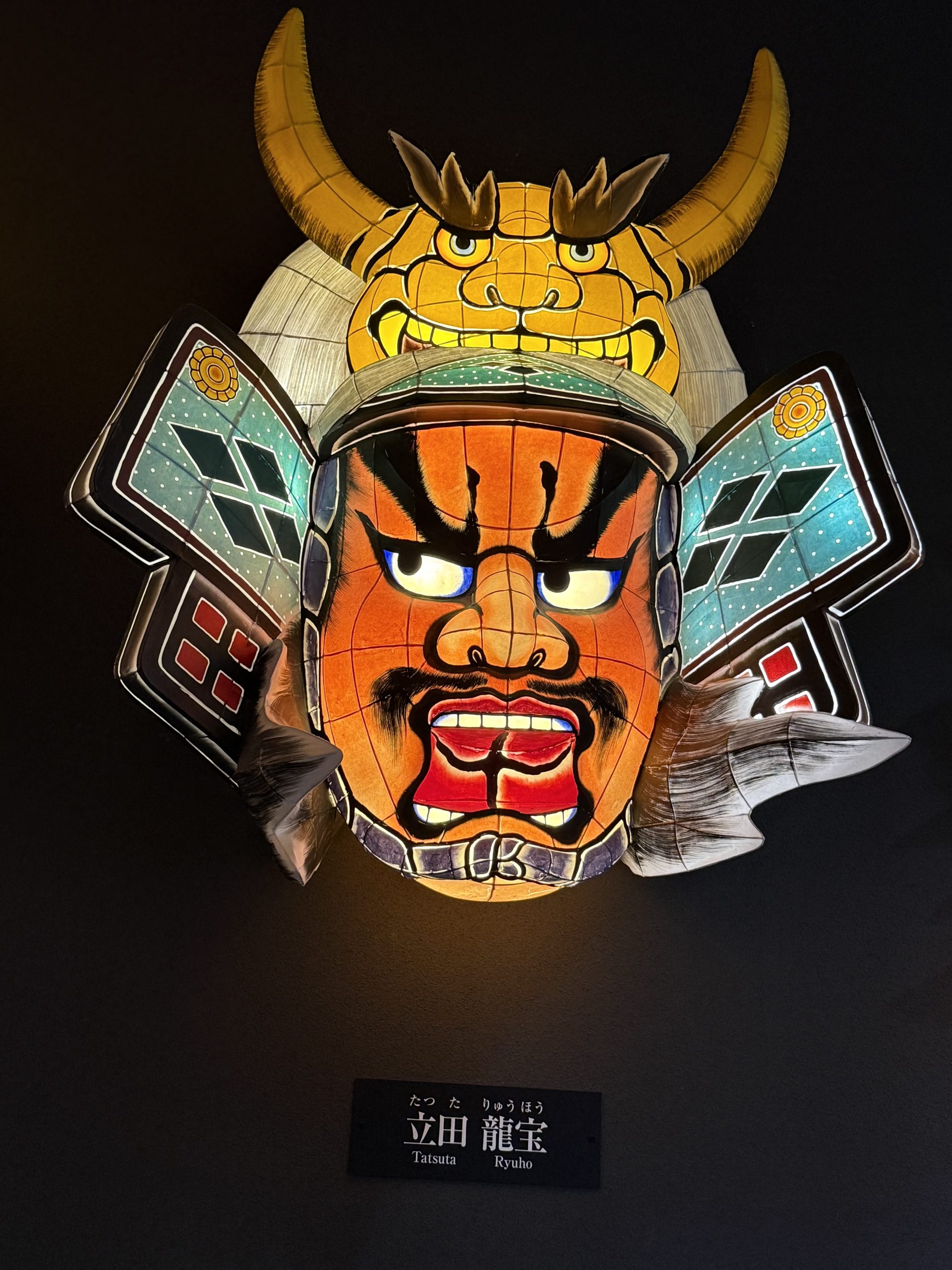
Those following this trip may be tired of my enthusiasm for onsen. Sorry. This morning, I woke early, and leaving my late-sleeping wife to sweet dreams, went to the onsen at 4:30am. It is open all night. I was the first and had it to myself.
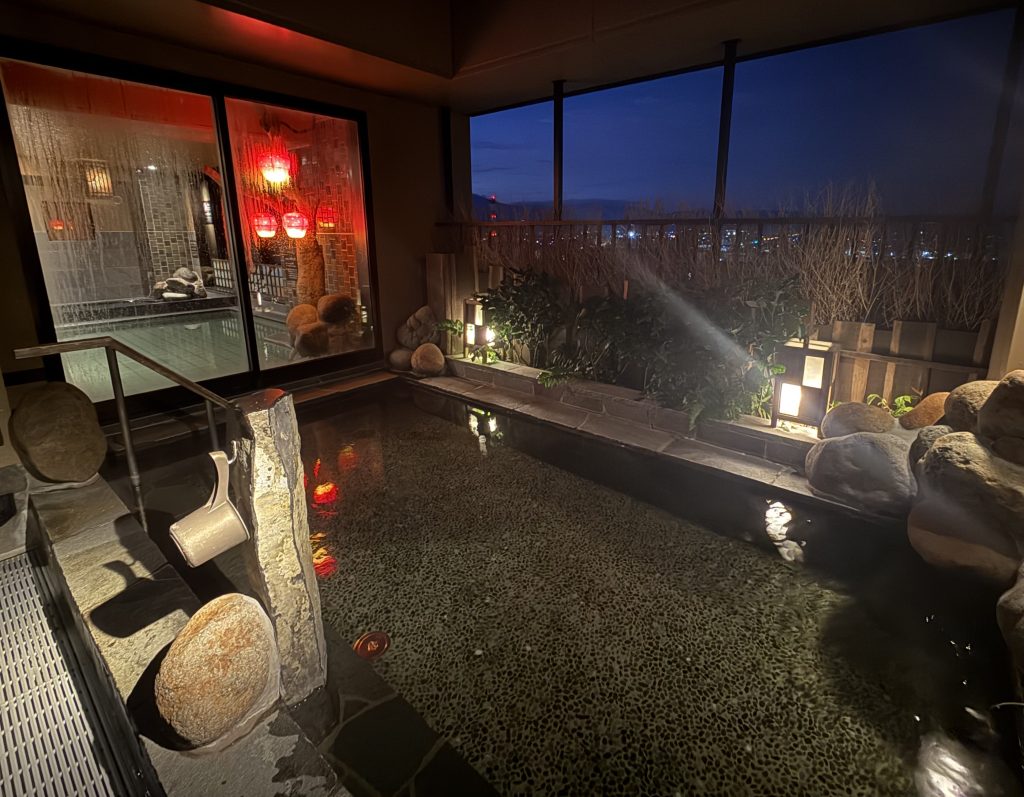
Outdoor area. Whole ceiling is open plus one wall, so the cool night breezes waft through. The water is 42-44°C (108-111°F), which is hotter than Americans are used to. I like that temperature. Soak in it till your body temperature climbs so you start sweating. Then I climbed out, and having the room to myself, did naked Tai Chi exercises while the night breeze cooled me off. Delightful! Once, in a similar Dormy onsen in Nagano in October, snowflakes drifted down around me.
From The Prophet: “…though you seek in garments the freedom of privacy you may find in them a harness and a chain. Would that you could meet the sun and the wind with more of your skin and less of your raiment. For the breath of life is in the sunlight and the hand of life is in the wind. Forget not that the earth delights to feel your bare feet and the winds long to play with your hair.”
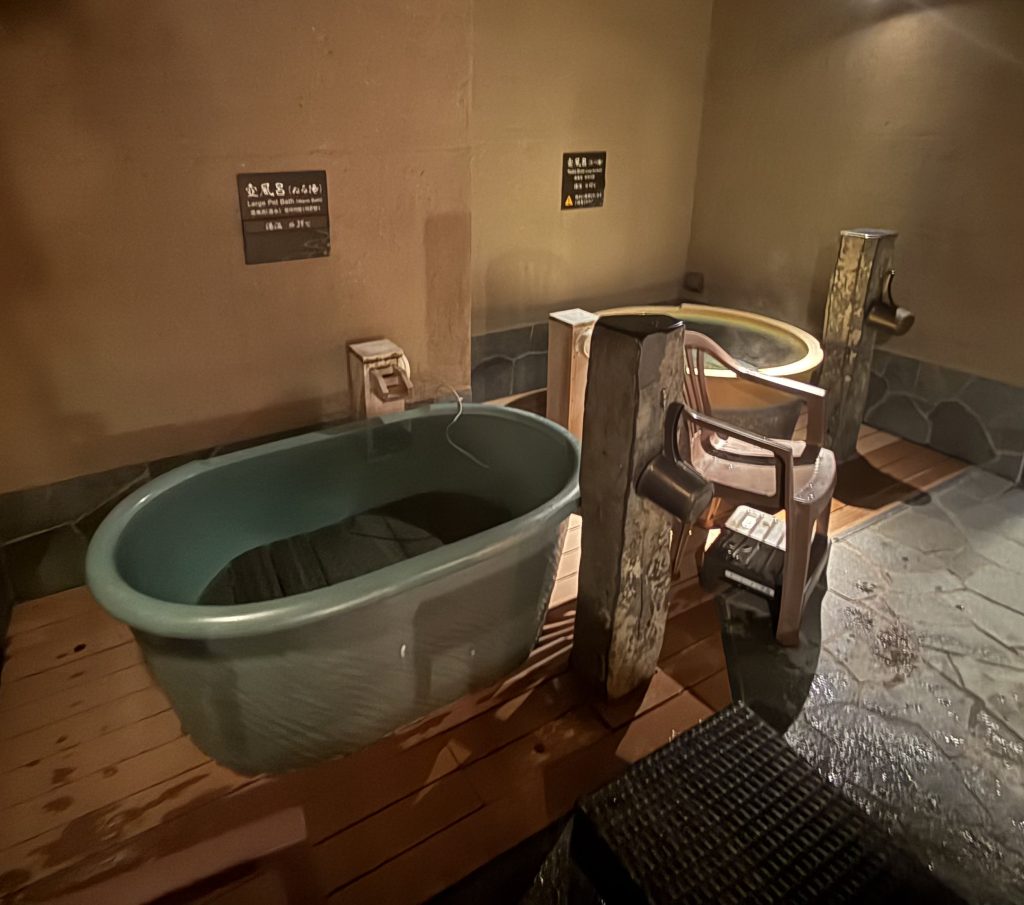
On the other side of the outdoor area, you can choose to soak in these tubs, which are popular.
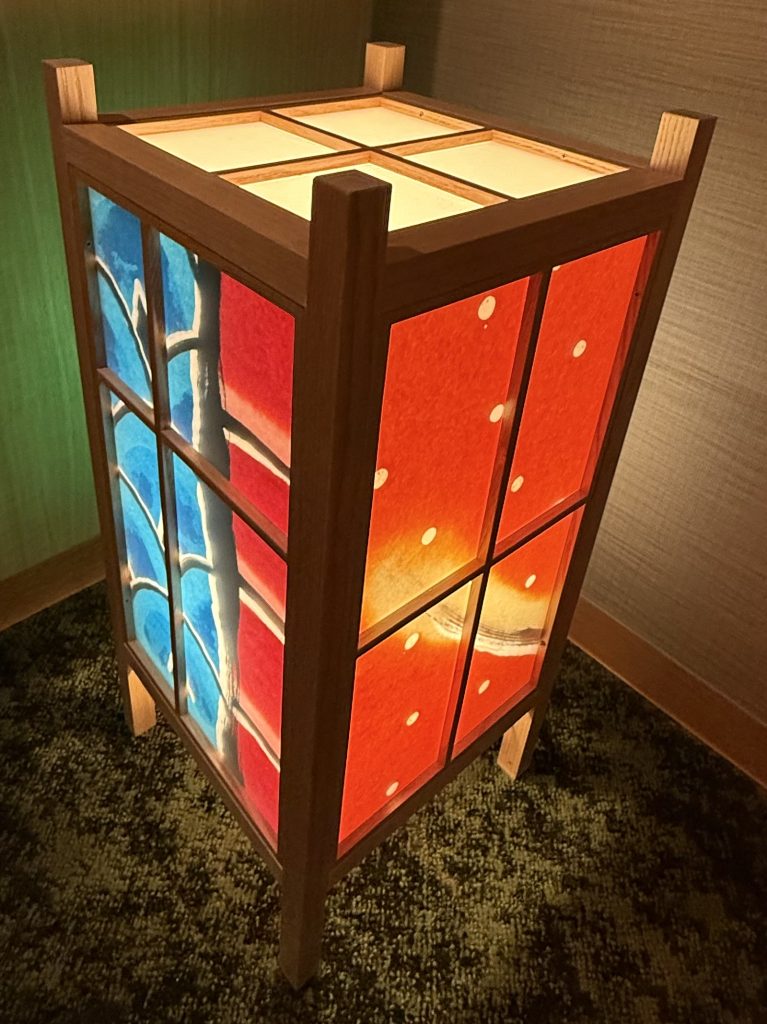
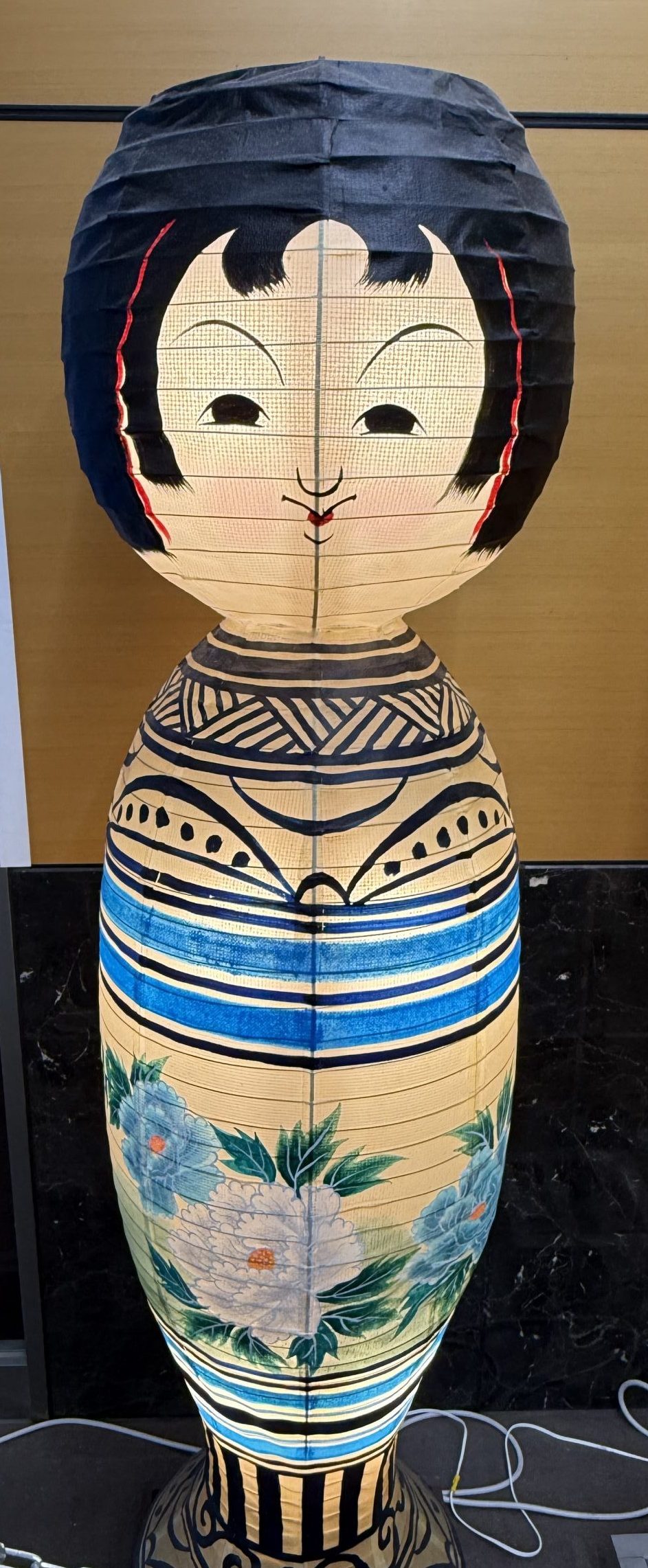
A lamp in the colorful style of the paper lanterns. I want one!
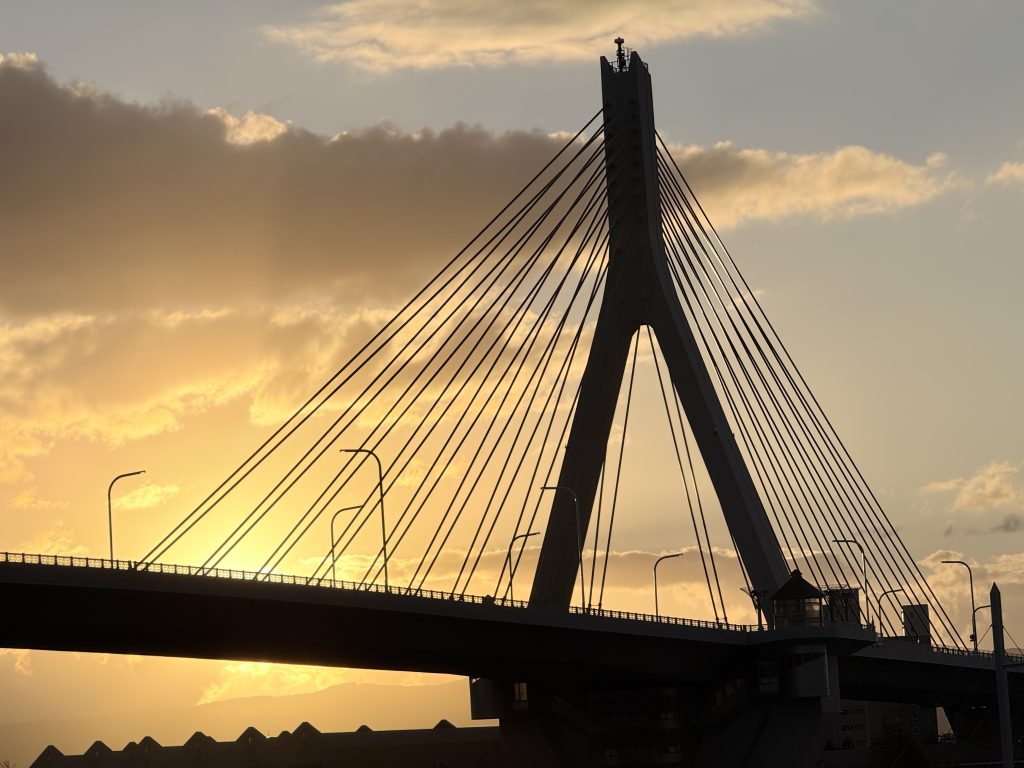
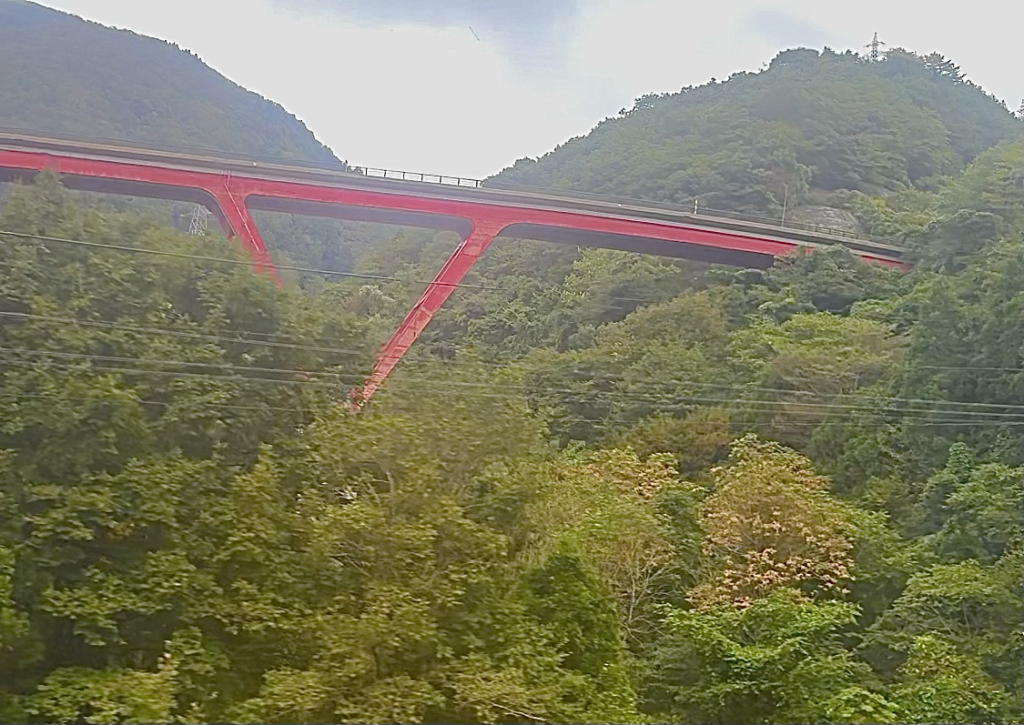
Today, we head up into the central mountains of northern Honshu island via the Akita Shinkansen, to Kakunodate, visit the Samurai village area there, and on to Kayokan Onsen for the night. Elegant road bridge!
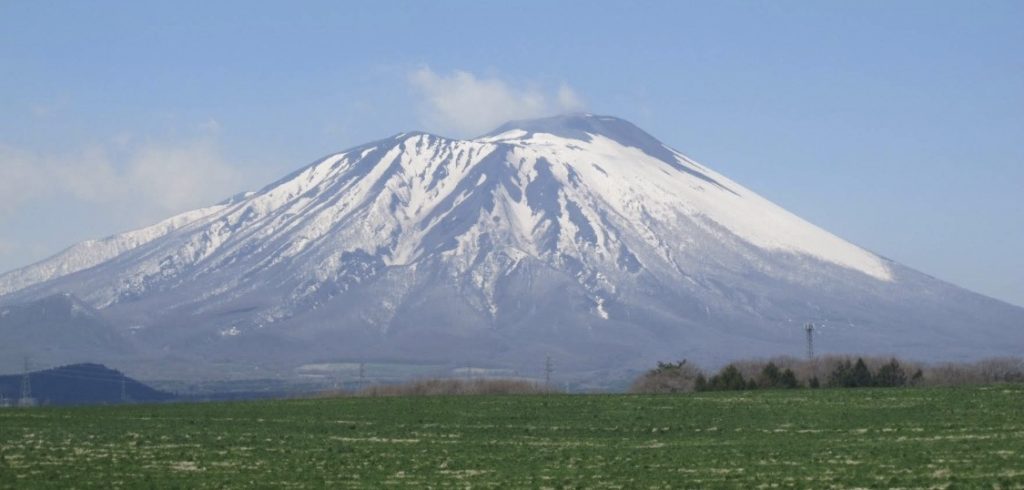
Volcano Mount Iwate, which we passed (in the winter, not my picture).
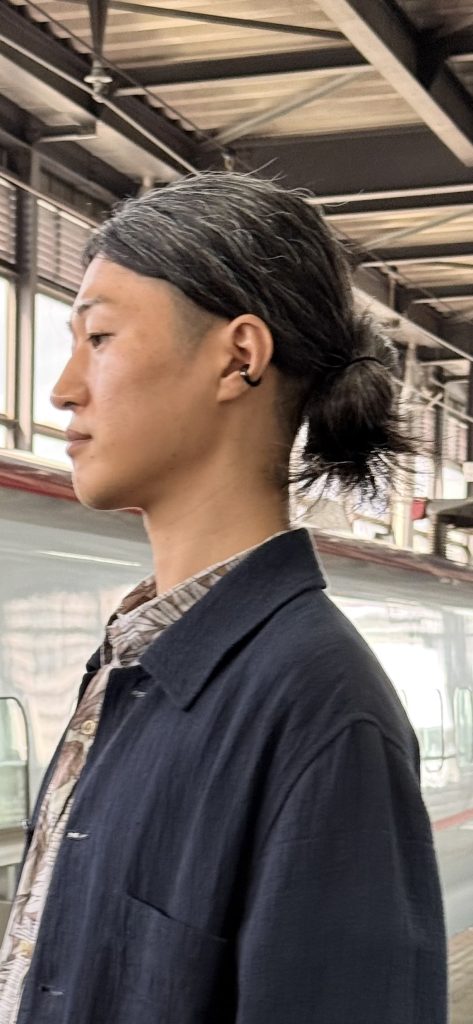
Waiting for Shinkansen, a fellow Japanese passenger with a youthful Asian face, belied by his grey-streaked hair, tied up in a traditional knot, meaning he’s probably in his 50s
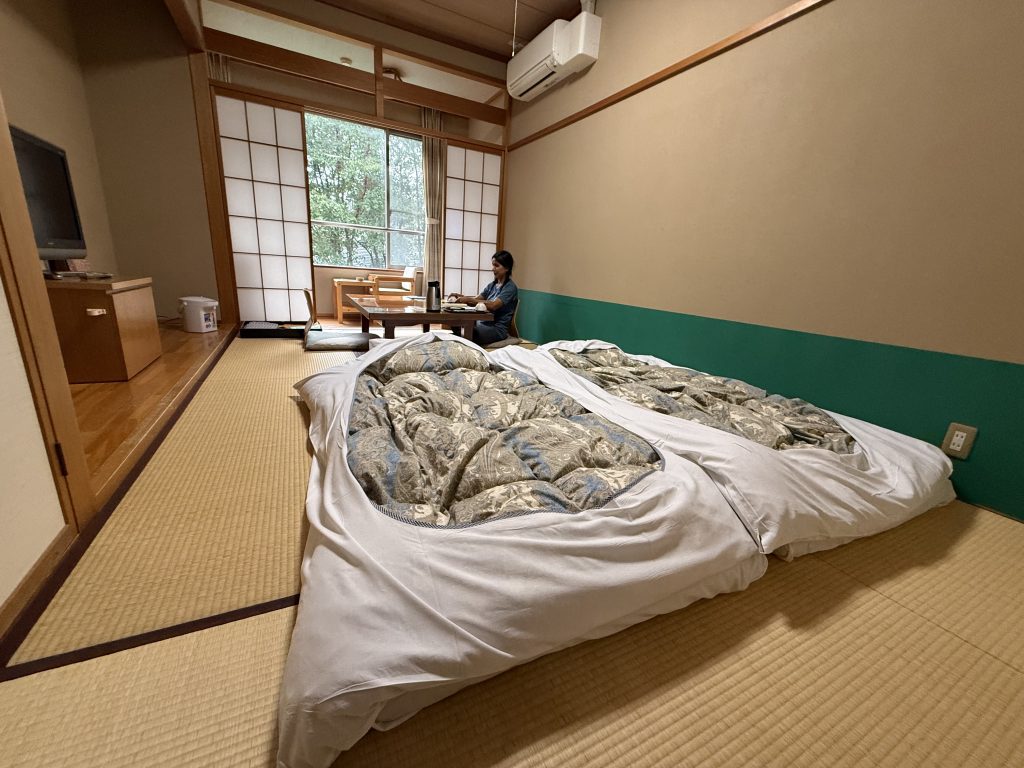
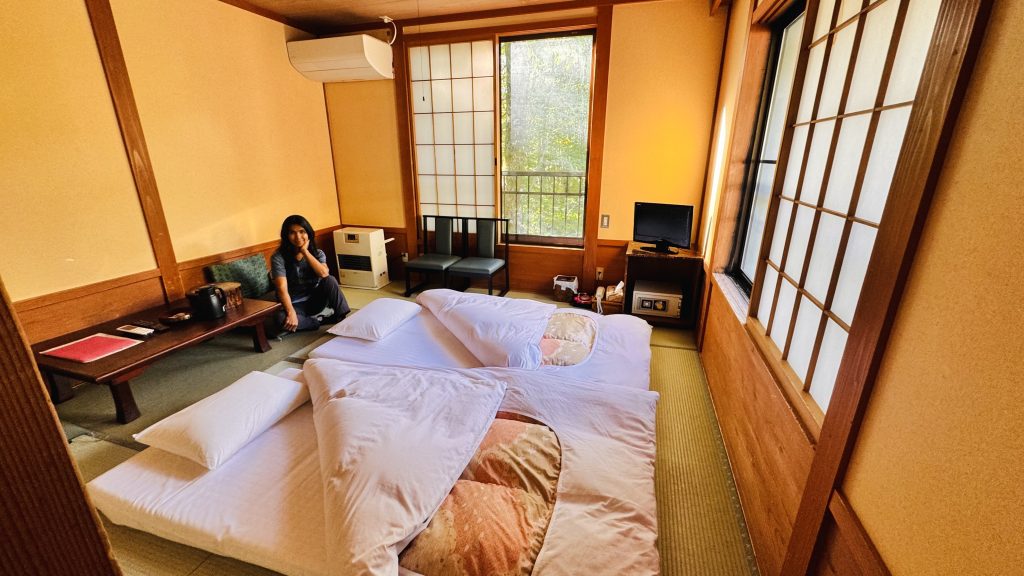
Tonight, we stay in a Japanese tatami room with futons:
Today, we go to a cluster of seven northern Honshu mountain onsen I have visited before: Nyuto Onsenkyo hot spring village.
As taking pictures is discouraged, I may need to use some photos of these lovely rotenburo (outdoor hot springs) gotten online. Showers yesterday and today. Onsen are at their most attractive in cool weather like this. I’m enjoying resuming my daily Tai Chi exercises in the cool air after heating up in the onsen pools.
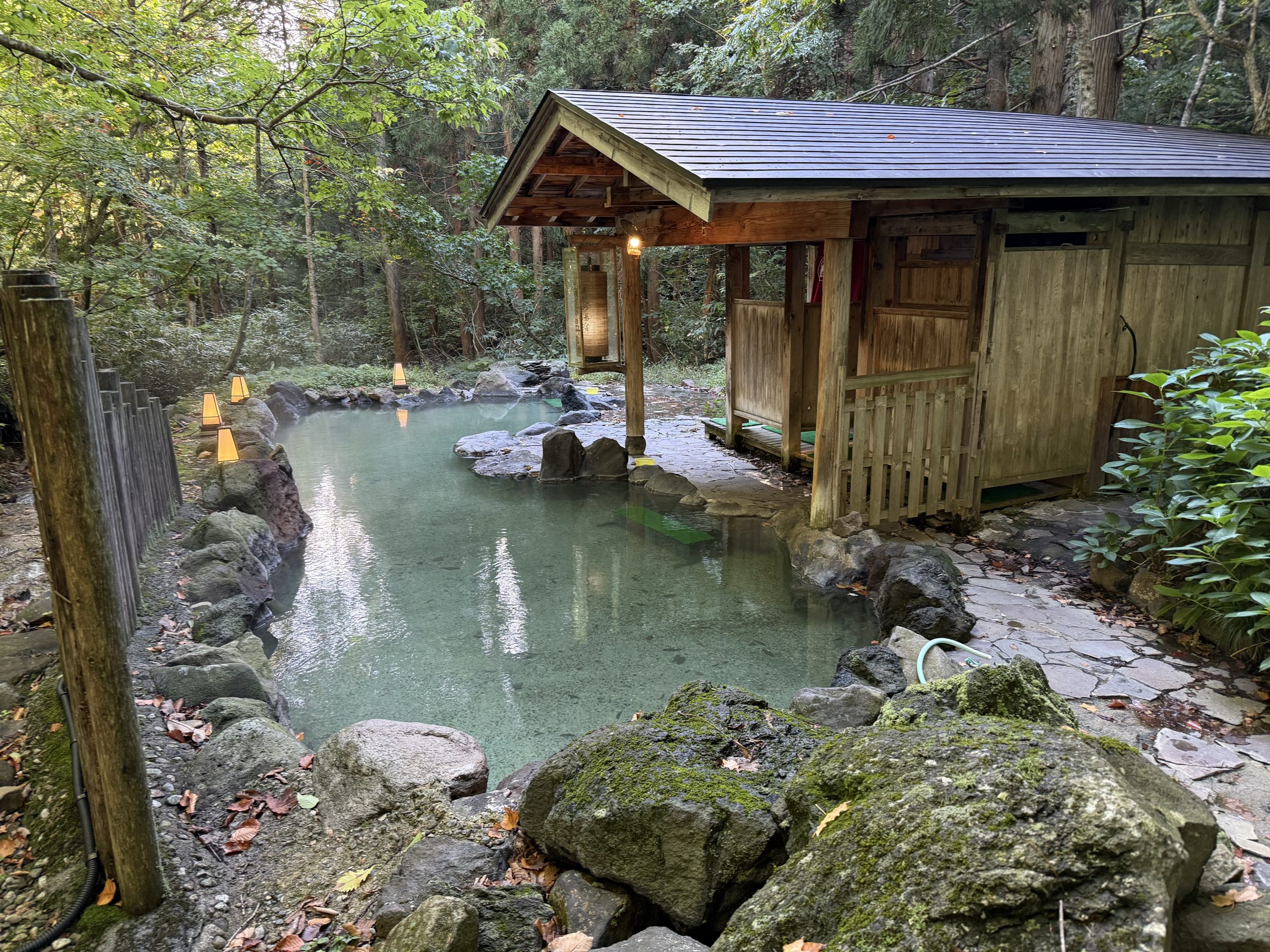
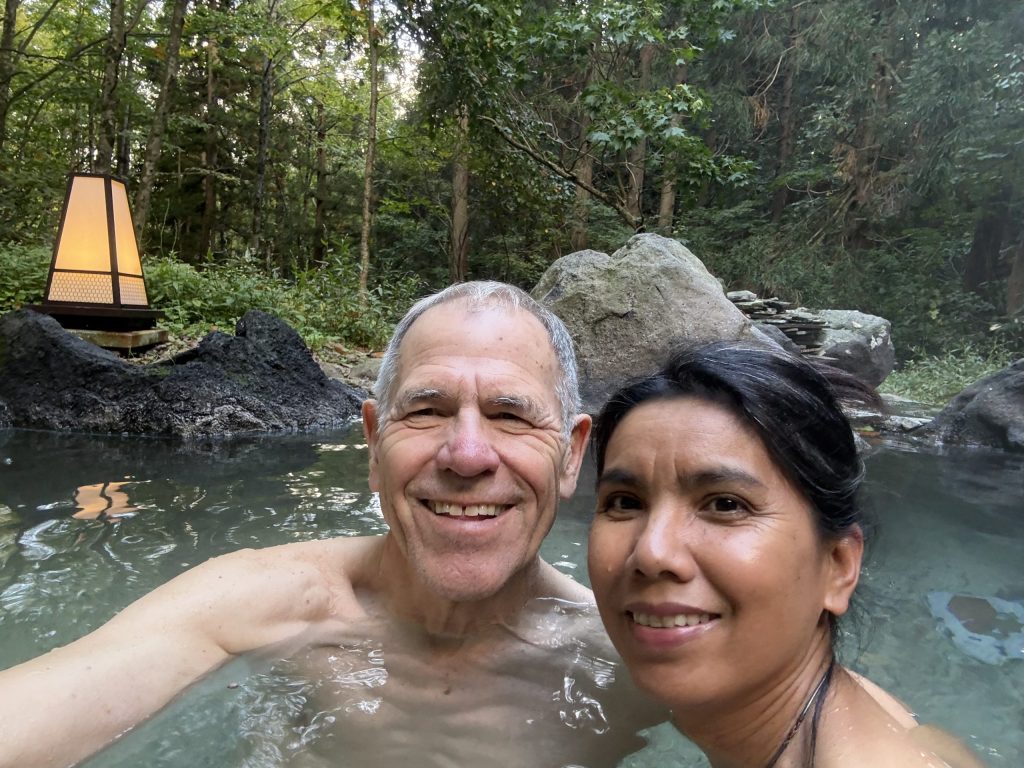
Today, I took this picture. One of my favorite simple natural rotenburo, at Ganiba Onsen site. It is a ‘mixed onsen’, meaning both men and women can bathe together most of the day, though it is for women only for an hour in the evening. As no people were around, Pin was willing to try it together. She loved it. An ample supply of natural hot water flows in from the nearby hillside maintaining a very warm temperature of about 44°C.
You purchase a shuttle bus pass that includes entry to all of the onsen. You might call it an ‘onsen tasting pass’. We’ve tried three today, the rest tomorrow.
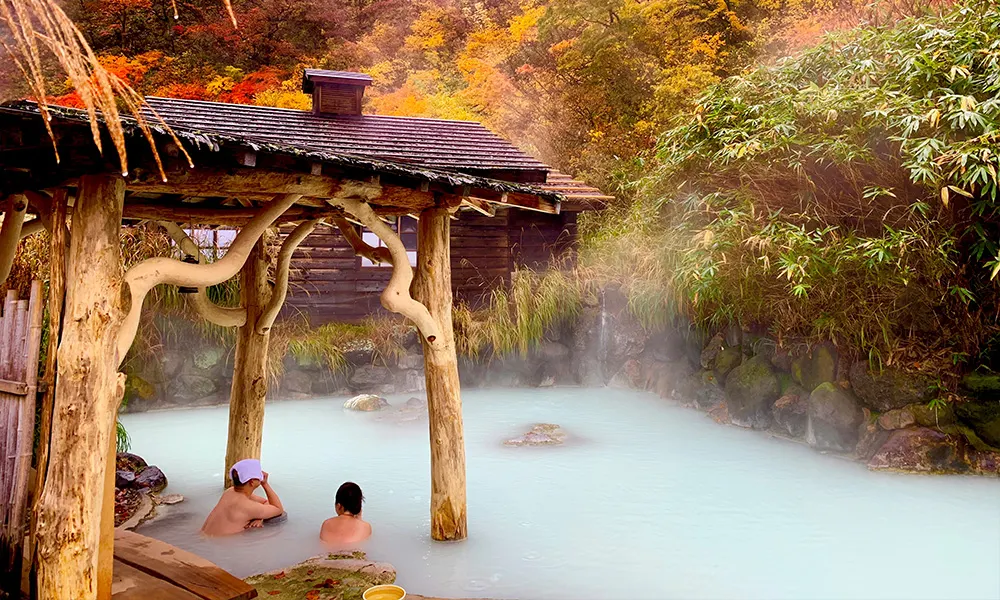
Tsurunoyu Onsen began about 450 years ago, and was popular with Samurai warlords. I stayed here during a previous visit to Japan. This is their famous ‘mixed bath’ pool (men and women together). The men and women wash and prepare in their own area, and walk out in a water ‘canal’ connection, with the milky water providing modesty. The bottom is lined with smooth stones, and the hot springs water bubbles up through them. We’ll take the shuttle bus over there tomorrow.
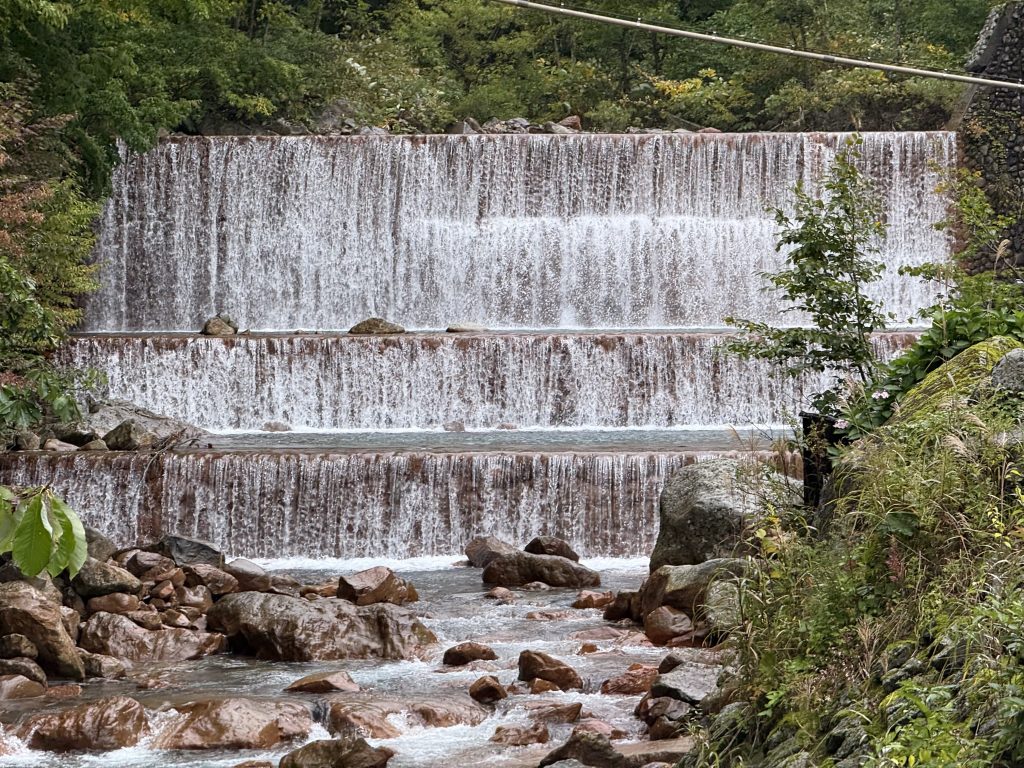
Taynoyu Onsen looks out on this waterfall from the onsen pools. Kyukamura onsen has an outdoor pool surrounded by 30 meter tall beech trees.
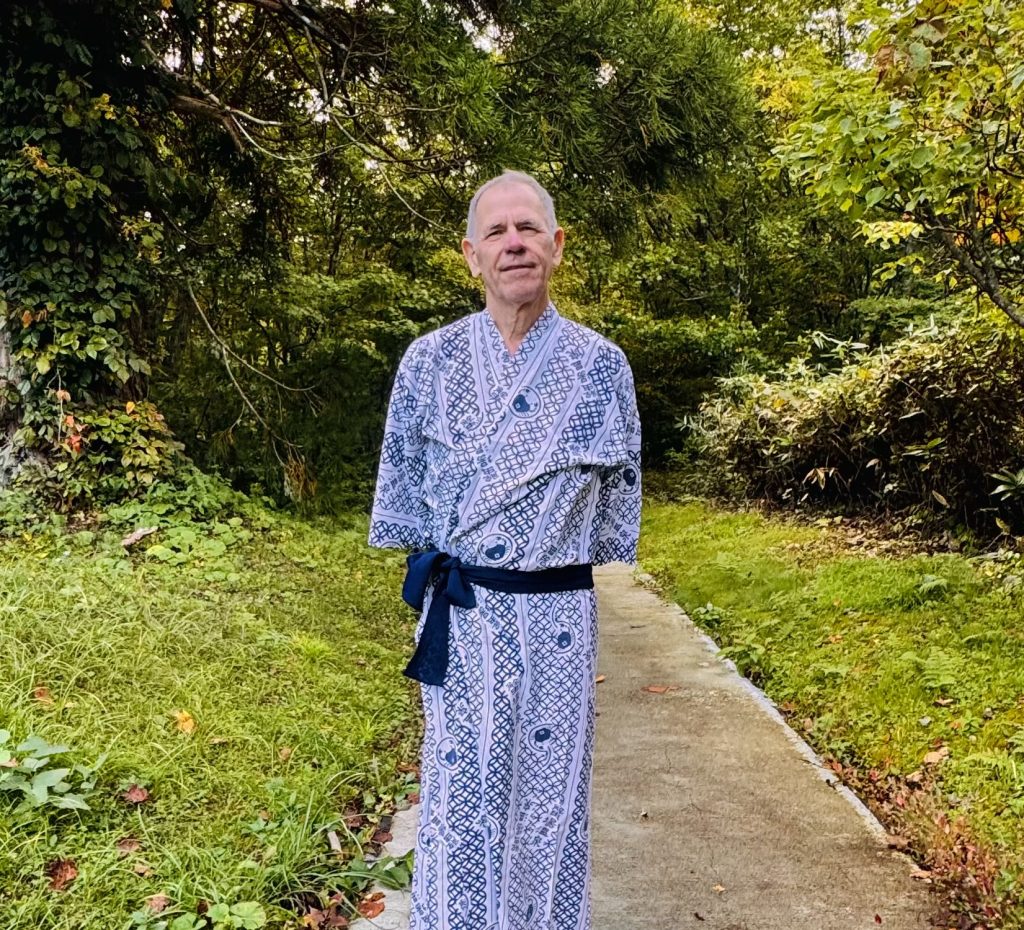
Ganiba Onsen is a ryokan, which is more than a hotel. It includes traditional Japanese breakfasts and dinners, as well as four onsen pools of its own. You dress in a ‘yukata’, a lightweight cotton robe that can be worn anywhere around the grounds, even to meals.
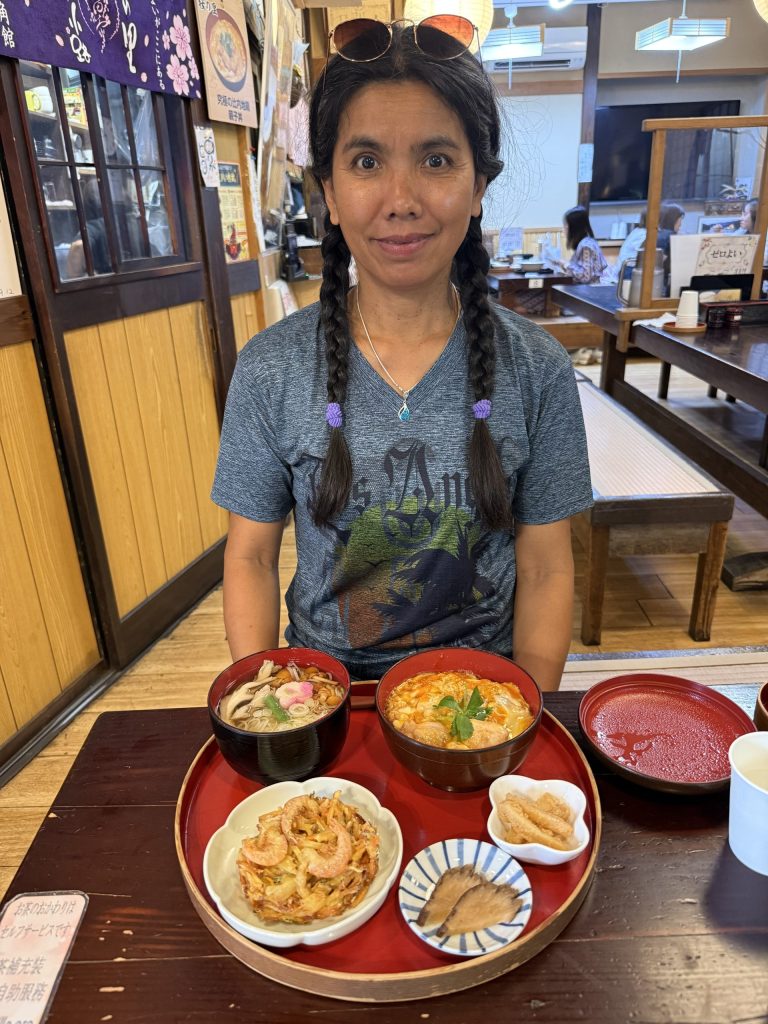
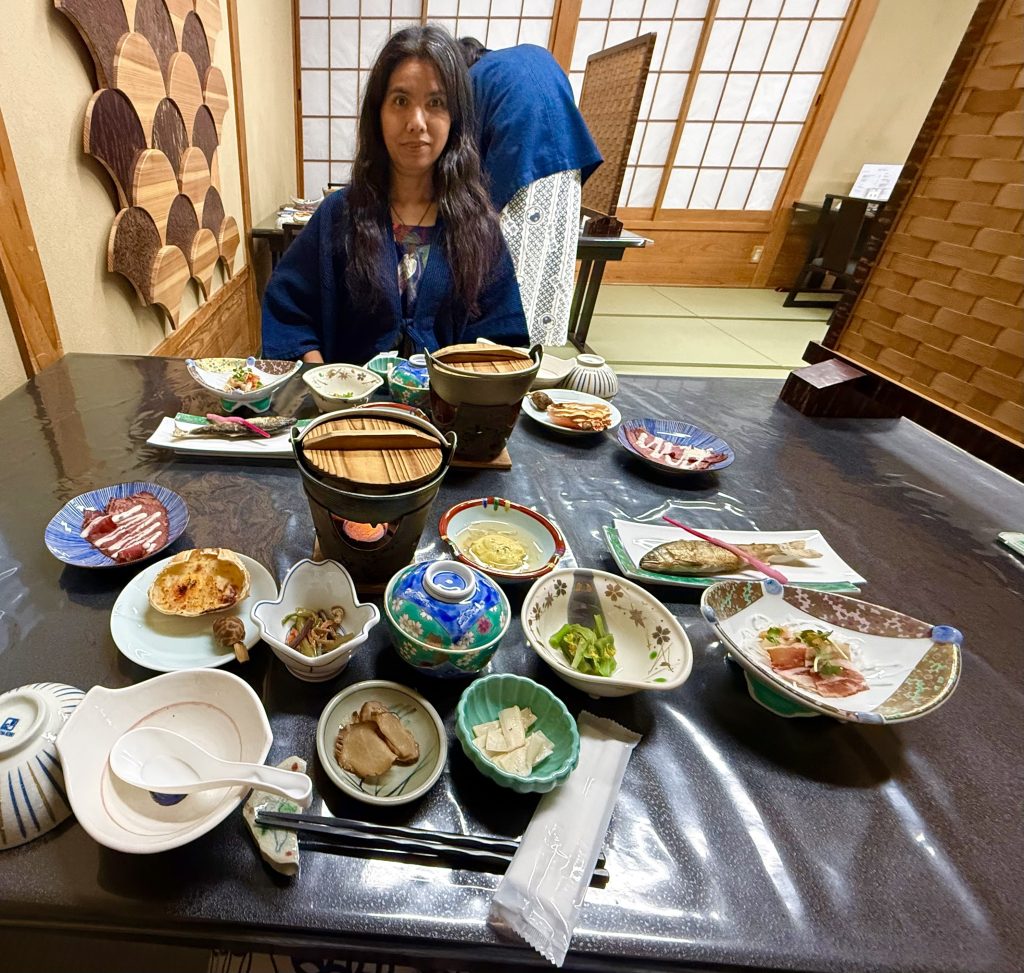
Dinner is ‘Kaiseki’, an elaborate multicourse meal. Breakfasts have a smaller assortment of dishes. No coffee, it’s not traditional. I like my morning coffee, so we brought some along and have it in our room using the hot tea water thermos.
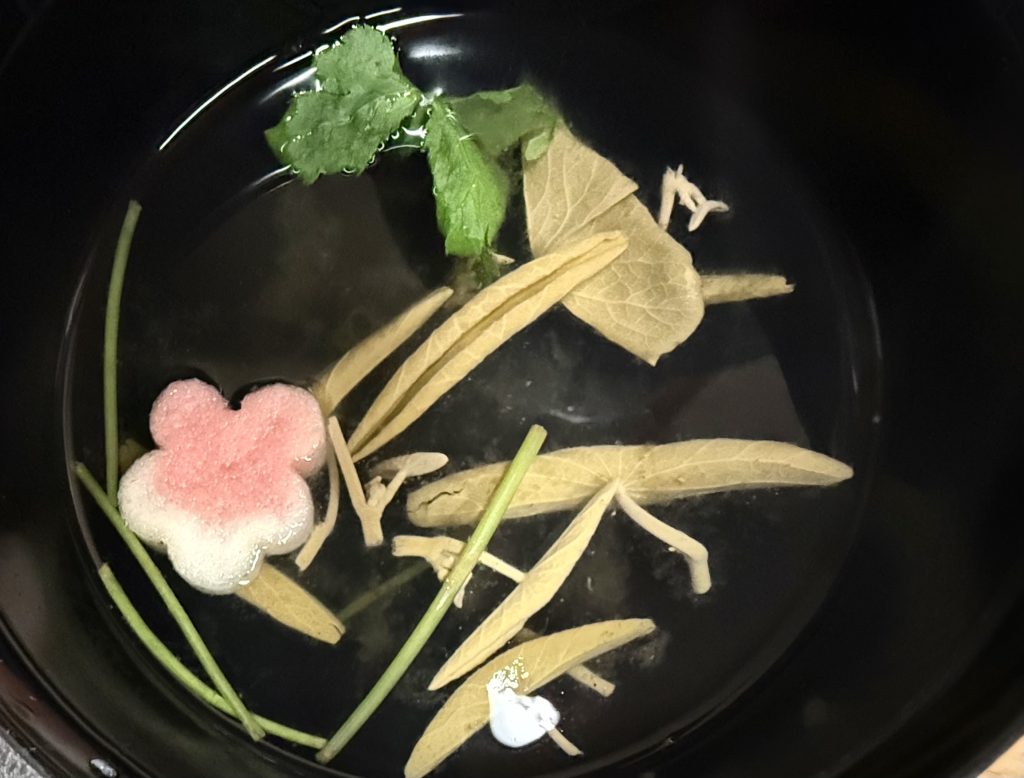
Style is important in Japan. Our miso soup:
Tempura is a Japanese specialty that, well-done, is not oily, and yummy. Like fried chicken, I like and eat it occasionally, though I know that it would be better to eat shrimp and chicken without (as my wife puts it) ‘powder coatings deep fried. So I eat such, cooked that, way rarely. But here we are in the home of tempura…
We sleep tonight in a Japanese tatami room on futons:
The Edo period (Samurai, 400 years ago) when the feudal fighting stopped, left Japan with a lot of highly skilled fighters who had to turn their training to something peaceful: a tradition that values fine workmanship and elegant design. Japanese children clean their classroom at the end of the day (a good tradition, IMHO). Compare with the American student joke called ‘Principal and Janitor’, in which a student playing the principal throws a deck of cards on the floor, and the student playing the janitor has to clean it up. This does not imbue students with motivation to take good care of their school. Cleanup is done by others. Kind of elitist. I like the cultural principle that if you throw trash or dirty things where you live, you wind up having to clean it up later yourself. Maybe if we taught kids that principle, we’d have less littering in America?
I just watched a very interesting historical essay on the benefits and drawbacks of the Edo closure of Japan, and then how Japan modernized itself. I recommend this essay, and others by this thoughtful commentator on all things Asian:
Now we’re in Akita, on the west coast, bordering the Sea of Japan. Koreas and Russia off to the west out of sight.
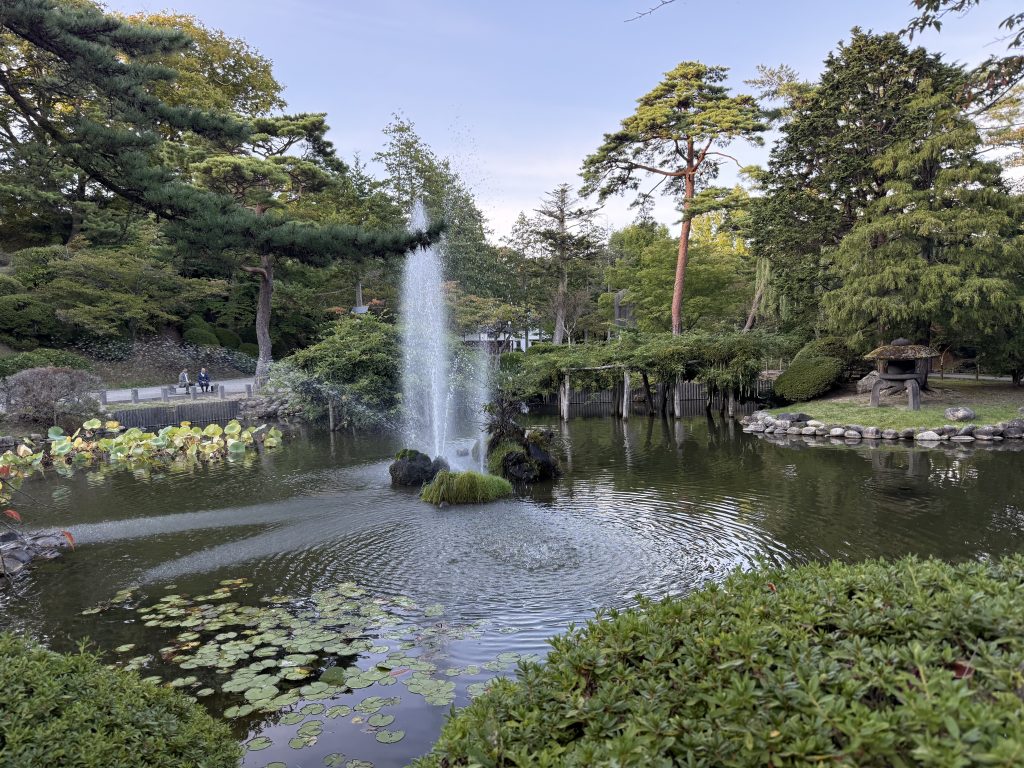
In Senshū Park, location of former Kubota Castle (no relation to Kubota company from Osaka)
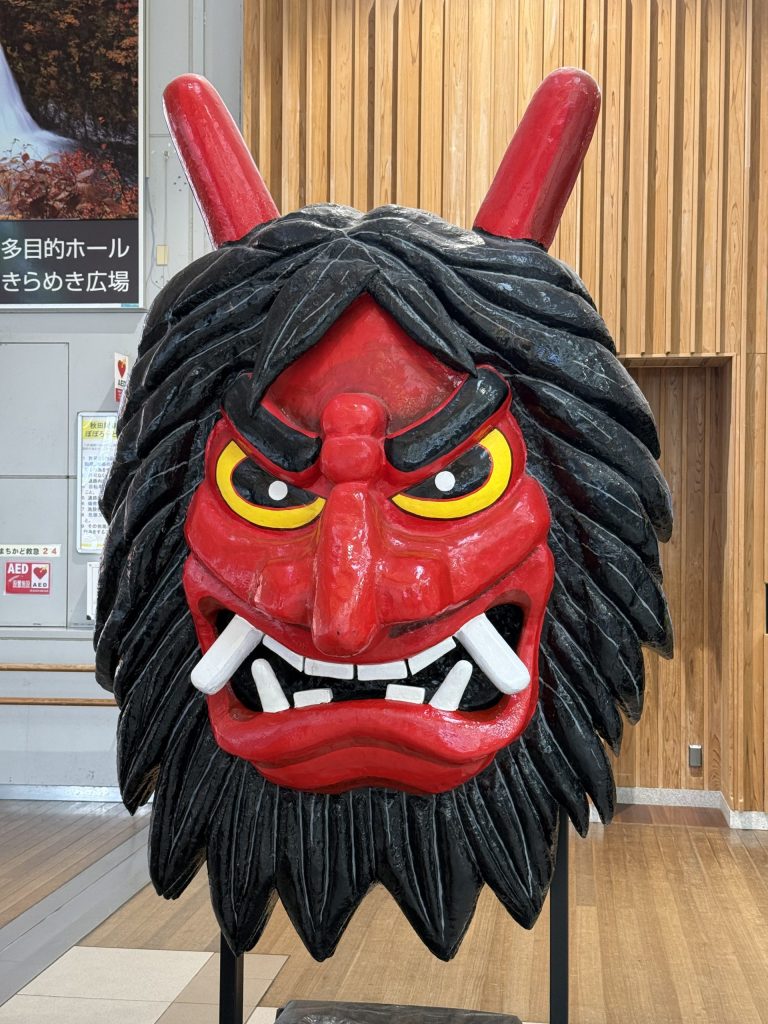
Rather different style from that of Aomori!
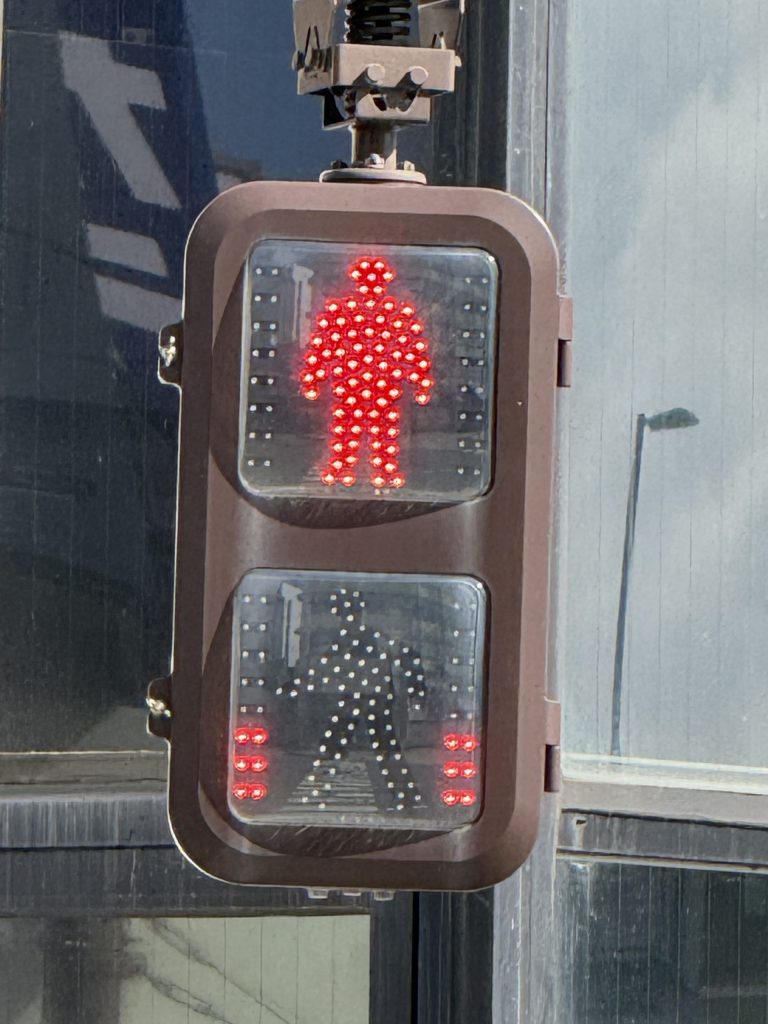
Clever Japanese crosswalk lights let you know how long you will have to wait by dots along the sides. We see traffic light innovations worldwide that the USA could benefit from.
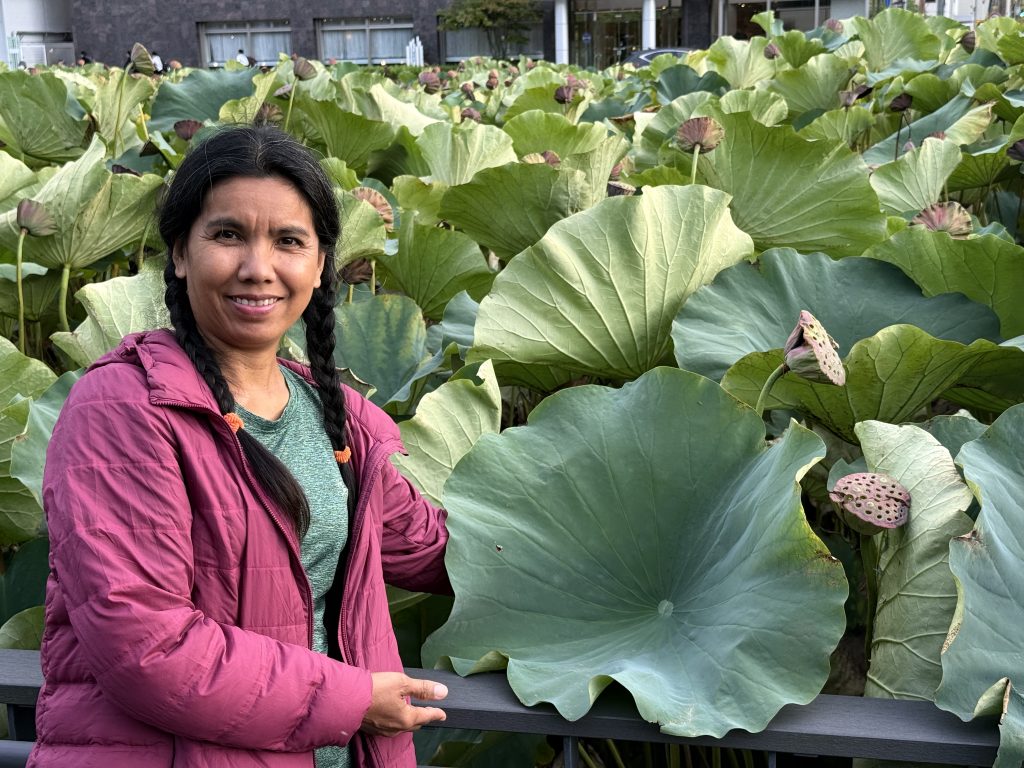
Huge area of lotus flower plants with giant leaves, near Senshū Park
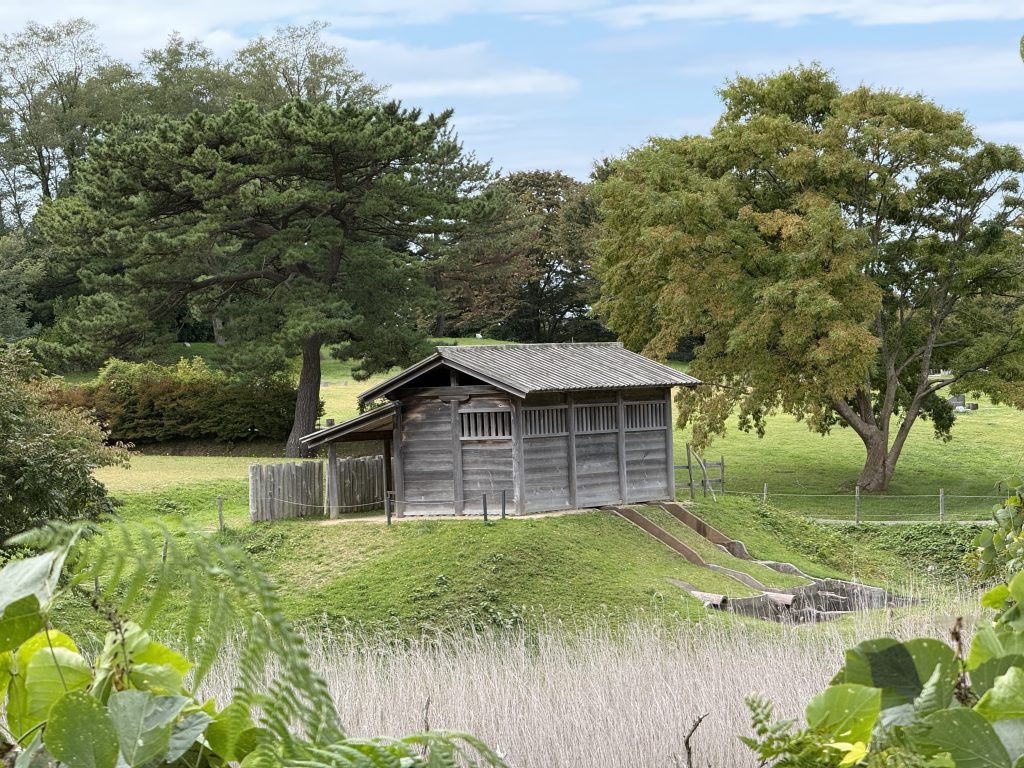
Possibly the world’s oldest flush toilet, built 1250 years ago for foreign dignitaries. Three stalls, flowed down into basin quite like a septic tank.
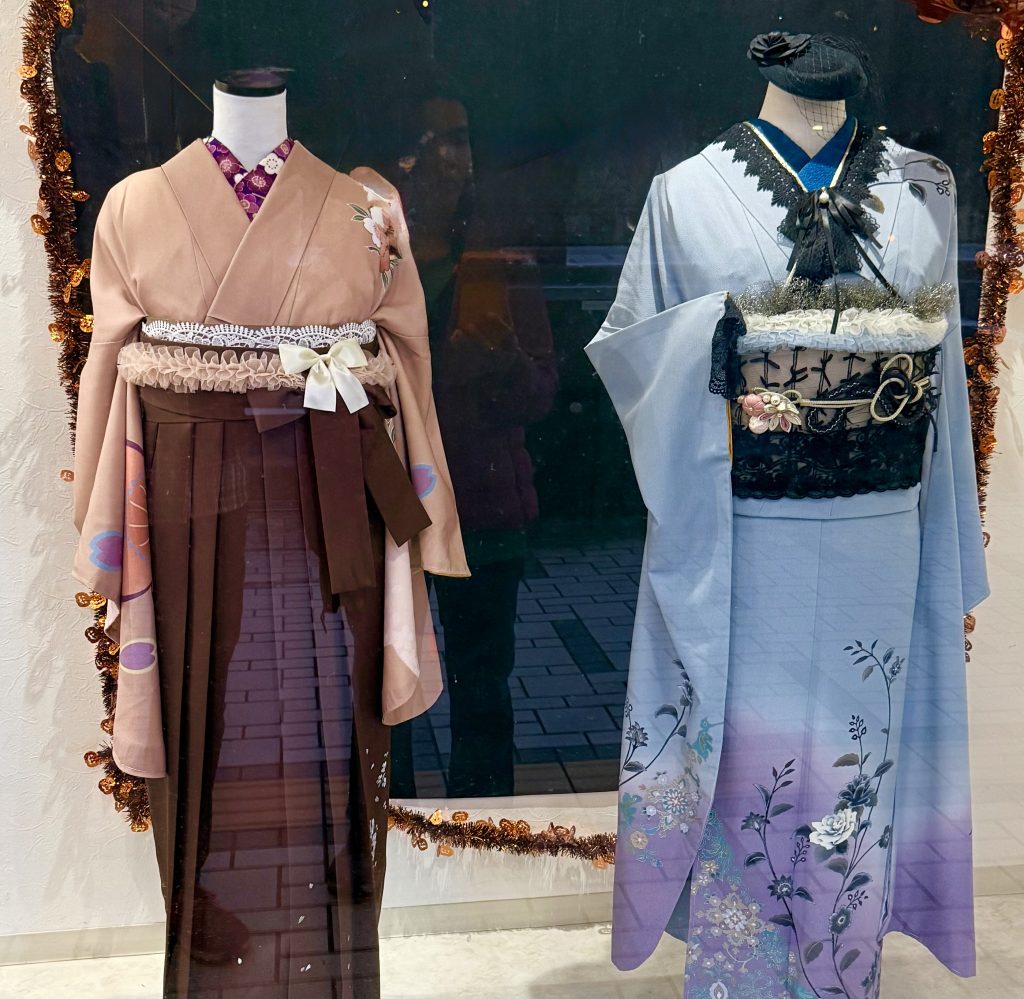
Kimono in a shop where you can pay to dress up in them and walk around the area, or buy them. Pin did this in South Korea, where such costuming is very popular.
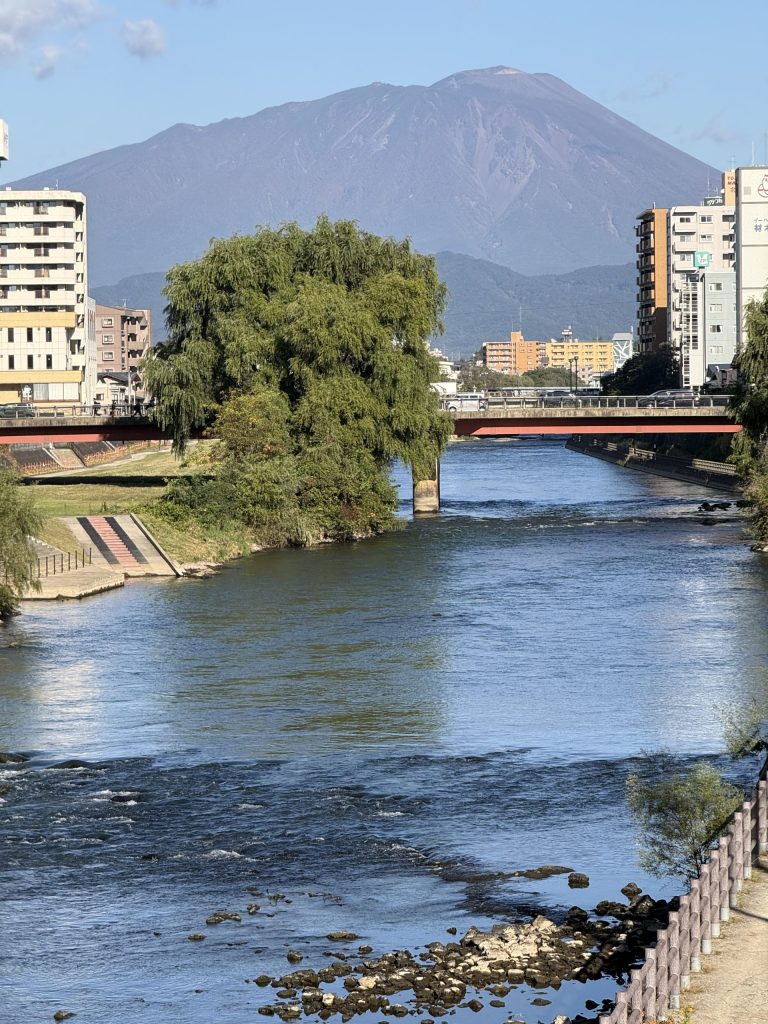
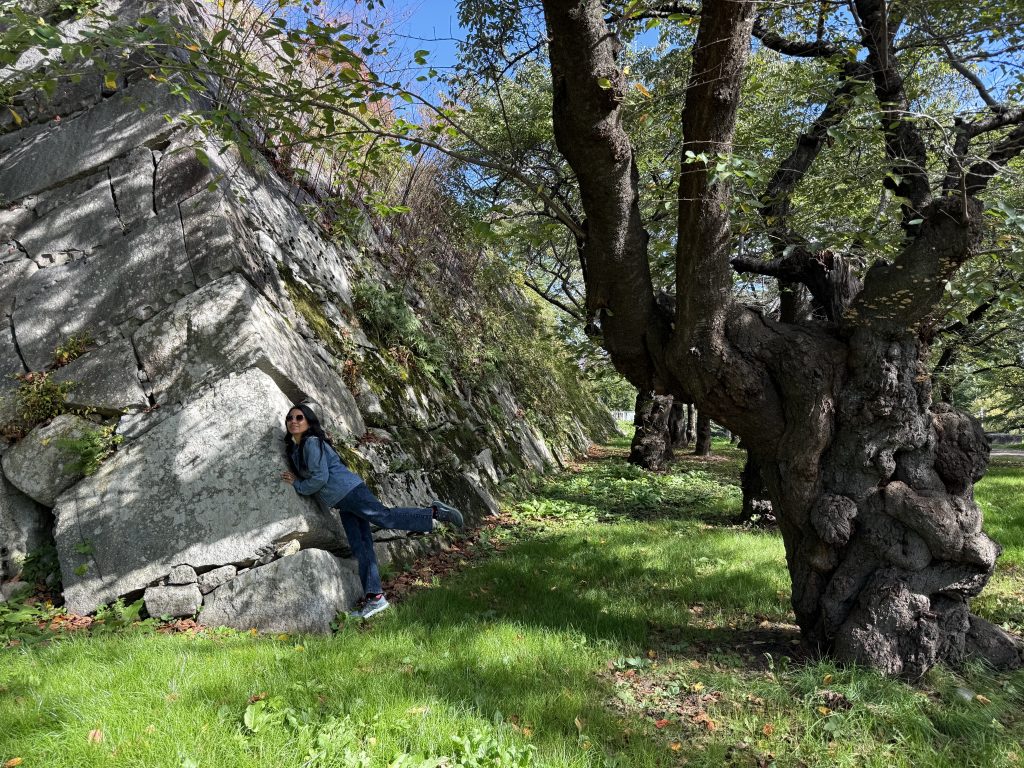
Volcano Mount Iwate rises high above Morioka. We enjoyed two days here, particularly the Morioka Castle Park area.
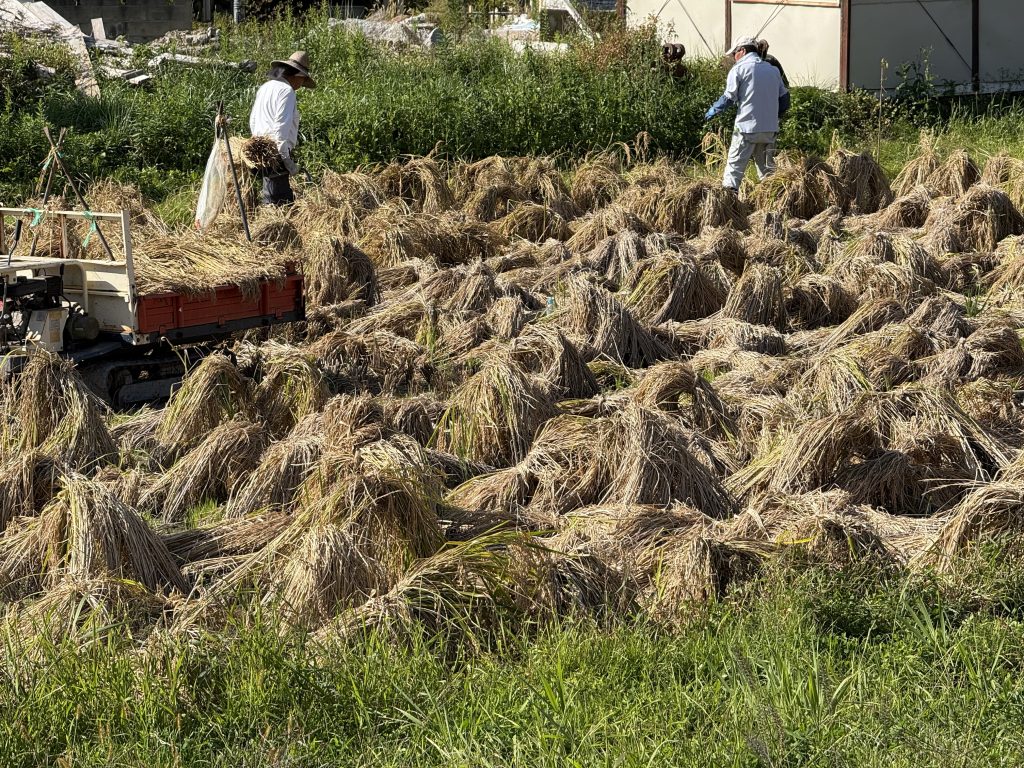
Then we went out to a mountain village area, where some of the rice is grown in very small fields, and harvested by hand rather than by large rice threshing machines. Here they are gathering the rice, which (unlike Thai practice) is harvested full length and tied up to dry before threshing by hand:
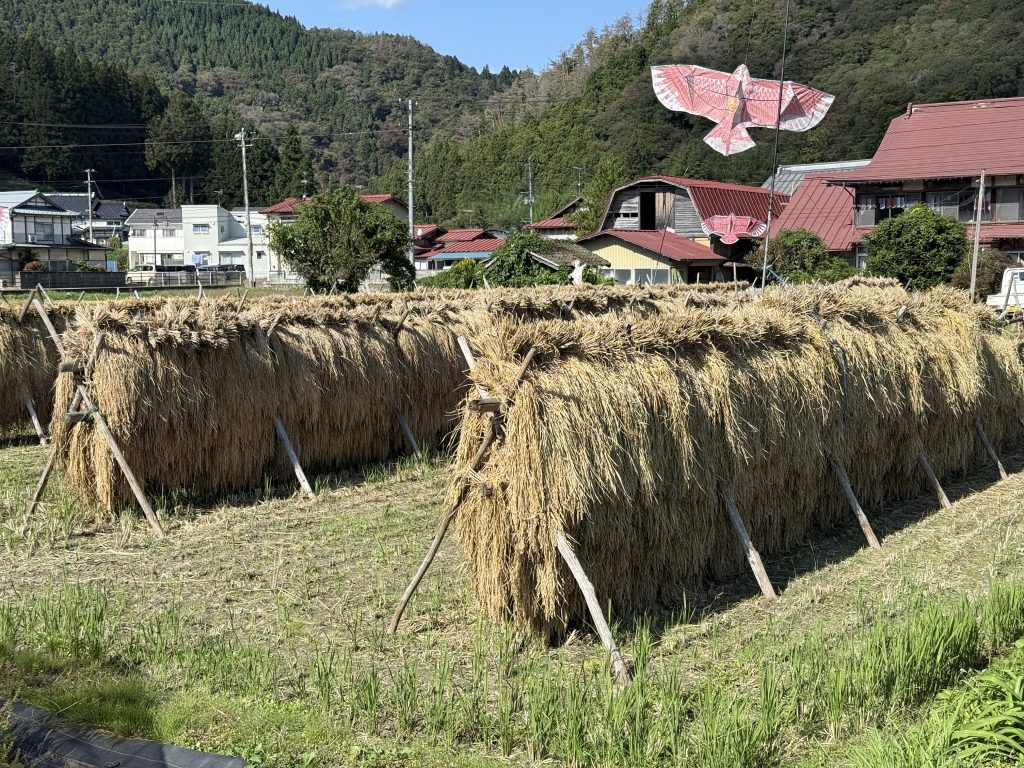
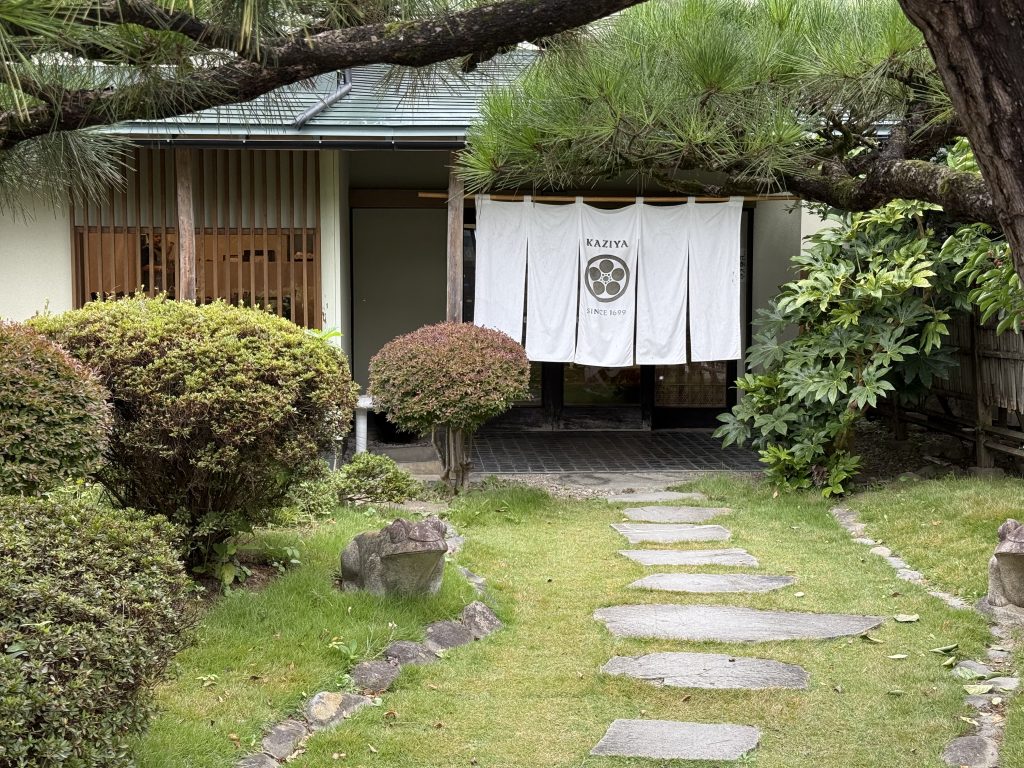
We stayed at a little family-run ryokan. It says ‘Since 1699’. Could be, but not this same building, which is newer. Nice place.
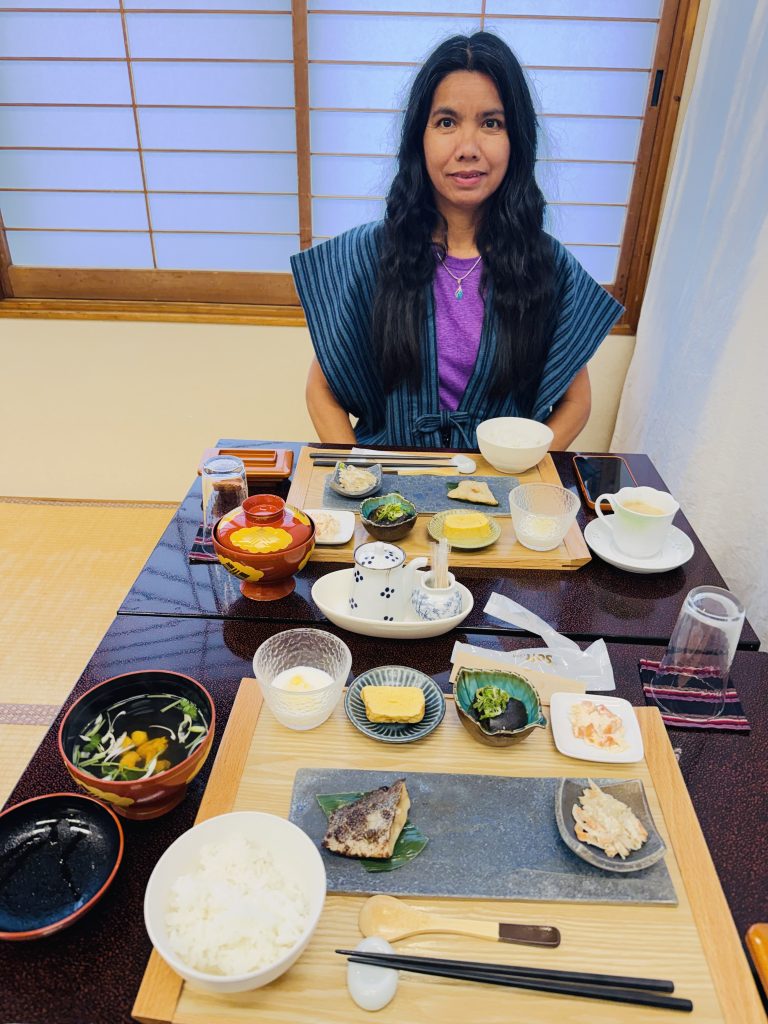
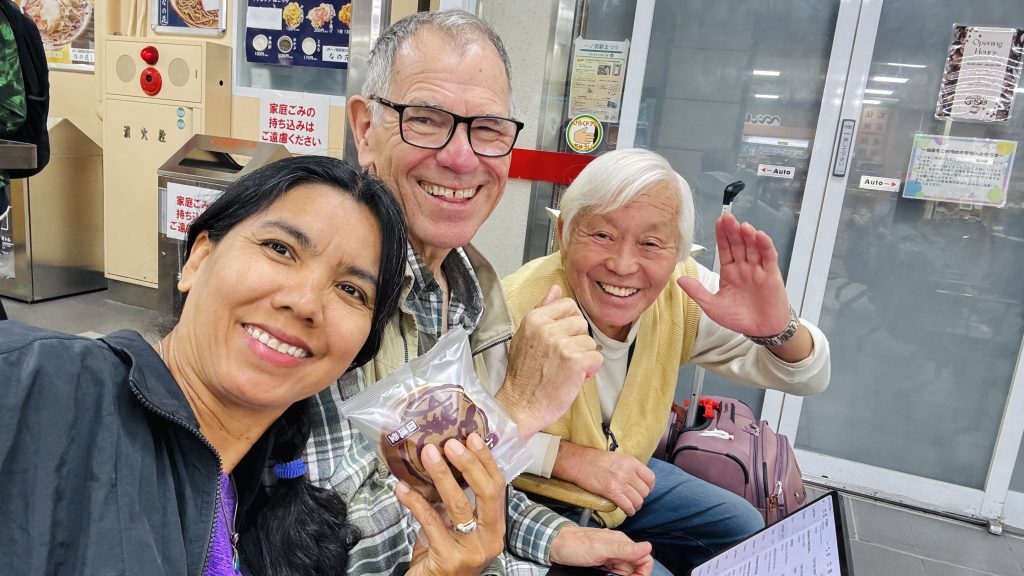
A delicious Japanese style breakfast. The owner even came by to visit with us and gift us a pastry while we were waiting back at the Ichinoseki Shinkansen station:
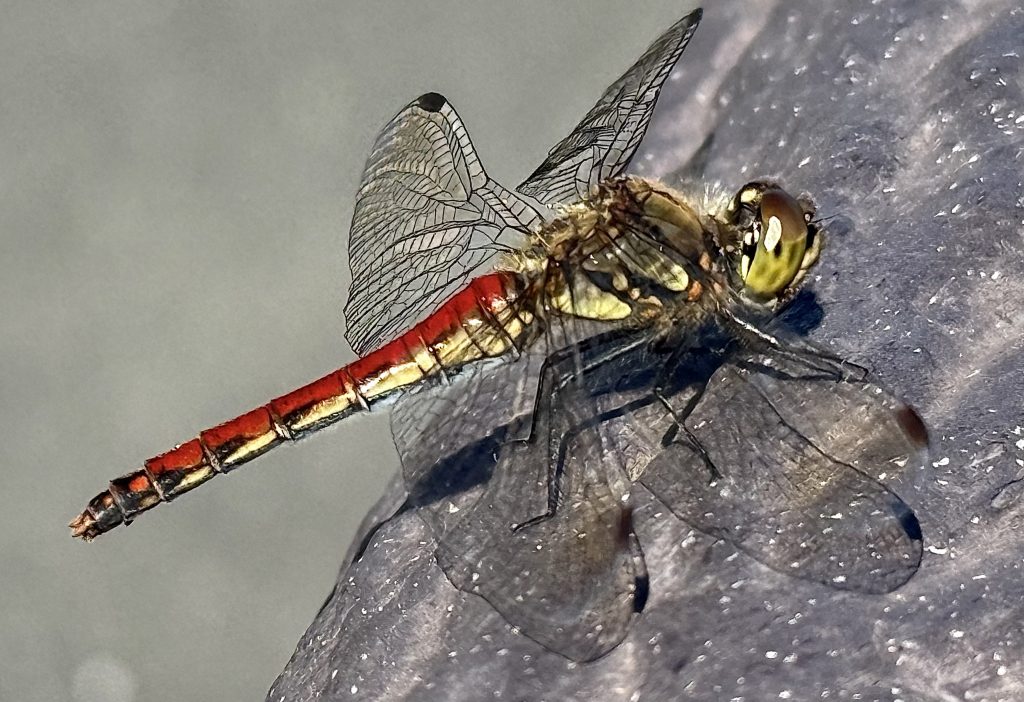
We are seeing hundreds of dragonflies hawking bugs like sparrows do:
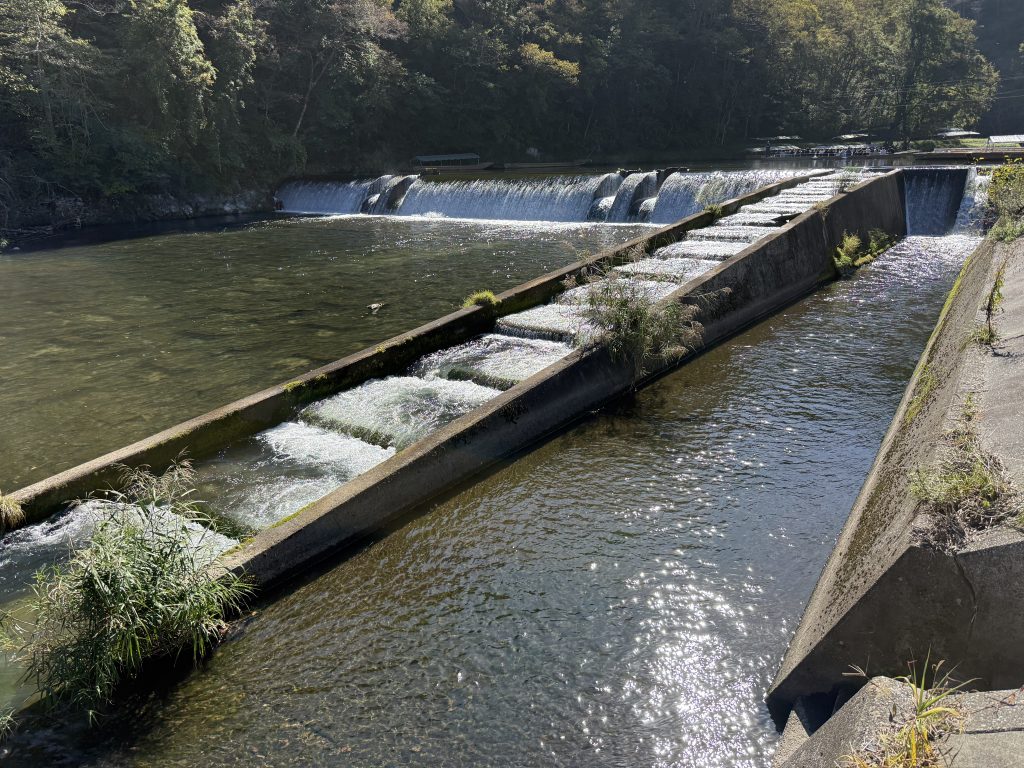
A fish ladder heading up the canyon to our rafting trip:
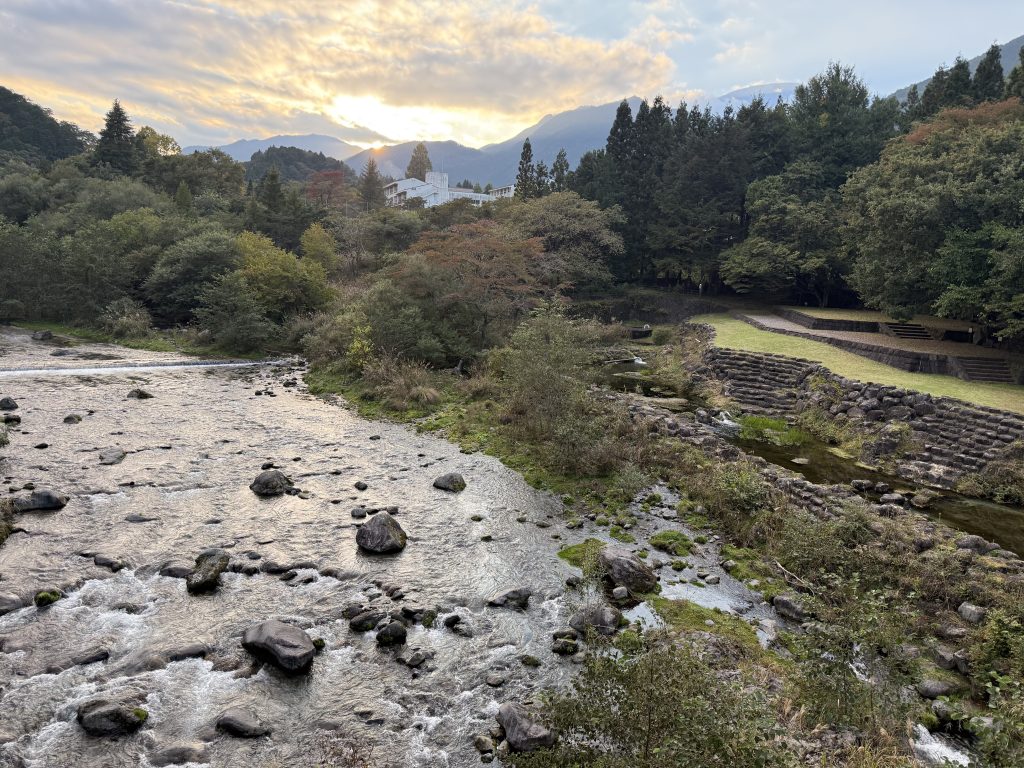
Now we are in historic Nikko.
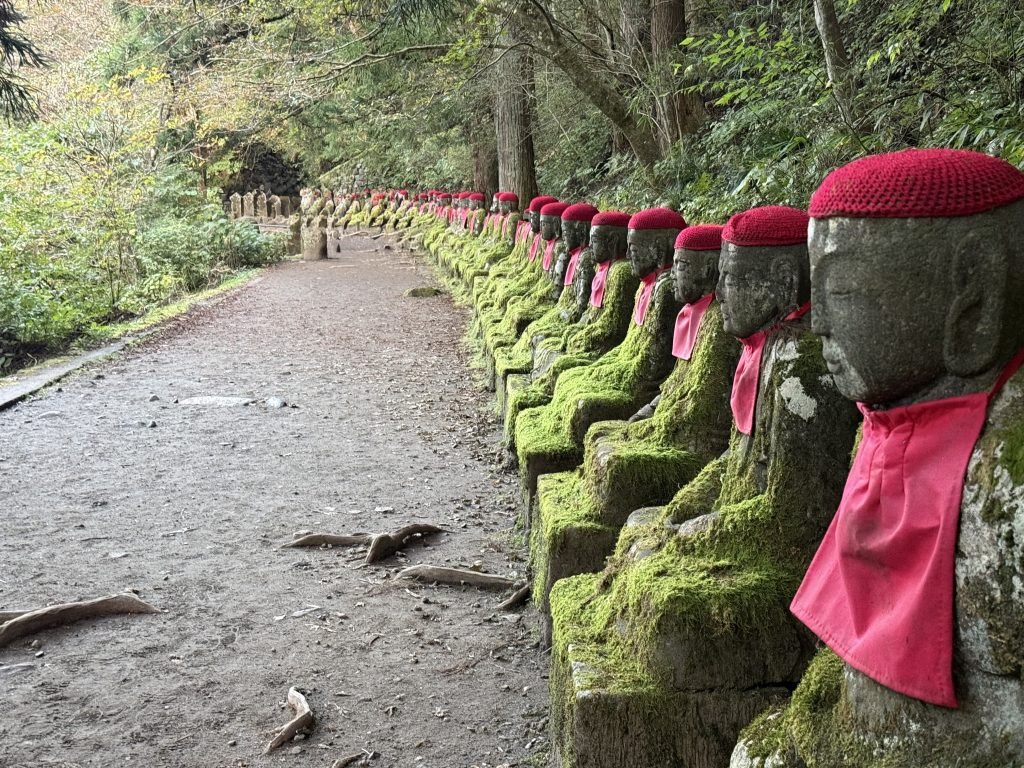
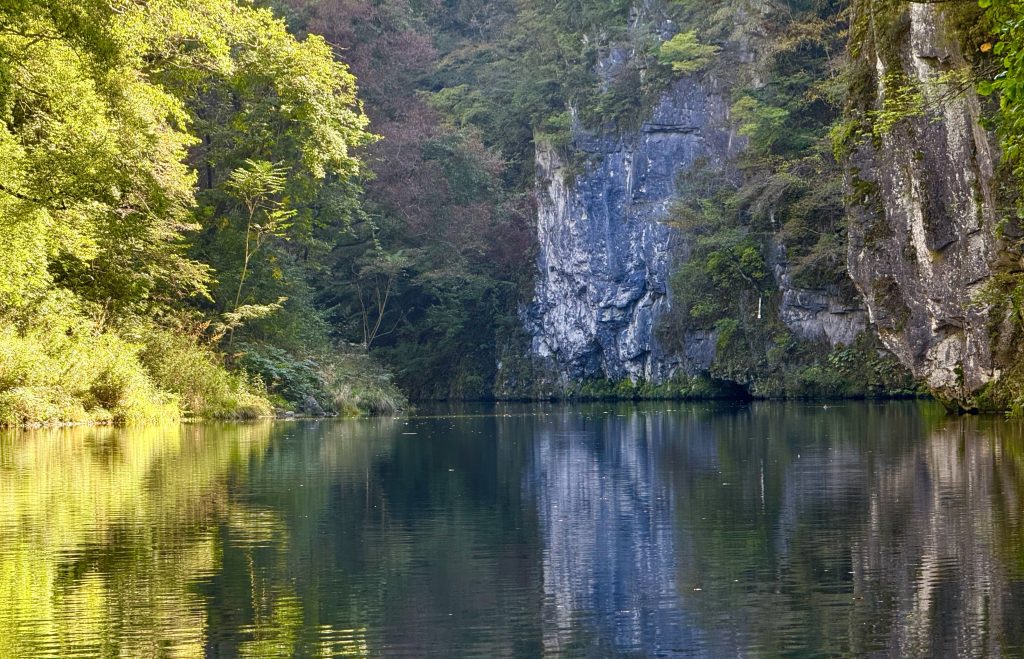
These Jizo statues were well known even in the 1600s. In the Kanman Gorge, known as the Abyss.
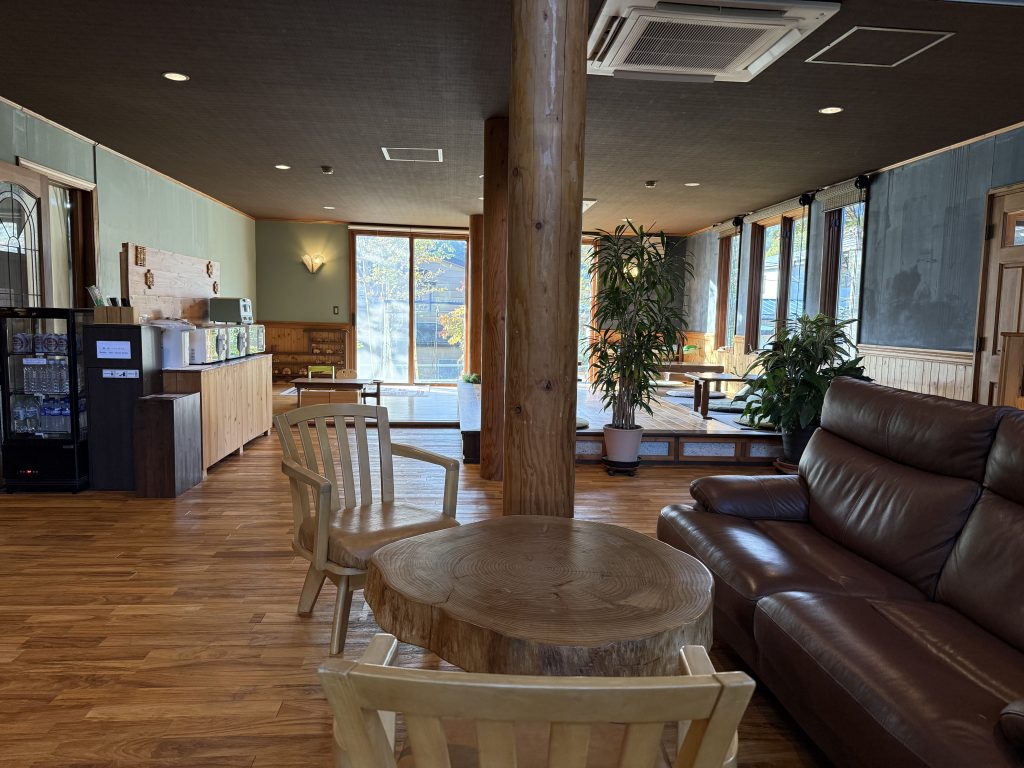
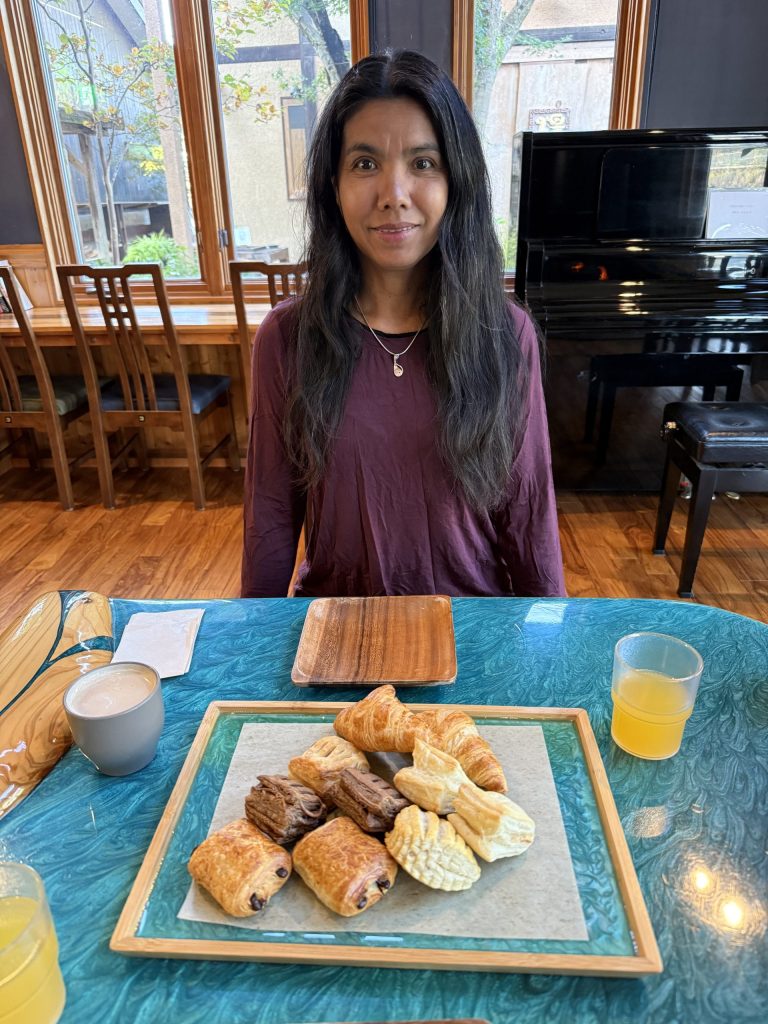
We are staying at a lovely little ‘hotel’ near the Nikko Botanic Garden that reminds me of a good youth hostel.
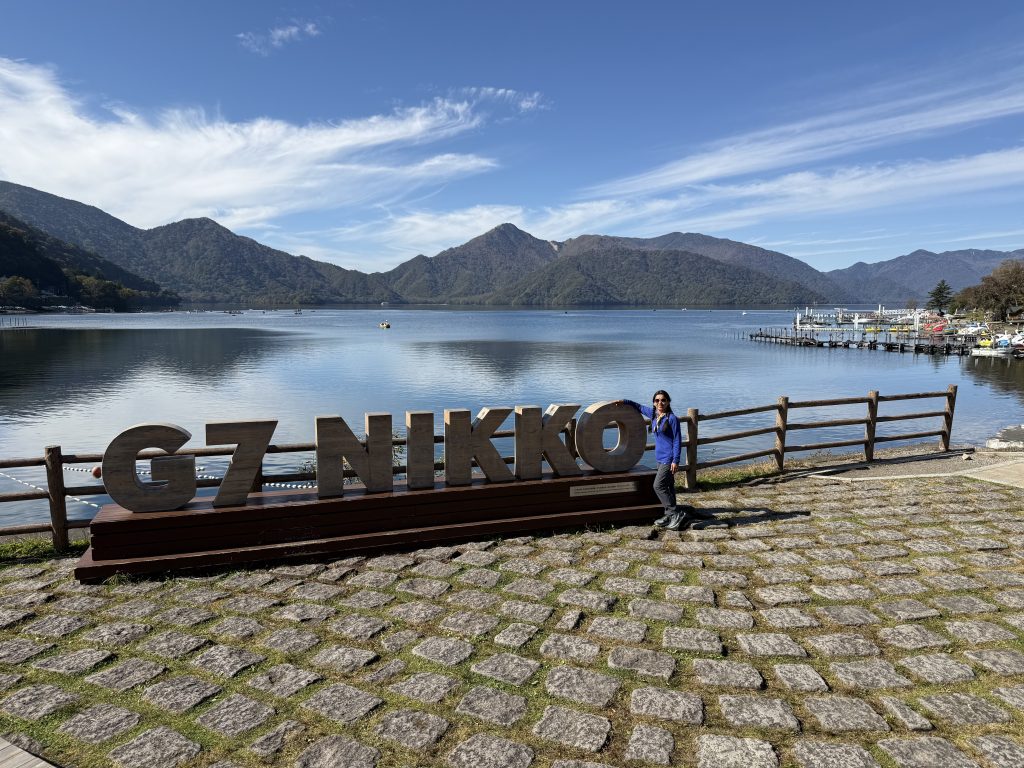
We’re heading up into the mountains above Nikko now. The 2023 G7 conference was held here at Lake Chūzenji, altitude 4,163 feet. Formed when Mount Nantai dammed the Daiya River with a lava flow 20,000 years ago. Some similarities to Lake Tahoe.
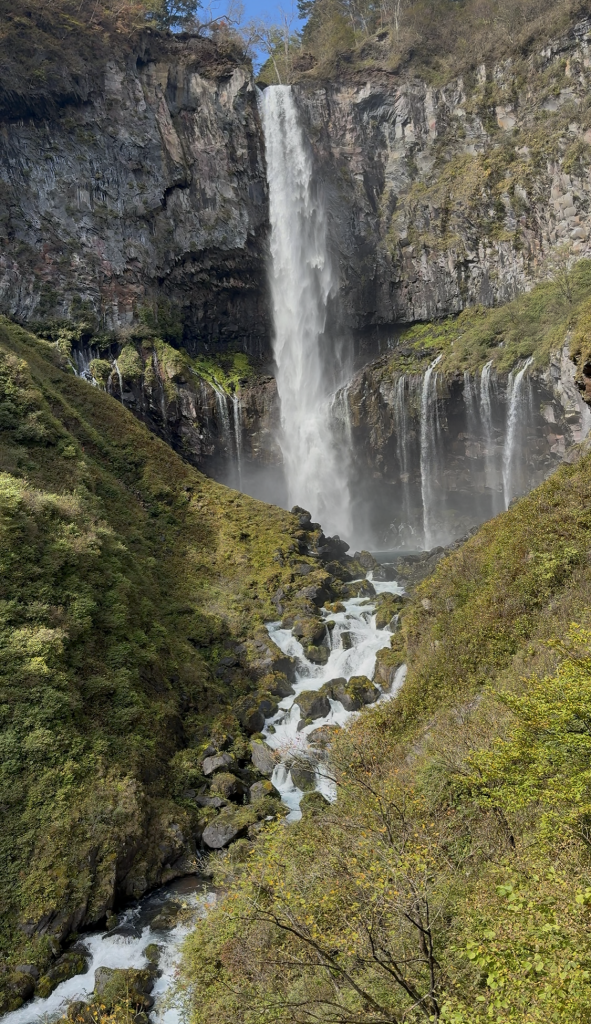
The lake feeds nearby Kegon Falls. Though I’ve seen waterfalls that are much higher, with more water volume, it is one of the prettiest I’ve ever seen in the world. 318 foot drop.
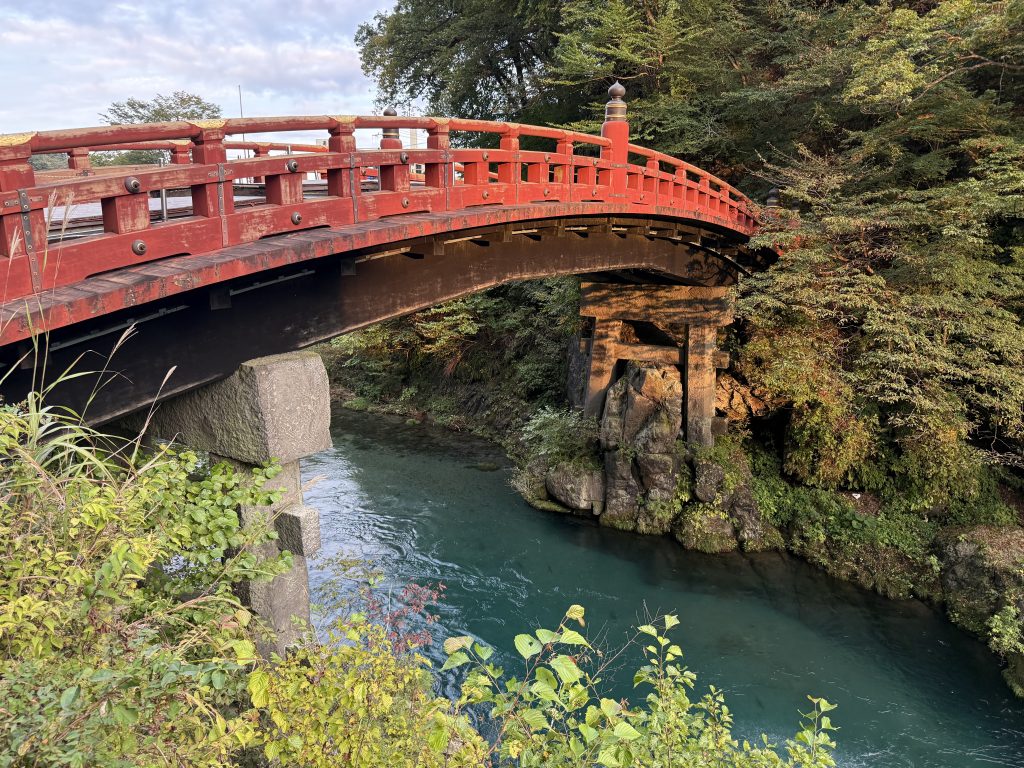
Back in Nikko, we cross the ancient (1638) bridge across the Diaya River to the entrance to the sacred shrines area, holding the burial sites of the shogun who unified Japan, and several important descendents.
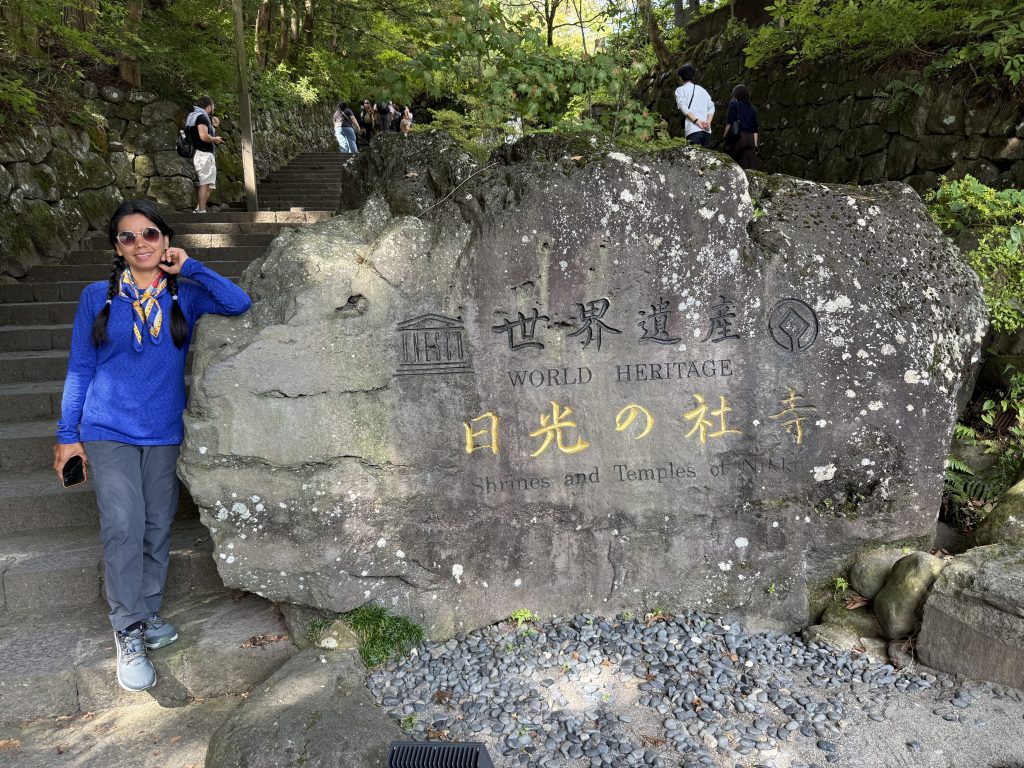
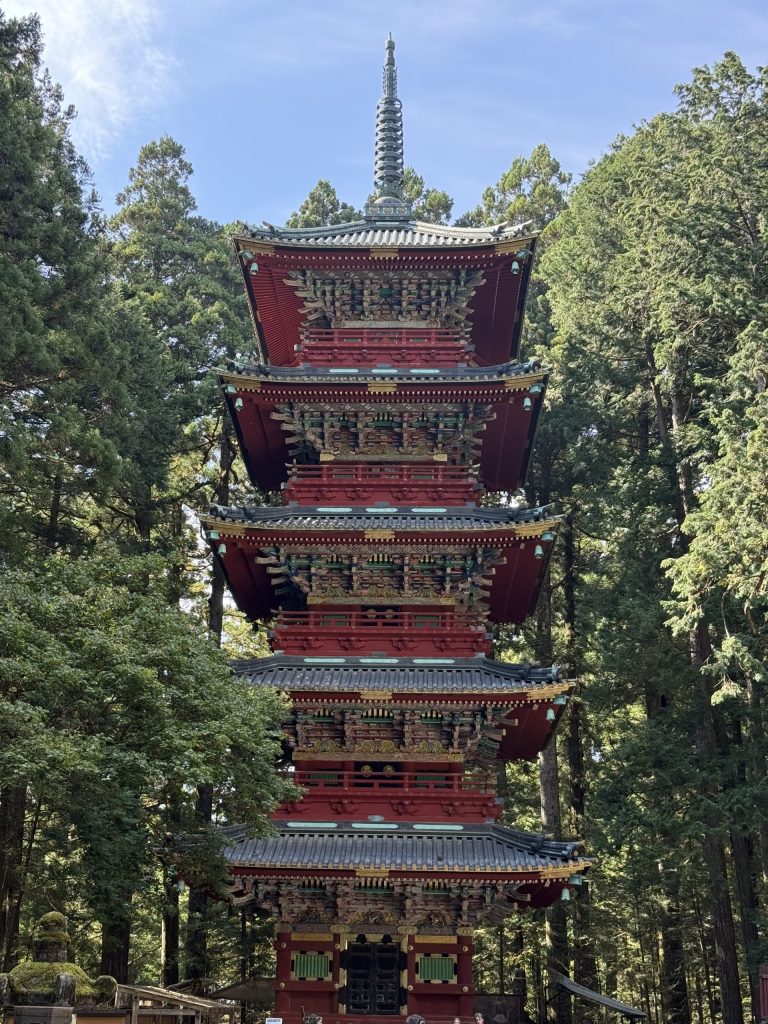
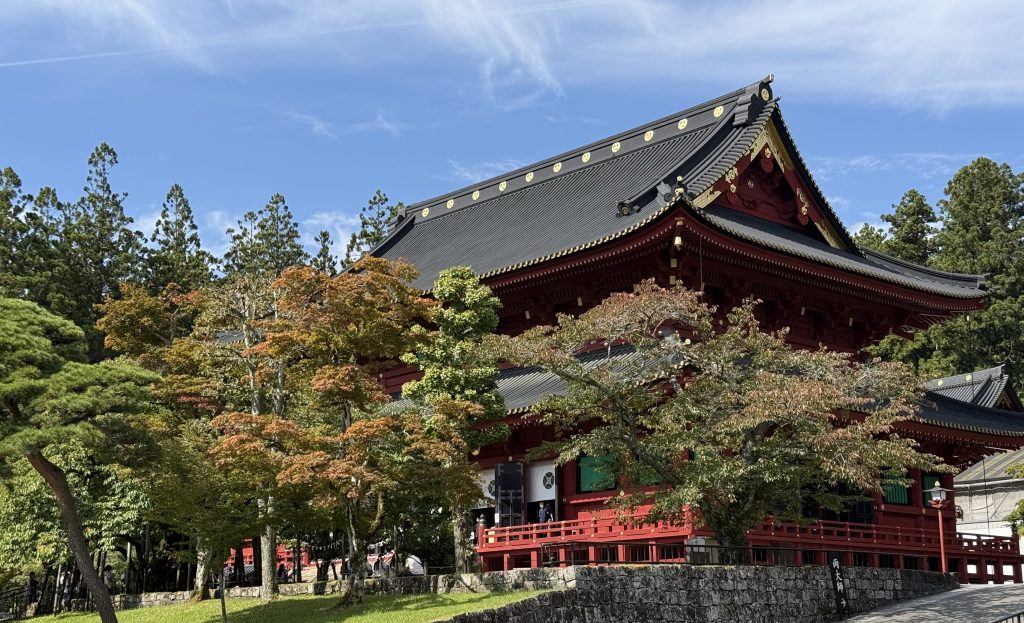
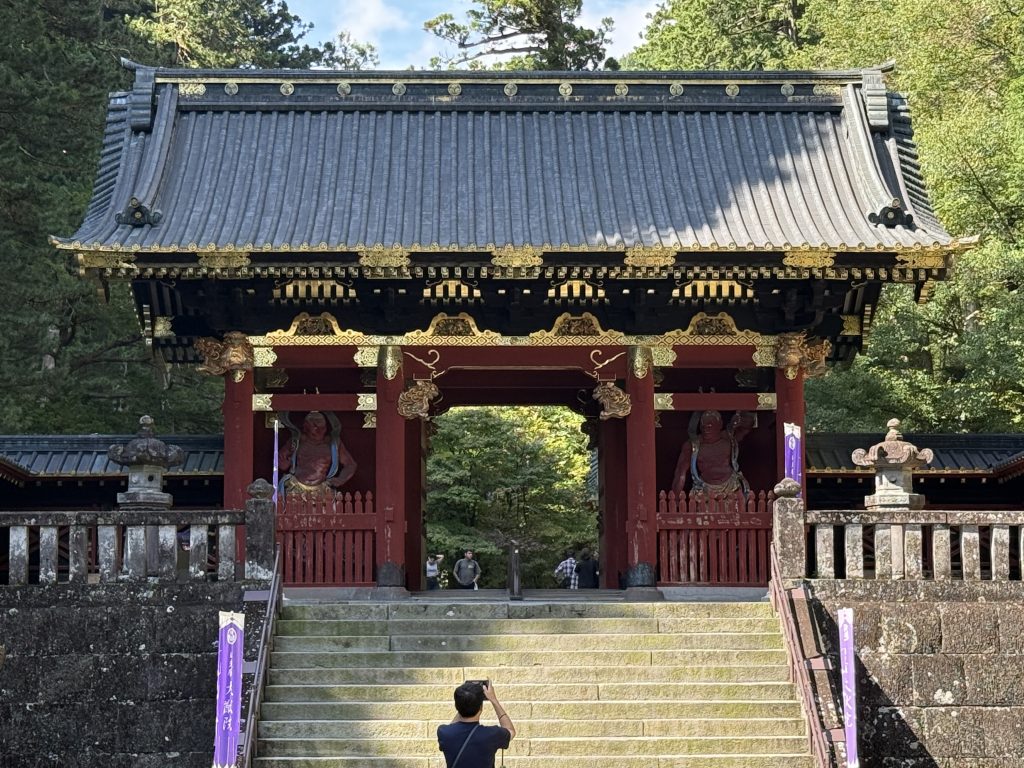
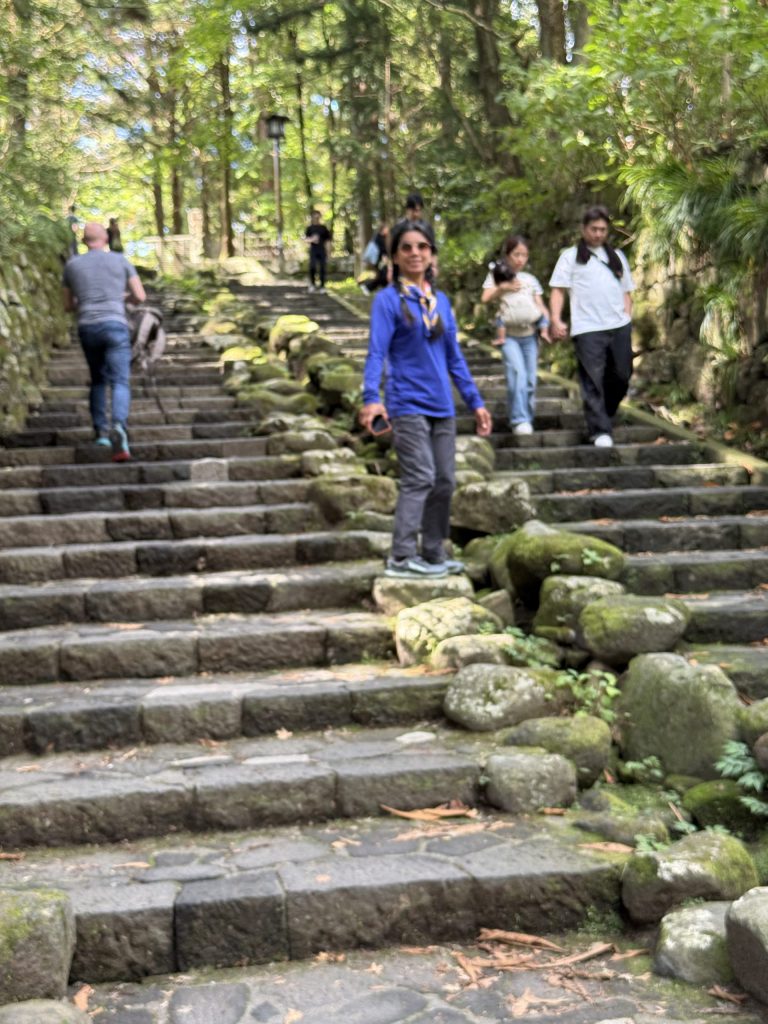
Nikko is spectacular. We could have spent a week here! One of my favorite places in Japan. I’ll spare you dozens of pictures. Beautiful blue sky weather.
Today, we head south to Tokyo for our final three days prior to heading to Thailand.
Fancy train Nikko to Tokyo:
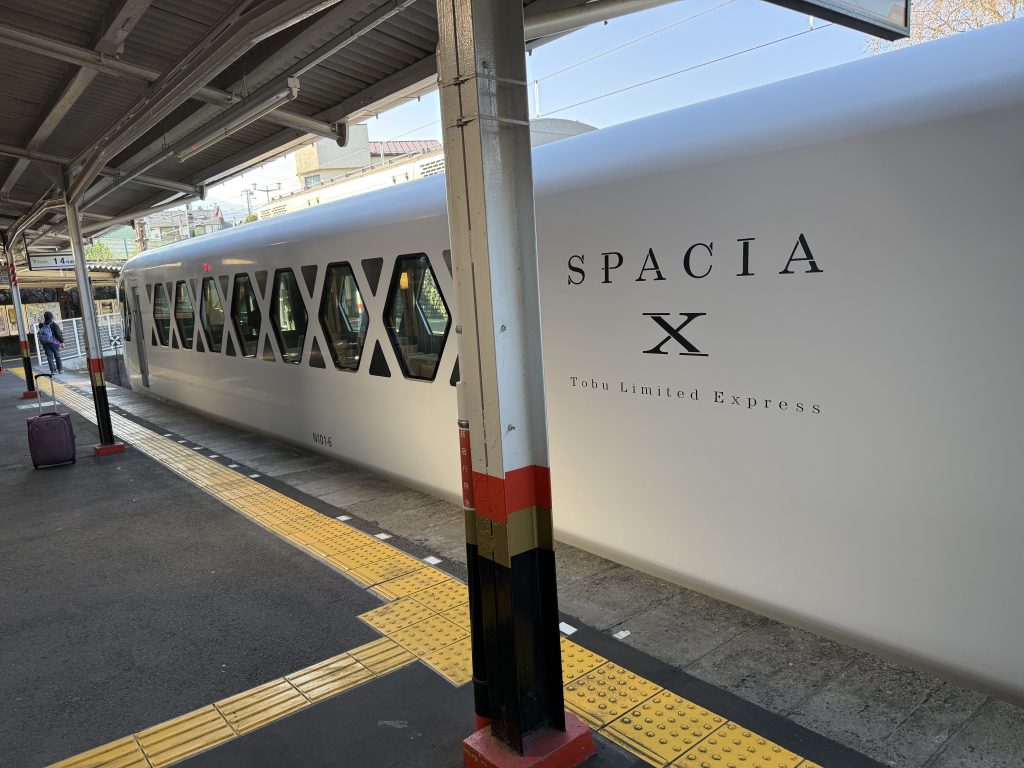
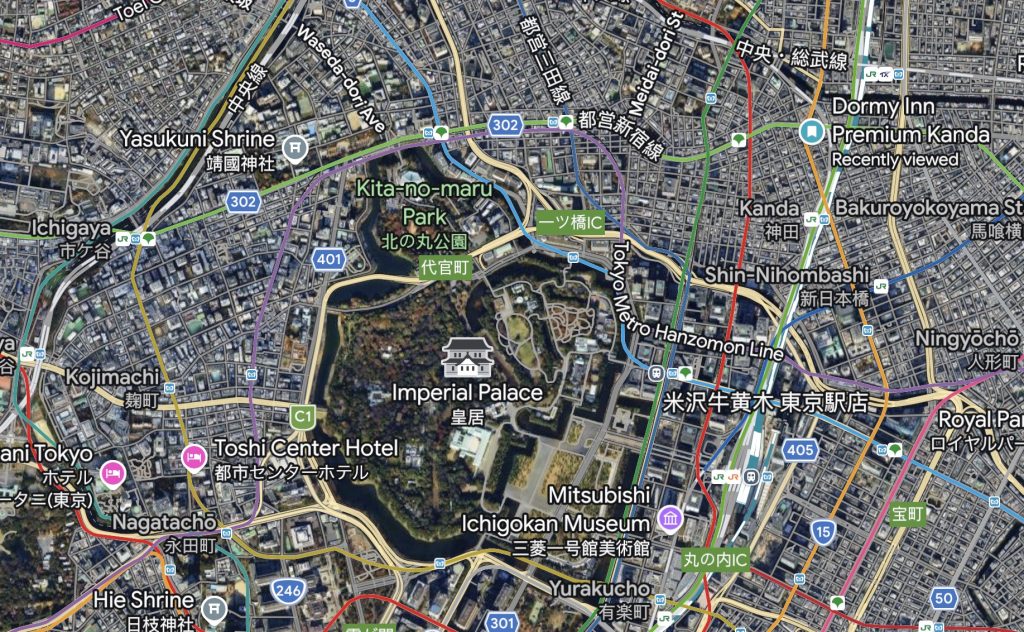
Tokyo is big: with 38 million people (30% of the population of Japan), it is the largest city in the world in population. We are staying in an area called Akihabara, near the Kanda River. Should be fun soaking in the urban liveliness of Tokyo.
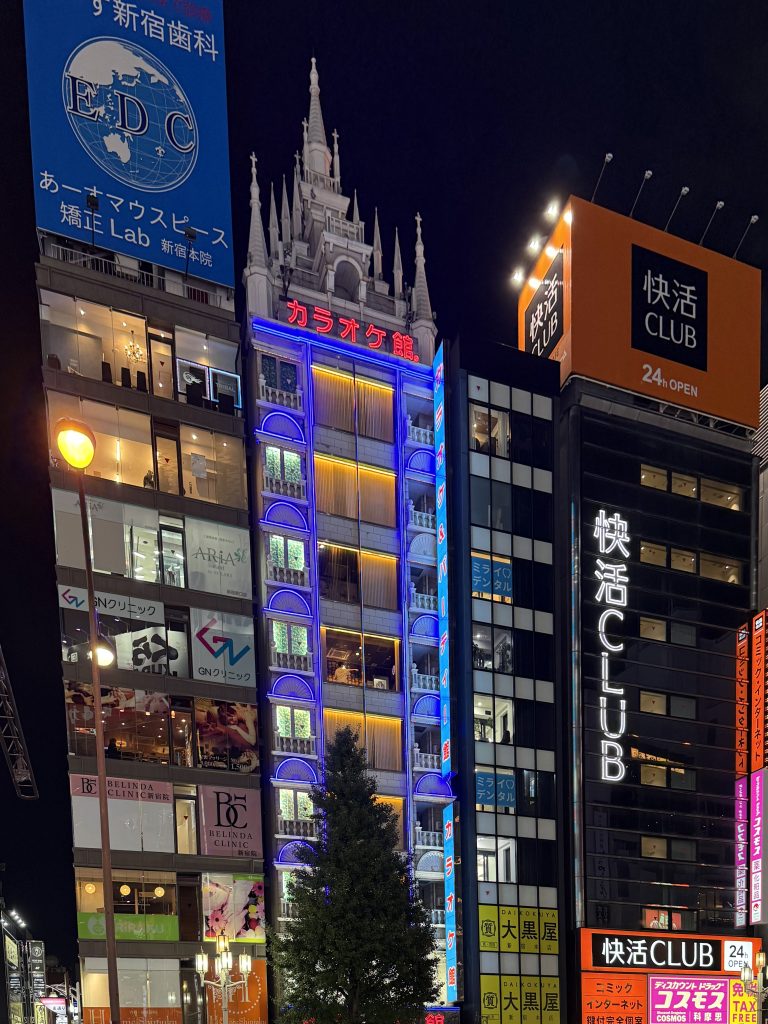
Shinjuku is perhaps the wildest food/bar/entertainment district in Tokyo:
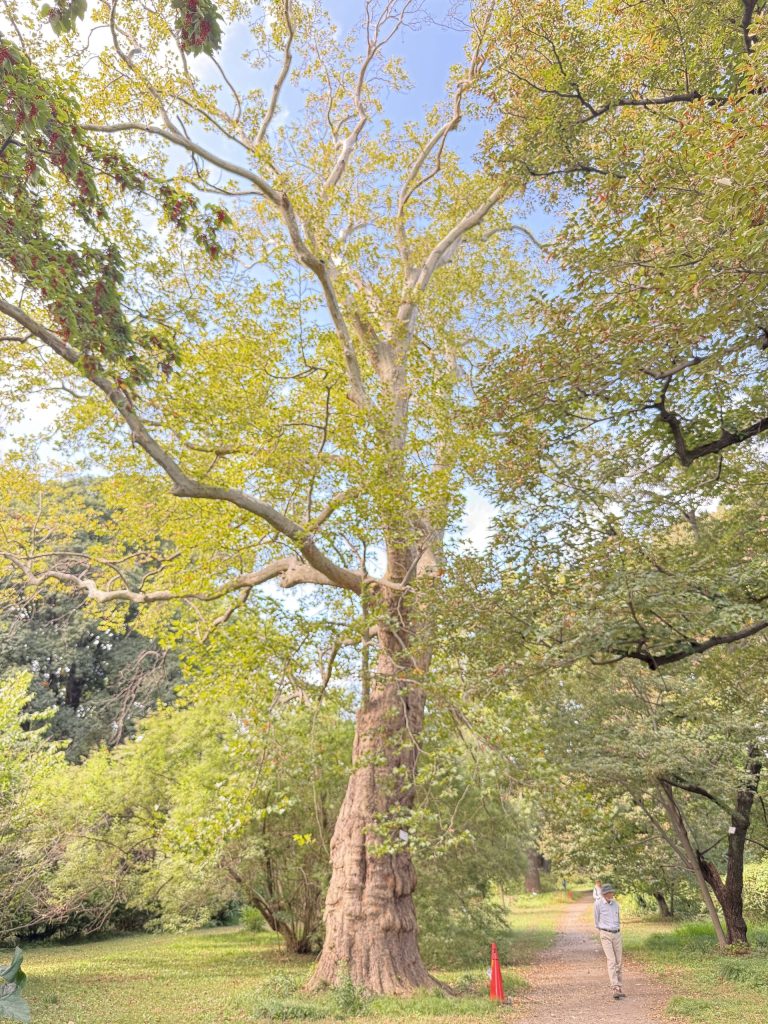
The next morning, we went to the Koishikawa Botanical Garden. Begun by the Tokugawa Shogunate in 1684 as an herb garden, it is the oldest botanical garden in Japan, and certainly the oldest I’ve seen anywhere in the world so far. As a result, it has some ‘old growth’ examples of trees that are impressive.
Here is the biggest Gingko biloba tree I’ve ever seen, with a trunk diameter of over 3 feet:
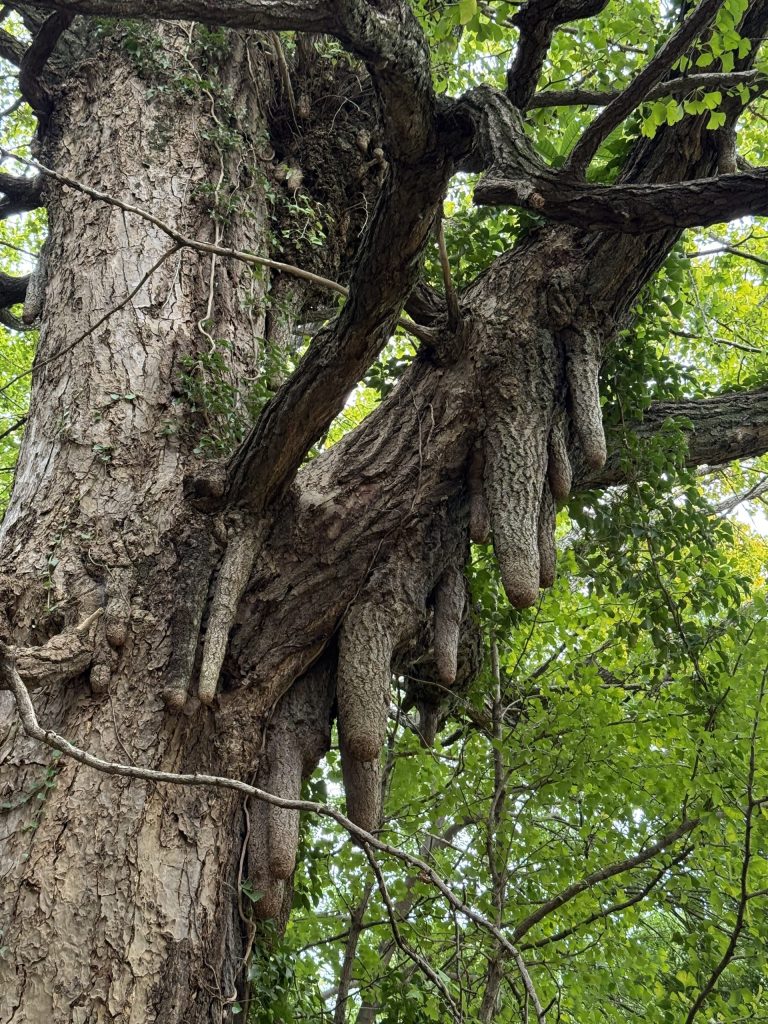
Another very old Gingko tree has downhanging lobes that are the beginnings of aerial roots. They only occur in Gingkos more than a hundred years old:
Ever see a Deodara tree as big as these two?
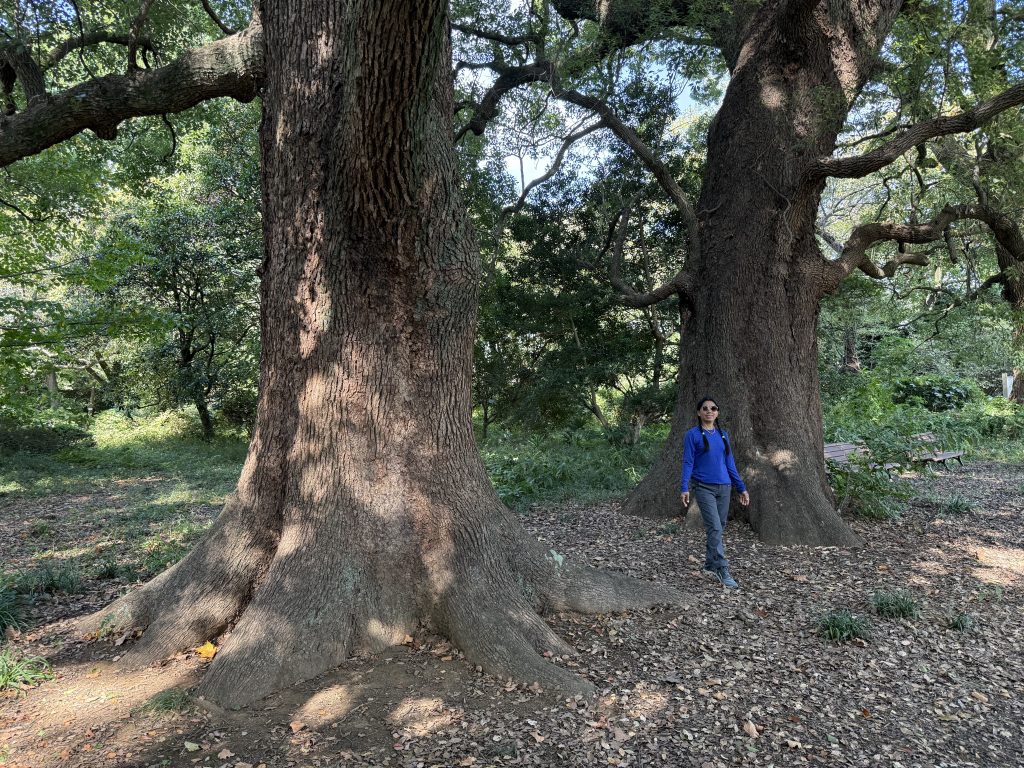
Many interesting trees I’ve not seen before, such as what the Japanese call a ‘Fawn tree’ because its mottled bark looks like a young deer fawn:
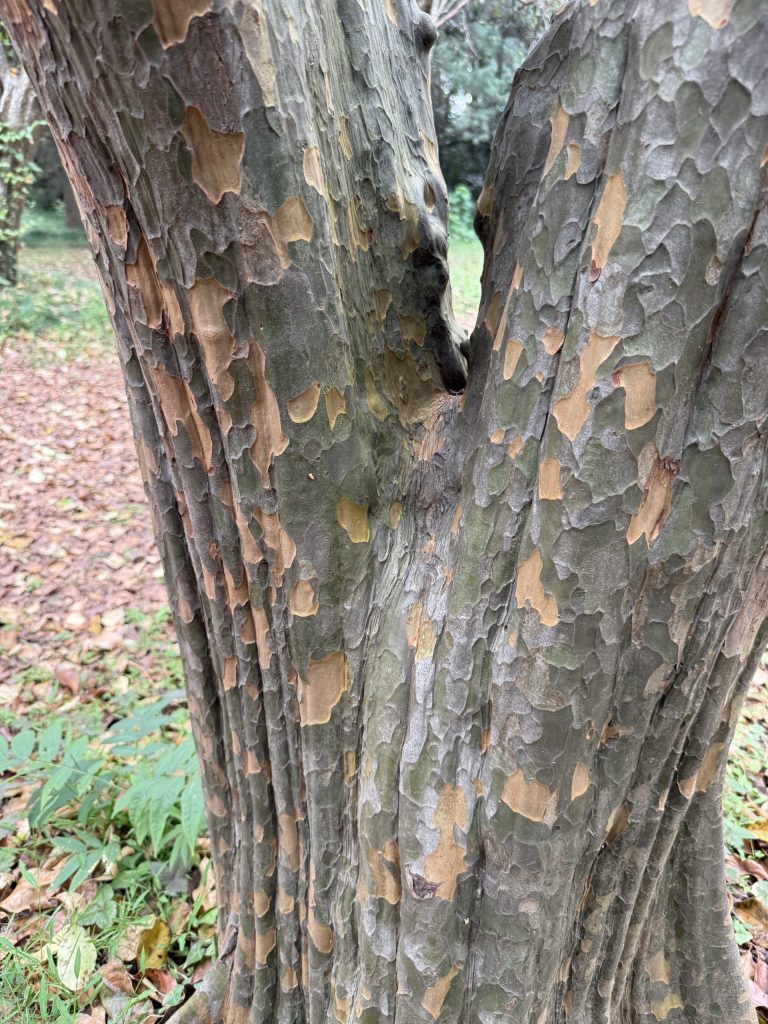
And big Quince trees, with fruit the size of a softball. Apparently quince fruit has so much pectin it can be made into jam without adding any gelatin. The fruit must be cooked to be edible.
We spent several hours exploring this lovely 40 acre botanical garden.
At Ueno Park, a museum has Japanese Edo treasures borrowed from the British Museum (?!?!?). The English hauled home treasures from all over the world. Some countries have protested that as looting, and gotten some of the artifacts back.
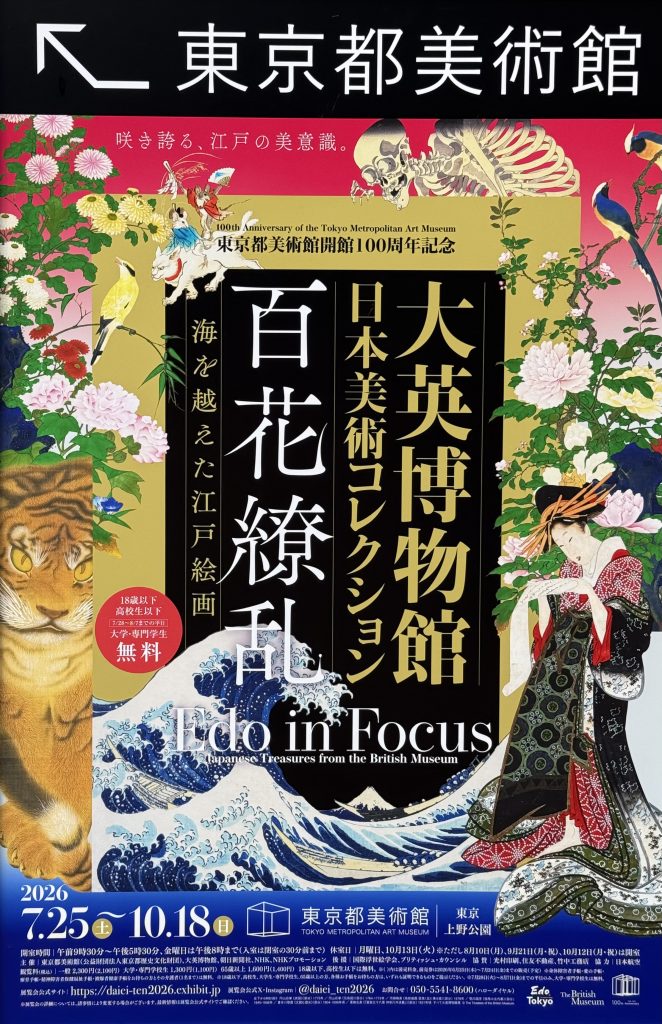
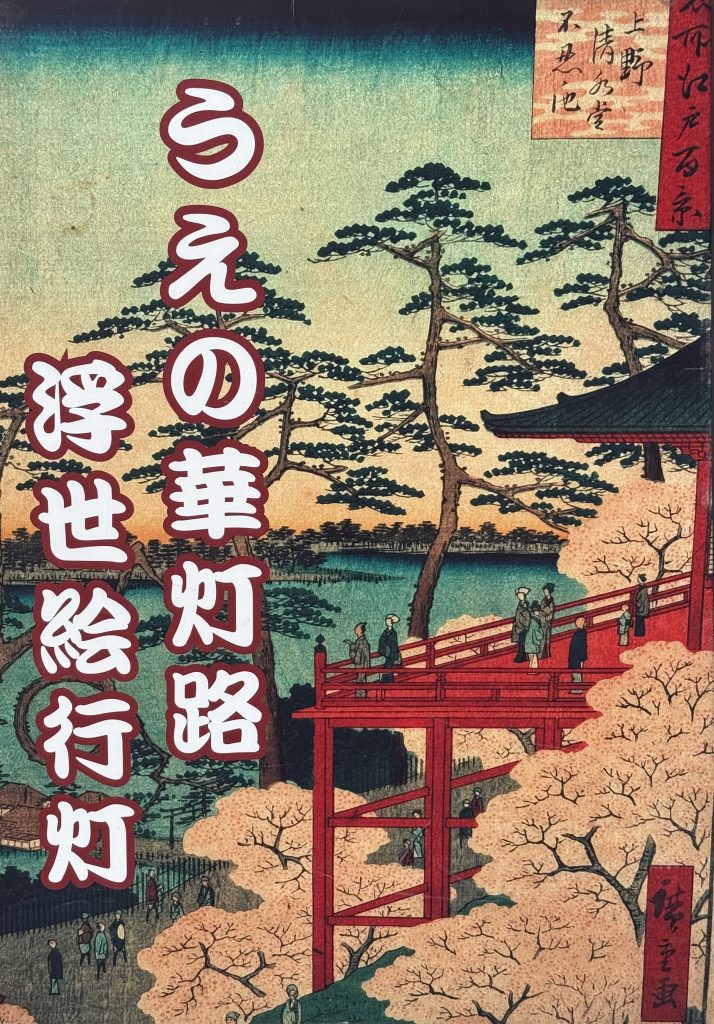
I could add a hundred pictures, but I must stop before I overload the server. Our three weeks in northern Japan has been fun and educational. Now it is time to pack up and head on to Isaan, Thailand, to take care of our family affairs there. We hope those who have followed along have enjoyed this trip report.